

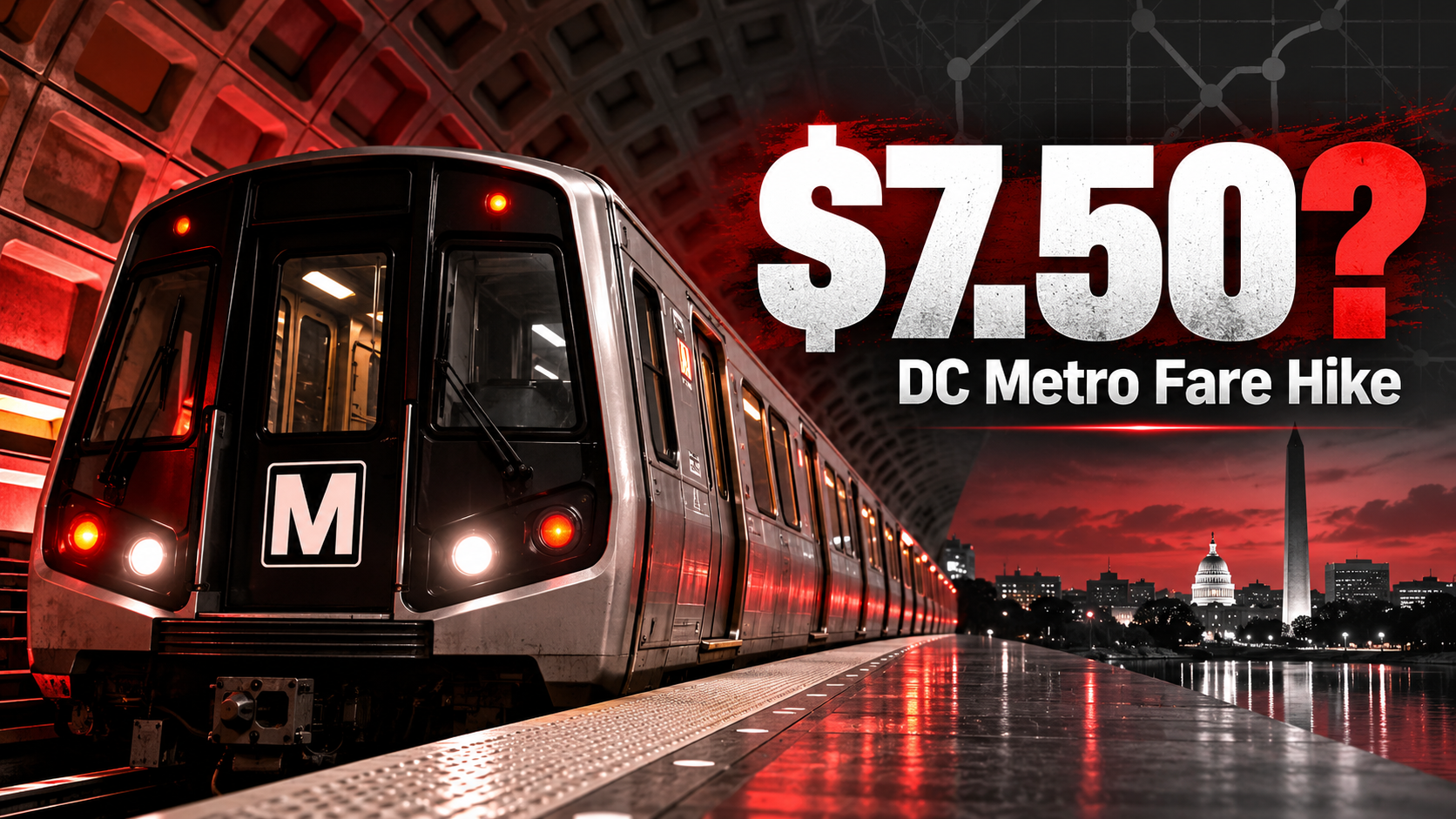
Metro riders across Washington, D.C., Maryland and Virginia could pay significantly more for public transportation in 2027 under a proposal that would increase fares by about 11.1 percent.
The Washington Metropolitan Area Transit Authority is considering the increase as part of its planning for fiscal year 2028. According to reporting based on WMATA board materials, regular Metrorail fares would rise from the current range of $2.25 to $6.75 to between $2.50 and $7.50. Metrobus fares would also likely increase from $2.25 to $2.50.
Nothing has been approved yet. The proposal is part of a broader fare strategy that Metro’s Finance and Capital Committee is scheduled to discuss on October 8, 2026. Metro’s general manager is expected to release the proposed fiscal year 2028 budget in December, followed by public hearings during the winter and a final budget decision in spring 2027. If the fare increase survives that process, July 2027 is the earliest riders could see the new prices.
That distinction matters. Riders are not facing an immediate increase, and the fare amounts being discussed could still change before the Metro Board votes on a final budget.
Metro fare increases have increasingly become part of the agency’s long-term financial planning. In budget materials prepared before the latest proposal, Metro said fiscal year 2028 would include potential fare increases as part of a roughly three-year cadence. The last systemwide fare increase took effect in 2024, when regular fares rose approximately 12.5 percent.
Metro did not raise fares for fiscal years 2026 or 2027. In April 2026, the Metro Board approved a $4.8 billion fiscal year 2027 operating and capital budget without an increase. The agency said that budget held growth in subsidies from D.C., Maryland and Virginia below the regional target while maintaining and expanding service.
The latest Metro fare increase proposal is largely being framed around inflation and rising operating expenses.
Metro estimates an 11.1 percent increase could produce an additional $40 million to $45 million in fare revenue. At the same time, the agency projects higher prices could lead to roughly 8 million fewer passenger trips.
Metro’s financial structure leaves the agency balancing passenger fares against funding provided by local governments. Metro projects roughly $537 million in fare revenue alongside nearly $1.94 billion in funding from D.C., Maryland and Virginia. Metro has said that without additional fare revenue, those jurisdictions could face substantially higher funding demands to maintain existing service, or the agency could have to consider service cuts.
For riders, however, even a seemingly small increase can add up quickly.
A regular Metrobus rider paying $2.25 today would pay $2.50 under the proposal. That is an additional 25 cents each way, or 50 cents for a round trip. Someone commuting by bus five days a week would spend approximately $2.50 more each week, roughly $130 more over a full year if the person made the same number of trips.
Longer Metrorail trips could produce an even larger difference. The maximum regular rail fare would rise from $6.75 to $7.50, an increase of 75 cents for one trip. For a rider paying the maximum fare twice per workday, five days a week, that difference could reach about $7.50 per week or $390 over 52 weeks.
Those calculations illustrate why the proposed Metro fare increase could have an outsized effect on households where transportation already consumes a meaningful share of the monthly budget.
Metro does have a program specifically designed to reduce that burden. According to WMATA, Metro Lift gives eligible residents who receive Supplemental Nutrition Assistance Program benefits in D.C., Maryland, or Virginia a 50 percent discount on Metrobus and Metrorail trips. The program is free to join. Still, the impact could be especially significant in D.C., where many residents are already navigating tight household budgets and unequal access to affordable transportation.
According to the U.S. Census Bureau, 17.3 percent of District residents lived below the poverty line in 2024, one of the highest rates in the country. The District Department of Transportation has also acknowledged that low-income communities have historically faced unequal access to safe, affordable, and reliable transportation. That matters because transit costs can directly affect whether people can consistently get to work, medical appointments, school, and other essential services. A D.C. government study completed in 2025 found that reducing fares for low-income residents increased transit use and improved well-being, underscoring how sensitive everyday mobility can be to price.
Metro created Metro Lift in 2023 as its first income-qualified reduced fare program. At the time, the agency estimated that approximately 471,000 people across its compact jurisdictions received SNAP benefits, although some were already eligible for other reduced fare programs.
Enrollment has grown since then. According to WMATA, about 18,700 customers had enrolled in Metro Lift between its 2023 launch and July 1, 2026. The program also expanded to Arlington Transit in July 2026, allowing eligible riders to receive reduced fares there in addition to Metrobus and Metrorail.
Metro General Manager and CEO Randy Clarke described the purpose of the program when the Arlington expansion was announced.
“Metro Lift helps ensure that cost is not a barrier to accessing jobs, education, healthcare, and other destinations,” Clarke said. “ART’s participation strengthens our shared commitment to providing a seamless regional transportation experience and makes it easier for customers to travel throughout the region using affordable, integrated transit services.”
The existence of Metro Lift does not mean every low-income rider is protected from a fare increase. Eligibility is tied specifically to participation in SNAP, meaning a rider with limited income who does not receive SNAP benefits would not automatically qualify for the Metro Lift discount. Metro also states that Metro Lift does not discount parking, MetroAccess fares, or unlimited passes.
Metro’s current fare proposal also extends beyond standard bus and rail tickets. Reporting on the agency’s board materials indicates that the proposed percentage increase could affect passes, U Pass, the MetroAccess fare cap and the Abilities Ride fee.
Transit advocates have already raised concerns about what higher prices could mean for riders on fixed or limited incomes. Alex Baca, D.C. policy director at Greater Washington, told The Washington Sun, “At a time when bus ridership is down, and Metro is cracking down on fare evaders, higher fares are a big turnoff for riders, especially people on fixed incomes.”
Others argue that adjusting fares for inflation is reasonable if the revenue helps maintain reliable transportation. Stewart Schwartz, executive director of the Coalition for Smarter Growth, told The Washington Sun, “It’s understandable given inflation,” before adding, “It’s, overall, a relatively modest increase.”
The potential loss of 8 million trips is likely to remain one of the central questions as Metro moves through the budget process. Higher fares can generate more money from each trip, but they can also discourage some riders from taking those trips at all. For workers without reliable access to a car, reducing transit use may not be a realistic option, leaving households to absorb the additional transportation cost elsewhere in their budgets.
Metro is simultaneously considering a policy that could lower transportation costs for some families. The agency is exploring free Metrobus and Metrorail rides for children ages 5 through 18 who live in D.C., Maryland, or Virginia. Metro estimates the proposal would cost approximately $7 million while generating about 900,000 additional trips.
For families with children who currently pay fares, that policy could offset part of the financial impact of higher adult fares. It remains a proposal, however, and would need funding and Board approval before taking effect.
The next major date for riders to watch is October 8, when Metro’s Finance and Capital Committee is expected to review the fare strategy. The more consequential stage will arrive after the proposed fiscal year 2028 budget is released in December and Metro opens the plan to public input during winter 2027.
Until the Board adopts its final fiscal year 2028 budget, the 11.1 percent increase remains a proposal rather than a settled fare change. If it is ultimately approved, riders throughout the D.C. region could begin paying the higher Metro fares as early as July 2027.
