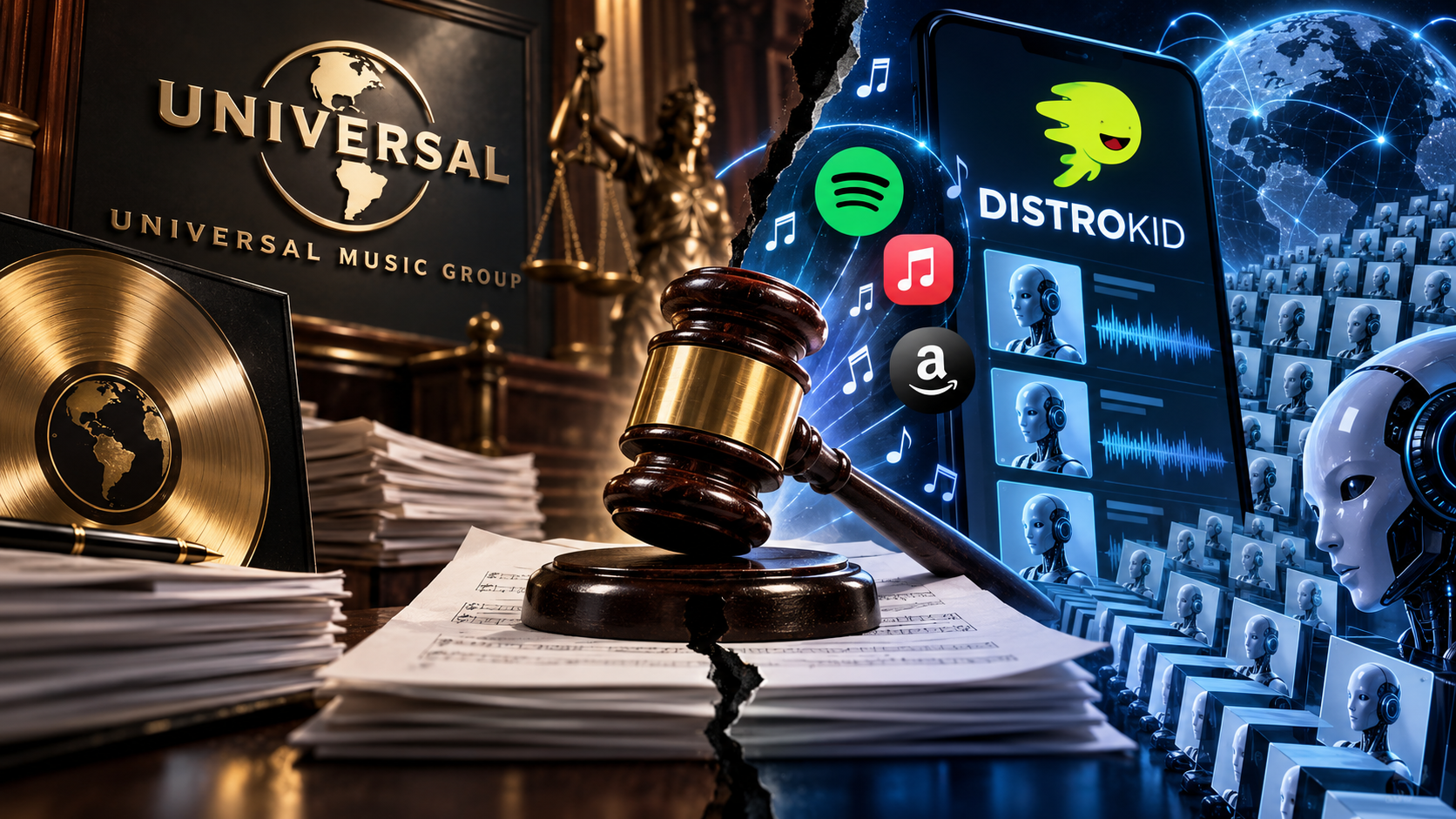
Universal Music Group filed a DistroKid lawsuit Tuesday, accusing the music distributor of flooding streaming platforms with AI-generated music that is passed off as the work of real artists. UMG and its Capitol Records label filed the 52-page complaint in federal court in Delaware.
DistroKid is one of the most popular tools independent artists use to get their music onto Spotify, Apple Music, YouTube and other streaming services. A distributor is the middleman that delivers an artist’s songs to those platforms and collects the royalties when people stream them. Artists who aren’t signed to a label often pay DistroKid a yearly fee to handle that for them. The company is valued at more than $2 billion and moves more music than any other distributor in the world.
UMG says DistroKid markets itself as a distributor for artist-backed releases, but that is not what it has become. According to the complaint, DistroKid is pushing out “AI-generated ‘slop’ that siphons revenue and listeners” away from real artists and the companies that own their music. “Slop” has become a common term for cheap, low-quality content produced in bulk with AI.
UMG is not arguing that AI music should be banned from streaming. The complaint says the case is about AI-generated songs that are not disclosed as AI. According to UMG, DistroKid gives listeners and streaming platforms the false impression that its catalog is made and owned by real human artists.The lawsuit also accuses DistroKid of plain old copyright infringement that has nothing to do with AI. UMG says the company allowed uploads of existing UMG songs that were sped up or remixed without permission. It also says DistroKid kept distributing some recordings even after admitting it did not hold the rights to them.
UMG says DistroKid gets an unfair advantage this way. Labels and other distributors spend a lot of money checking that the music they send out comes from real artists and is legally owned. According to UMG, DistroKid skips that work but is still treated as if it plays by the same rules.
The DistroKid lawsuit lists 1,000 recordings as examples. For each one, UMG is asking for the maximum statutory damages allowed under copyright law, which is $150,000 per song. Statutory damages are amounts set by law that a court can award without the plaintiff having to prove exactly how much money it lost. If the court awarded the maximum on all 1,000 tracks, it would come to $150 million. UMG calls those songs “the tip of the iceberg” and says it expects to find thousands more once the case moves forward.
UMG is also asking the court to stop DistroKid from presenting its catalog as mostly artist-backed releases and to block it from distributing any more of UMG’s copyrighted music.A DistroKid spokesman declined to comment.
The timing is no accident. The day before UMG filed suit, the International Federation of the Phonographic Industry, the global trade group for record companies, launched what it calls a Streaming Integrity Initiative. It is a set of standards meant to help distributors fight streaming fraud. UMG, Sony Music and Warner Music all signed on. DistroKid did not.
Money is at the center of the fight. On major streaming services, most of the revenue from subscriptions and ads goes into one big pool, and artists get paid based on their share of total streams. Every stream that goes to a mass-produced AI track leaves less money for everyone else. That is why labels have grown so aggressive about AI uploads and fake streams.
This is not UMG’s first fight with a distributor that caters to independent artists. In 2024, UMG and other music companies sued Believe and its distributor TuneCore, accusing them of building their business on copyright infringement involving sped-up and remixed songs. The two sides settled that case in April.
For independent artists, the fallout could cut both ways. The industry is pushing distributors toward identity checks and AI detection before a song goes live. Uploading could get slower and come with more hoops, especially for artists who are used to posting a track in a few clicks.
The upside is that less AI clutter in the system means more of the royalty pool stays with the people actually making the music.
Universal Music Group recently signed its own AI deal with ElevenLabs to launch an AI-powered music platform. The label’s position is not against AI itself. Its target is AI music that is hidden or unlicensed and competes with its artists for listeners and royalties.