

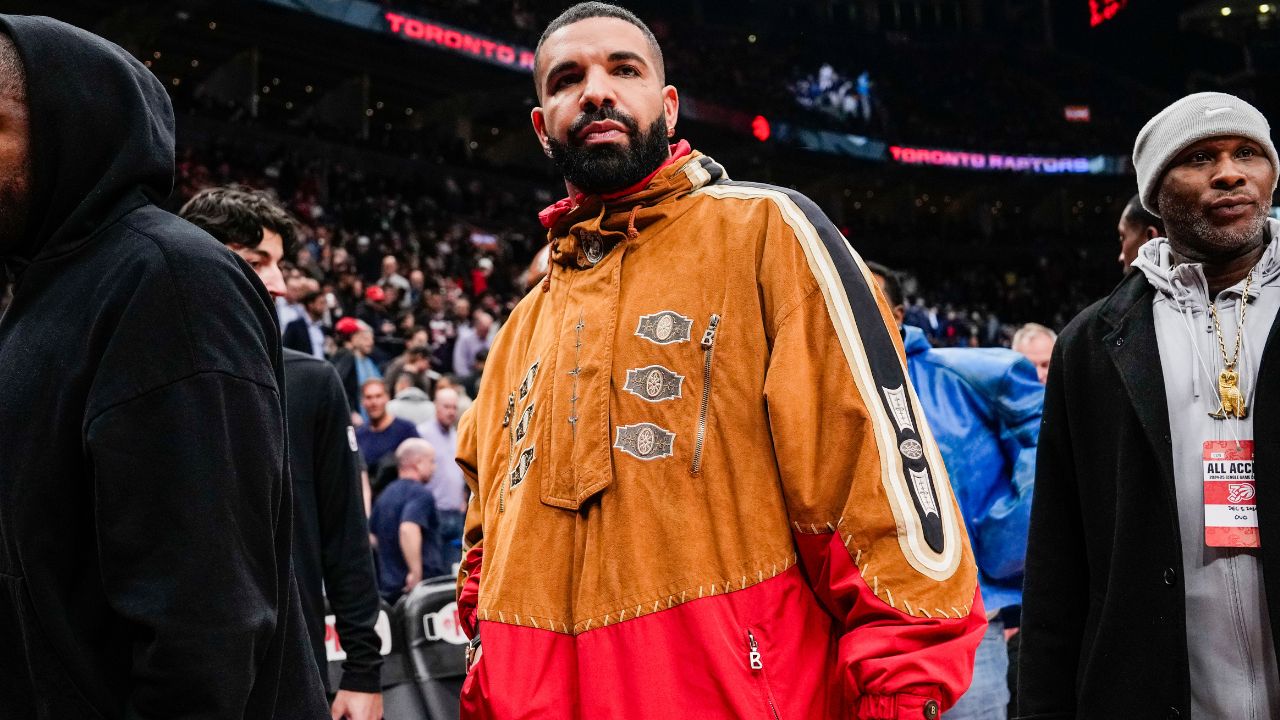
Concordia University in Montreal is preparing to offer a new class centered on Drake’s career, mythology, and industry impact.
The school will offer “Drake: Media, Myth & Manhood” during its Fall 2026 semester. The course will examine Drake’s discography, the rise of OVO, and the larger systems that shape modern hip hop careers. For an artist whose career has been debated through charts, rap beefs, fan loyalty, streaming dominance, and questions of authenticity, the classroom setting gives the conversation a different kind of weight.
The Drake course will live under the broader “Hip-Hop: Past, Present & Future” curriculum, listed as FFAR 256. The class will be led by rapper and professor Yassin “Narcy” Alsalman, a Concordia alumnus who has previously taught university-level courses centered on Kanye West. That detail matters because this is not just a celebrity-themed elective built for buzz. It is part of a larger academic trend where professors are using major music careers to study race, gender, capitalism, branding, media narratives, and power.
A sample syllabus week dated November 12, 2026, is titled “US vs. THEM: Artist vs. Corporation.” The week reportedly looks at label control, stream farms, and lawsuits involving legendary artists and the music industry. That framing positions Drake as more than a hitmaker. It uses his career as a case study for how artists move through systems that can amplify, package, pressure, and profit from them at the same time.
The syllabus looks at the OVO brand and the relationship between artists and the music industry. That opens the door to conversations about how Drake helped turn a Toronto-centered movement into a global identity, how sound becomes regional branding, and how artist-led labels can function as both creative homes and business machines.
Narcy also confirmed the course in his own words, writing, “I’m teaching a class about Drake and OVO this fall (September) at my alma mater Concordia University under the class ‘Title Hip-Hop: Past, Present and Future’.. We have things to discuss, forrrreeeaaaaaalllll yeah.” The quote gives the class a tone that feels fitting for the subject. Drake’s career has always lived at the intersection of scholarship and spectacle, where every lyric, rollout, alliance, and rivalry gets dissected in real time.
The bigger angle is that Drake is not entering the classroom alone. According to The Guardian, Yale University announced a Beyoncé-centered course titled “Beyoncé Makes History: Black Radical Tradition History, Culture, Theory & Politics through Music,” taught by professor Daphne Brooks. The course explores Beyoncé’s work through Black feminist politics, Black liberation politics, performance, and album-making. That places Beyoncé in an academic lineage where her career is studied not just as entertainment, but as cultural production with political and historical meaning.
Taylor Swift has also received the university treatment. New York University’s Clive Davis Institute launched a course focused on Swift’s musical impact and legacy, taught by Rolling Stone journalist Brittany Spanos. Per Teen Vogue, the class examined Swift as a creative music entrepreneur and looked at the writers who influenced her, along with the way her songwriting helped her stay durable in a changing music industry. While Swift’s course came from a different cultural lane, it reflects the same academic shift: pop stardom is now being studied as a business, social, and creative force.
Ye, once known as Kanye West, has been part of that conversation as well. Washington University in St. Louis offered “Politics of Kanye West: Black Genius and Sonic Aesthetics,” taught by Dr. Jeffrey McCune. Time reported that the course used West’s influence in hip hop to explore topics beyond music, including race, gender, sexuality, and culture. That course also showed why polarizing figures often become useful academic subjects. Their careers create friction, and friction gives students something to examine.
That is where the Drake course could become especially interesting. Drake’s career is loaded with contradictions that have powered years of public debate. The Concordia class will look at his catalog, cultural mythology, and the systems surrounding his career. Those themes could easily connect to the way Drake has been praised as one of the defining artists of the streaming era while also facing criticism over genre fluidity, industry power, public feuds, and questions about how male vulnerability is packaged in rap and pop.
For Black music and hip hop studies, the moment is bigger than one rapper. The Drake course signals how far hip hop has traveled from being dismissed by institutions to becoming a subject those same institutions now want to decode. When universities study artists like Drake, Beyoncé, Ye, and Taylor Swift, they are also acknowledging that modern music is one of the clearest ways to study identity, influence, technology, fandom, and power.
Drake’s Concordia class begins in September during the Fall 2026 semester. Whether students arrive as fans, critics, or both, the syllabus suggests they will be asked to look past the memes and chart numbers and into the machinery behind the music. For an artist who has spent years turning public perception into part of the performance, that may be the most fitting assignment of all.
