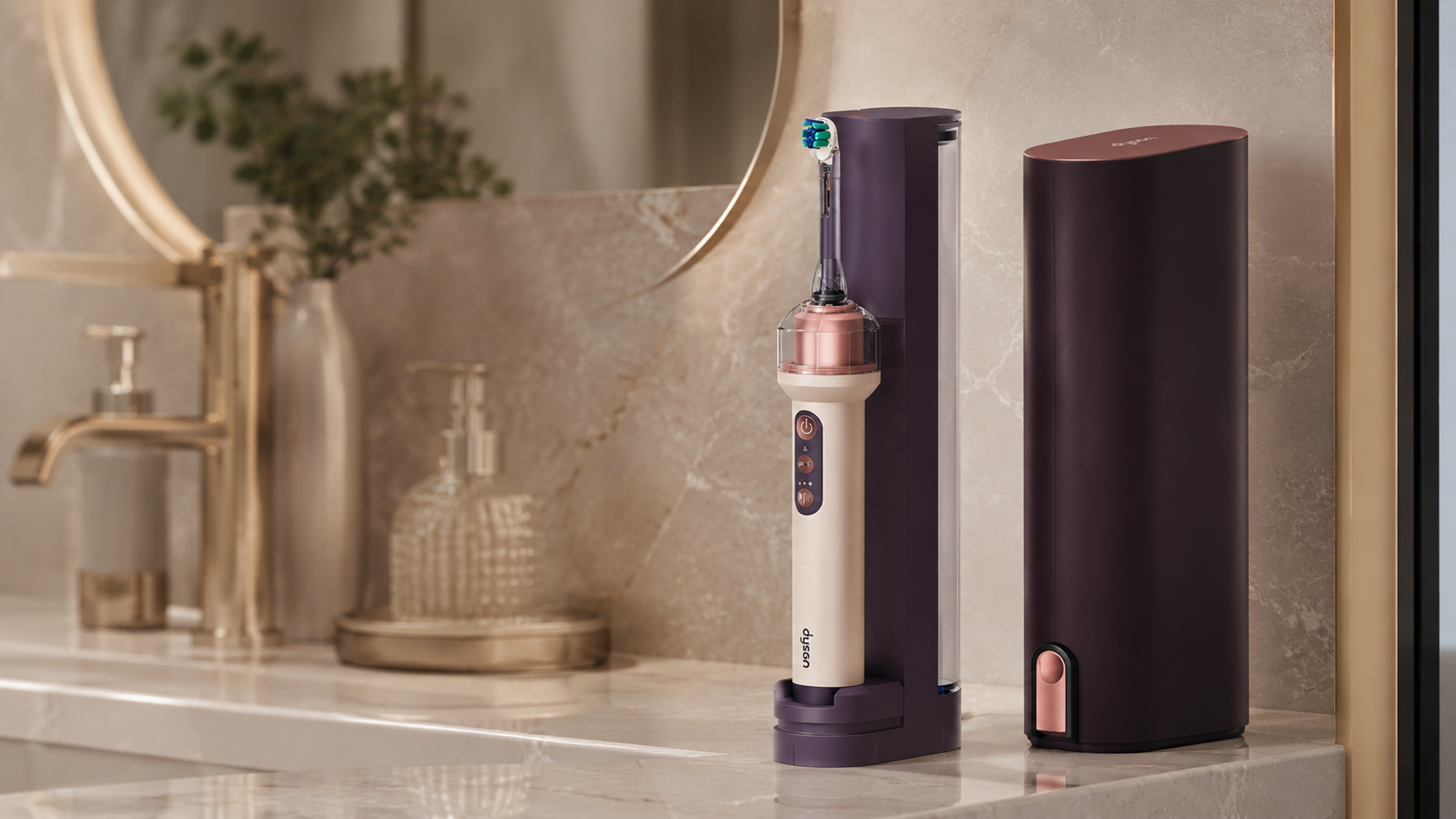
James Dyson stood in Paris this morning and introduced a toothbrush with a camera in it. The Dyson CameraJet costs $499.99. It is on sale as of today, and it comes in blue and pink. Here is what it does. A tiny camera sits just under the brush head and takes 28 images per second while you brush. Software Dyson calls Gap Optical Targeting reads those images, identifies the spaces between your teeth, and within about 100 milliseconds fires a jet of mouthwash into the gap. The camera is 100,000 pixels, which is 0.1 megapixels, far below anything in your phone. That is on purpose. It does not need a clear picture of your molars; it just needs to tell the difference between a tooth and the space next to it, and a sharper lens would add cost without doing that job any better.
The Dyson toothbrush also streams live video from inside your mouth to the MyDyson app, where you can watch your own teeth in real time, see a map of where you have actually brushed, and get feedback on the spots you keep missing. It connects over Wi-Fi and Bluetooth.
The mouthwash sits in a 12.5 milliliter tank, enough for one session. Dyson calls it an anti-gravity tank. Regular water flossers pull liquid up through a straw, which sucks in air and loses pressure when you tilt the device, and tilting is exactly what you do when you reach the back of your teeth. Dyson built a diaphragm pump and a pressure chamber to keep the jet firing at any angle so it does not shoot blanks. The dock refills the tank in about three seconds while charging.
Dyson says the CameraJet removes 69 percent more plaque from hard-to-reach areas than premium electric toothbrushes. Read the fine print on that one. The testing was Dyson’s own, run in its labs using a proxy plaque the company developed over five years with the dentistry faculty at the National University of Singapore. It was not a clinical trial with actual patients, so the number describes how the device performed against a stand-in for plaque under conditions Dyson set.
Then there is the obvious question, which is that this is an internet-connected camera in your bathroom. Dyson says the images are not stored, not shared, and are processed on the device itself. That is the company telling you its own policy, not an outside auditor confirming it, and the whole product exists to look inside your body.
The company says the CameraJet took six years to develop. James Dyson’s stated reasoning was simple enough. People do not floss as much as they should, so build a brush that flosses while you brush.David Phelan at Forbes used one for over a week and came back with the detail that is going to follow this product around. Dyson recommends you smile while you brush so the camera can see what it is doing. Smiling while a jet sprays mouthwash into your teeth means toothpaste goes everywhere. His advice was not to wear your good shirt while brushing, and to expect some cleanup after. He said the jet is not painful and is actually kind of pleasant, but you definitely feel it. You can also turn the AutoJet off and fire it manually with a button.
At $499.99, it is about $100 more than the Philips Sonicare Prestige 9900 and the Oral-B iO Series 10, the two products it is really competing with. Smart toothbrushes already exist, and Oral-B and Philips both sell models that track pressure, coverage, and brushing time through an app. Dyson’s claim is that the camera makes this the first one that can actually find the gaps rather than guess at them. The company is not trying to undercut anybody; it is trying to sit above the premium tier entirely, which is the same move it made with hair dryers and headphones.
Dyson is also working on a low-foaming mouthrinse and an SLS-free toothpaste to go with it. It is available now through Dyson’s website and Dyson Demo Stores.
Short Link: https://balleralert.com/l6uy