

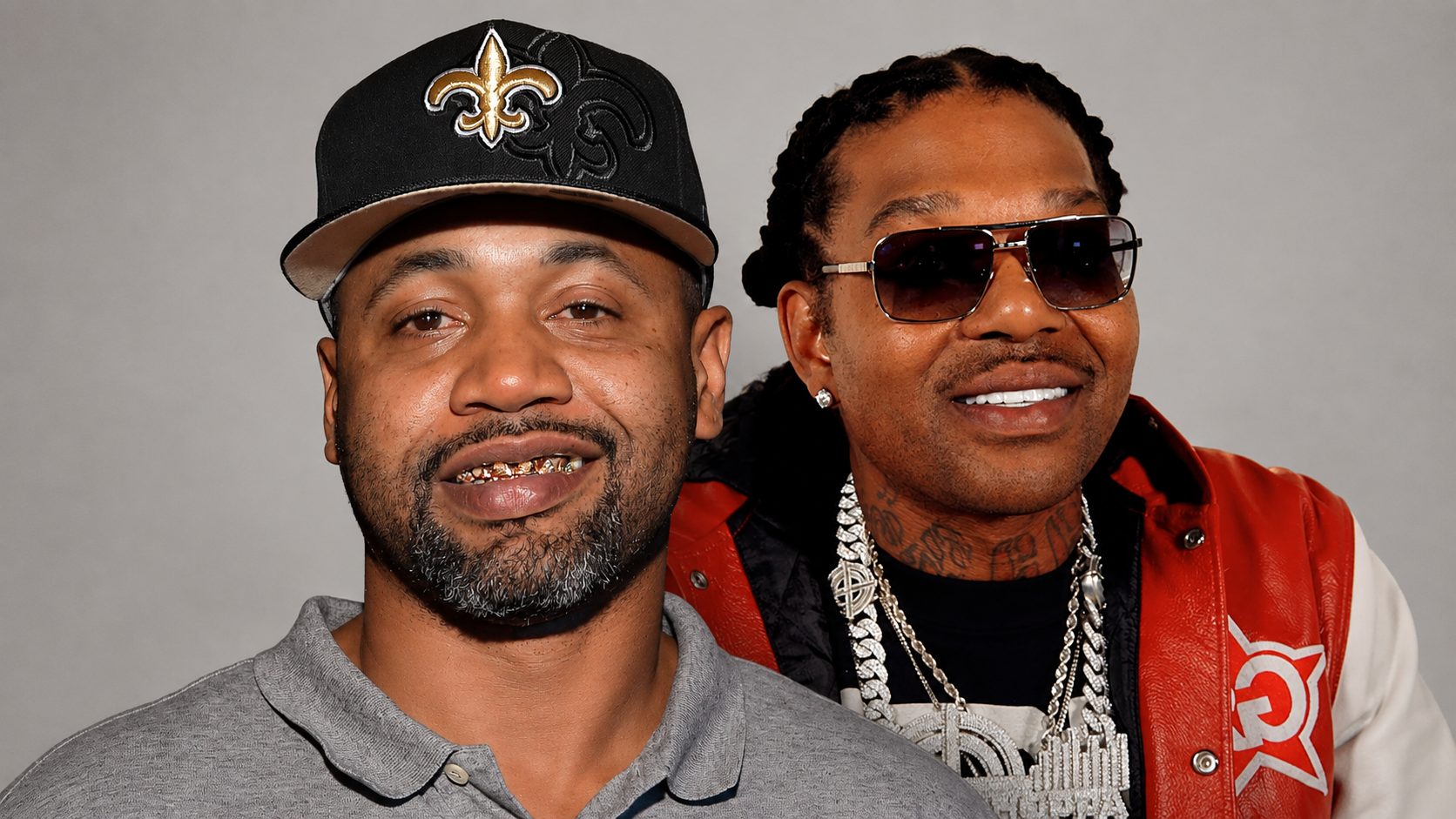
Juvenile and B.G. never expected the look they created while representing New Orleans to travel across the world three decades later. During an exclusive conversation with Baller Alert, the Hot Boys veterans reacted to seeing elements of the music, fashion, and video style their crew helped popularize appearing within K Pop, opening a bigger conversation about where influence ends and cultural appropriation begins.
Video
The Hot Boys’ influence came from a period when Juvenile, B.G., Turk, and Lil Wayne were helping turn Cash Money Records into a national force. Cash Money’s 1990s breakthrough took the crew’s New Orleans identity nationwide, with videos showcasing cars, jewelry, local surroundings, oversized fashion, and the group simply living the lifestyle they were rapping about.When Baller Alert asked whether those visuals were carefully planned or simply a reflection of who they were, Juvenile said there was no grand strategy behind the Hot Boys’ influence.
“We, I don’t think we had a strategy. Like he said, we was caught up in the moment, man; we was kind of like enjoying ourselves. The fashion and everything that we’ve done, kind of like people followed behind us…We were so naive to the fact of knowing that people was gonna do everything we did,” he explained. “This is something that I don’t think anybody could predict, and it’s truly a blessing to be standing here seeing. Seeing just what you say, I mean, Korean pop like K-pop? That’s crazy to me.”
That international connection is not entirely surprising when looking at the development of Korean pop music. Research published by the Archives of Design Research found that Korean music companies increasingly incorporated American hip hop production and imagery during the 1990s and early 2000s. The study specifically points to Korean duo Jinusean’s 1999 “Famillenium” video, which used a fisheye lens, money, flashy clothing, and other imagery associated with American hip hop videos of that period.
That does not establish Jinusean or later K Pop artists as direct Hot Boys imitators. It does, however, place the Hot Boys’ influence inside a much larger era of Black American hip hop aesthetics that traveled globally through television, music videos, fashion, and eventually the internet.
There is another fascinating connection through B.G. himself. His 1999 hit “Bling Bling,” featuring members of the Cash Money family, helped push the phrase into mainstream culture. Nearly two decades later, YG Entertainment group iKON released its own song called “BLING BLING.” iKON’s record was a hip-hop track built around brass and 808 drums. There is no verified public statement connecting iKON’s song directly to B.G., but the shared language shows just how globally familiar terminology born from Cash Money’s era became.
B.G. told Baller Alert that what people are still responding to was authenticity rather than something manufactured for cameras.
“I think it was just us being true to ourselves, man, you know what I’m saying? Just being authentic, man, and, and we always believed that authenticity and originality was the key, right? You know what I’m saying, and, and we always been authentic and, and just original.”
The appropriation question is more complicated. K Pop’s relationship with Black culture has been debated for years, particularly when hip-hop sounds, hairstyles, language, clothing, and imagery are used without context or acknowledgment. P1Harmony leader Keeho said artists have a responsibility to think carefully about cultural sensitivity in their styling, music, and language. Academic research has similarly described K Pop as a hybrid form that has repeatedly drawn from Black American music while generating ongoing debates around appreciation, adaptation, and appropriation.
For Juvenile and B.G., though, seeing Hot Boys’ influence reach Korean pop culture appears to register first as something neither could have imagined while making music in New Orleans.
