

Enes Kanter Freedom filed a federal lawsuit on Thursday over his removal from a Chicago Sky game last month, naming three defendants: Chicago Women’s Basketball Operations, the company that operates the Sky, the Metropolitan Pier and Exposition Authority, and the City of Chicago. The complaint runs 15 pages, was filed in the United States District Court for the Northern District of Illinois, and asks for both an injunction and damages. He has demanded a jury trial.
An injunction is a court order requiring someone to stop doing something or to undo something they have already done. In this case, it would most likely mean an order lifting the ban that currently keeps him out of the arena.
Announcing the filing on X, he said he was taking legal action over an ejection that happened while he was peacefully exercising his First Amendment rights, and that his shirt managed to define a woman when the league could not. He wrote that there were no threats and no violence, and said he would not be intimidated or silenced.
🚨SEE YOU IN COURT!!!
Just filed a federal complaint.
I’m taking legal action over my ejection from the @chicagosky game while peacefully exercising my First Amendment rights.
My T-shirt did what the whole @WNBA apparently couldn’t: define a woman.
No threats. No violence.… pic.twitter.com/LqQO6x4z0X
— Enes Kanter FREEDOM (@EnesFreedom) September 3, 2026
The complaint opens by stating that Enes Kanter Freedom believes the integrity of women-only sports must be protected and has said so repeatedly in public. It then states that he has self-identified as a player eligible to play in the WNBA, on the grounds that such a declaration is all the league’s rules and its collective bargaining agreement require. He is a retired men’s professional player who spent 11 seasons in the NBA, and he has been making that declaration publicly for several weeks. The WNBA has described those declarations, his and those of at least one other former men’s player, as publicity stunts it does not intend to give attention to. The league’s collective bargaining agreement states that only players who are women are eligible, and there are currently no transgender players in the WNBA or entering it.
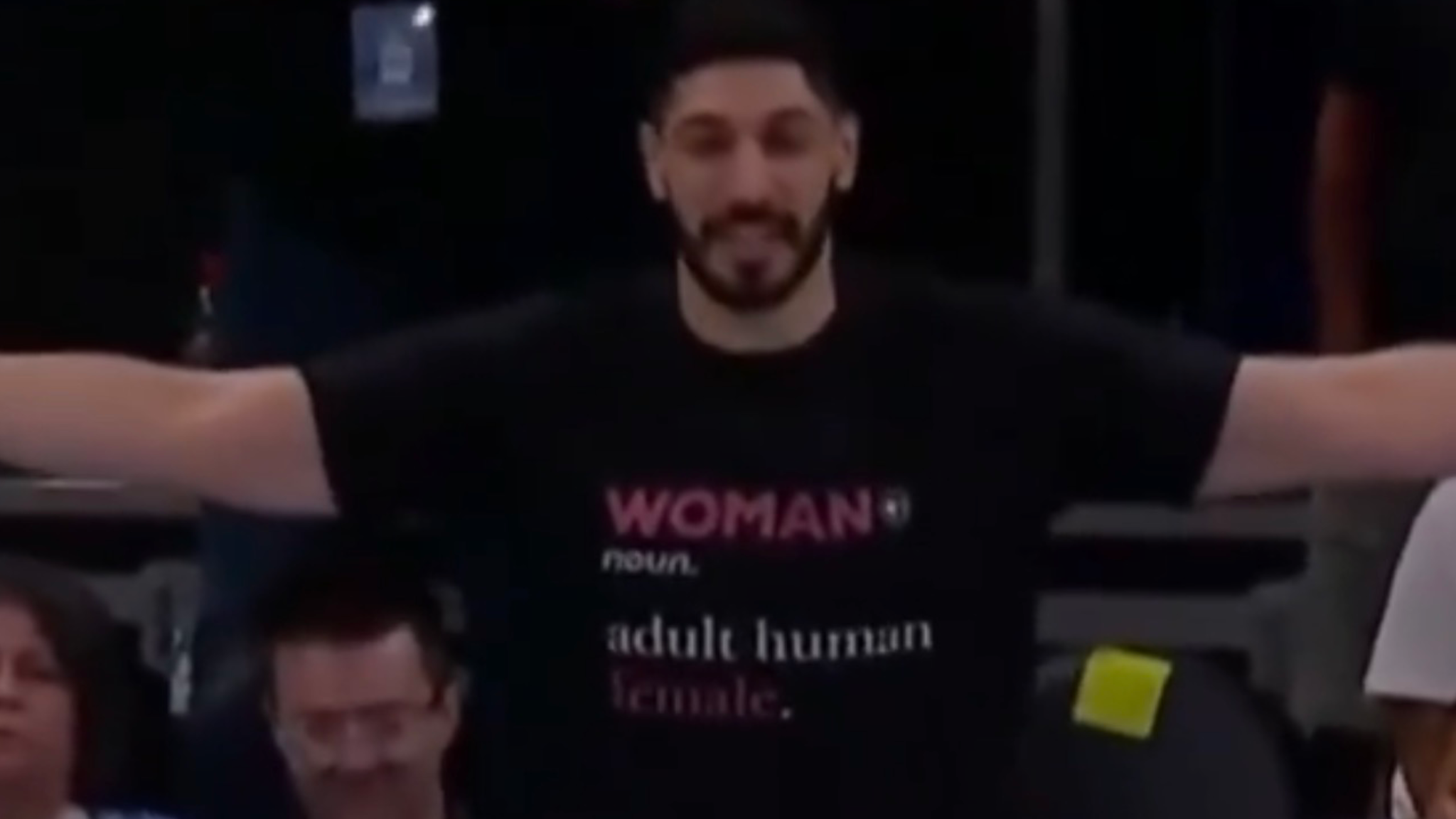
The incident behind the suit happened on August 23 at Wintrust Arena, where the Indiana Fever beat the Sky 113 to 90. He sat courtside in a black shirt reading “WOMAN noun. adult human female.” During a timeout late in the third quarter, Sky guard Natasha Cloud walked toward him and began shouting and pointing. He stood with his arms outstretched and took several steps toward the court before security stopped him and walked him out. Teammates and security held Cloud back. She spoke with team and league security after the game but did not talk to reporters, and posted on Threads that night that transgender people will always be protected by her.
Two days later, Sky principal owner Michael Alter told Chicago media that the team had banned him from the arena. Alter said he had shown he had the “potential to be a threat,” and that he would not be welcome back until he could demonstrate he would follow the building’s rules. Alter said he spoke with people seated near him who confirmed the exchange started on his side, characterizing it as basketball trash talk that was pointed enough to engage Cloud and, in Alter’s view, to provoke her. The Chicago Tribune reported that he had not been invited to the game, that his ticket was purchased under a different name, and that his agent texted Sky’s general manager Jeff Pagliocca to say he was coming. Alter said the two men had not spoken in three or four years.
His own account differed. Speaking to Fox News the following night, he said he came out of love for basketball and to support Fever guard Sophie Cunningham, who told ESPN in July that the league should bar biological males from competing. The Sky responded publicly that parts of his version were misleading. A fan seated in his row, Trista Smith of Boise, said afterward that she only saw him cheering and thought the removal was unfair.
The legal question is why the city and a state agency are defendants alongside a private basketball team. The First Amendment restricts what the government can do, not what a private company can do, so a claim that a private team violated someone’s free speech rights is difficult to sustain on its own. The Metropolitan Pier and Exposition Authority is the public body that runs the McCormick Place complex, which includes Wintrust Arena. Naming it and the city puts a government actor in the case, and whether the security decision that night counts as government action is likely to be the fight that decides how far this goes.
None of the defendants had responded to the complaint as of Thursday. Filing a lawsuit is not a finding of anything, and the claims in it are one side’s account until the other side answers.
