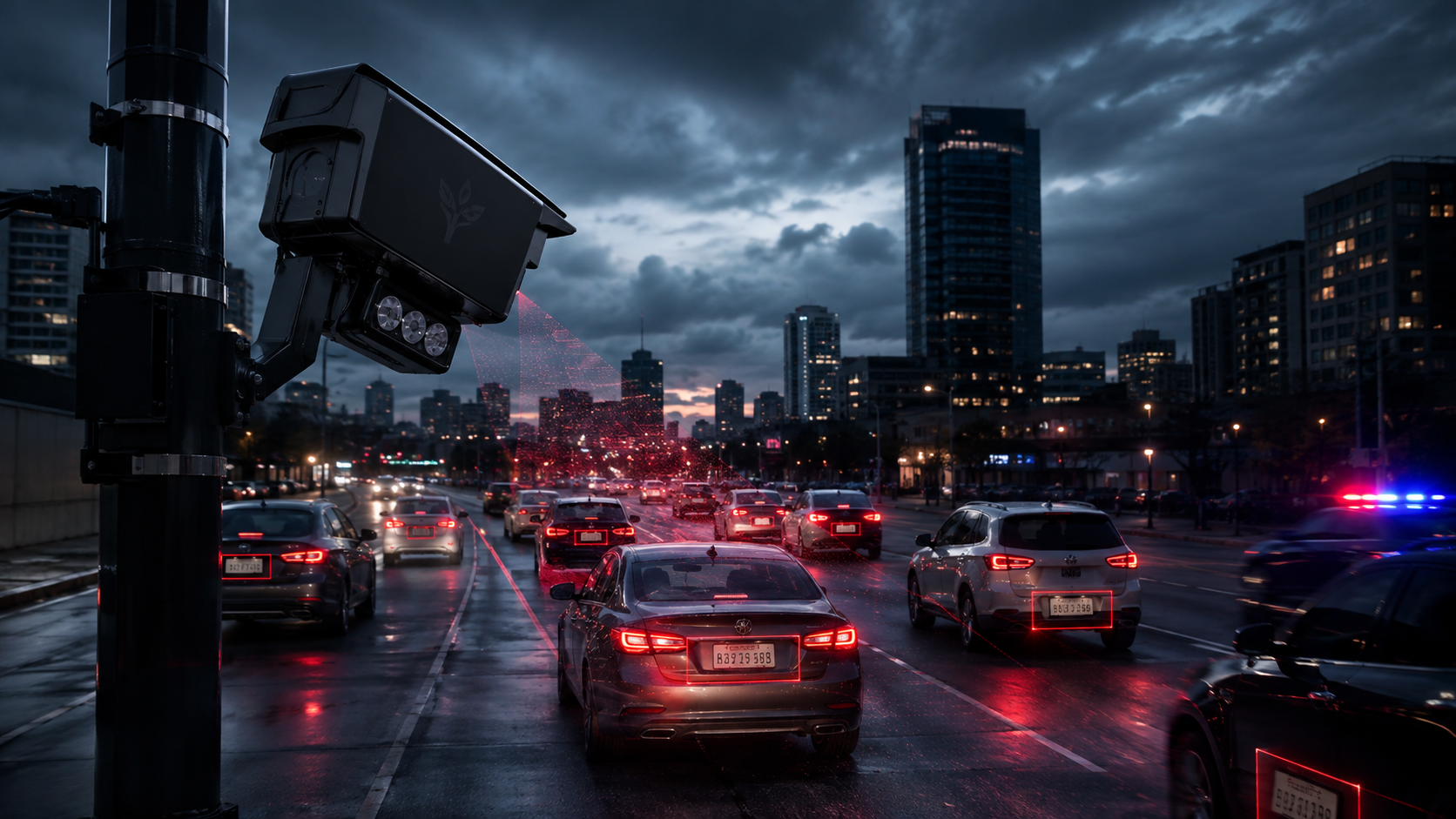
What started as a local fight over roadside surveillance is quickly becoming a national political problem for Flock Safety as more states question whether its crime-fighting technology gives police too much power to track ordinary people. Florida and Texas have moved to restrict the cameras in different ways, while Pennsylvania officials are now debating limits that range from stronger privacy rules to an outright ban. The growing push is turning Flock cameras into a rare bipartisan privacy issue.
Flock cameras are automated license plate readers that photograph vehicles traveling past fixed locations and make the information searchable for authorized users. According to Flock Safety, its systems can collect license plate text, the date and time of a sighting, camera location, and basic vehicle characteristics. The company says customers control their data and that Flock does not sell customer information. Flock has also said its network includes more than 120,000 cameras nationwide, giving the system a reach that has become central to the privacy debate.
Florida delivered one of the strongest state responses so far. According to an August 31 Florida Department of Transportation memorandum, the agency revoked approvals for automated license plate readers placed by local law enforcement within state highway rights-of-way. Officials ordered permitted devices removed within 30 days and said future placement requests would no longer be approved. The memo cited “concerning reports of misuse, data privacy concerns, and surveillance schemes.”
The move does not amount to a complete statewide prohibition on every Flock camera in Florida, since local agencies can operate systems outside the state highway locations covered by the transportation department’s authority. Still, the order came days after Ron DeSantis called the growth of license plate readers “out of control” and raised concerns about Florida becoming a surveillance state. According to local reporting, some Florida agencies have responded by abandoning the technology entirely, while others plan to remove only the cameras affected by the state order.
Texas is taking a different approach by cutting off state money. According to the Texas Tribune, Greg Abbott ordered state agencies to stop funding Flock cameras as scrutiny of the network intensified. A separate Tribune investigation found that a state vehicle crime authority had devoted at least $30 million toward expanding Flock surveillance and had helped state and local agencies install at least 3,200 cameras since 2023. The action stops state funding rather than automatically removing every locally operated camera.
The Texas backlash intensified after an alleged case of police misuse in Lufkin. According to Angelina County court records reported by The 936, police officer Zachary Anthony Klein was indicted on 100 counts of misuse of official information. The allegations involve repeated unauthorized use of the license plate reader system. Klein has been accused, not convicted, and the criminal case remains subject to the court process. Lufkin police said the department suspended use of its Flock cameras while investigations continued.
That case is part of a much wider concern surrounding Flock cameras: the technology can become a personal tracking tool when authorized access is abused. An investigation by The Washington Post reported in August that at least 69 police officials had been accused, charged, or convicted of improperly using Flock or other license plate reader systems. The Post found cases involving officers accused of searching for spouses, former partners and personal acquaintances, sometimes repeatedly, while several departments acknowledged they had not been routinely auditing searches.
Accuracy has created another layer of controversy. The Institute for Justice has documented cases in which automated license plate reader errors were followed by traffic stops, detentions and arrests involving innocent motorists. In one February 2026 incident cited by the organization, a Flock camera in Sherwood, Arkansas, allegedly misread a vehicle plate and officers detained an innocent couple at gunpoint before determining there had been an error. The Institute for Justice has since compiled more than 100 reported incidents involving various forms of license plate reader abuse, errors, or unauthorized use.
Privacy advocates argue the concern extends beyond individual misconduct because a searchable camera network can reveal patterns of movement involving people who are not suspected of crimes. The ACLU has warned that widespread automated license plate surveillance can expose where people travel and create risks involving immigration enforcement, reproductive health visits, political activity, and other sensitive movements. Flock, meanwhile, says customers control sharing decisions and that the company does not sell customer data.
Flock has responded to the criticism with new safeguards. According to a company announcement from Flock Safety, the company changed its recommended and default retention period for new law enforcement customers from 30 days to seven days and is moving to require stronger auditing, case codes for searches, proactive account lockouts, and multi-factor authentication. Flock said the changes are intended to detect unusual activity and give agencies greater control over access and sharing. The ACLU responded that some changes were improvements but argued they did not eliminate the broader civil liberties concerns created by large-scale surveillance.
The constitutional issue is also far from settled. In January, a federal judge in Virginia ruled that Norfolk’s particular automated license plate reader system did not violate the Fourth Amendment under the facts before the court. According to the federal court opinion, the system did not capture enough information to reconstruct the whole of the plaintiffs’ movements. The Institute for Justice, which represents the challengers, announced that it would appeal, arguing that warrantless monitoring through networked cameras raises serious constitutional questions.
Now Pennsylvania could become another major battleground. Republican state Sen. Dan Laughlin has announced proposed legislation that would prohibit Flock and substantially similar networked surveillance systems, according to the Pennsylvania Senate. Democratic Sens. Nick Pisciottano and Patty Kim are pursuing a different bill that would establish access controls, audit requirements, retention standards and penalties for unauthorized use. Pennsylvania Gov. Josh Shapiro has gone further, publicly saying he would welcome bipartisan legislation banning the cameras statewide.
The fight over Flock cameras is ultimately becoming less about whether license plate readers can help police solve crimes and more about how much routine surveillance Americans should accept to receive that benefit. Flock points to missing person cases, stolen vehicle recoveries and criminal investigations as evidence that the technology can serve public safety, while critics argue that those successes do not justify building a system capable of recording the movements of millions of people who are not suspected of wrongdoing. With Florida removing cameras from state highways, Texas shutting off state funding, and Pennsylvania lawmakers considering new restrictions, pressure is growing for governments to decide where crime-fighting technology ends and mass surveillance begins.