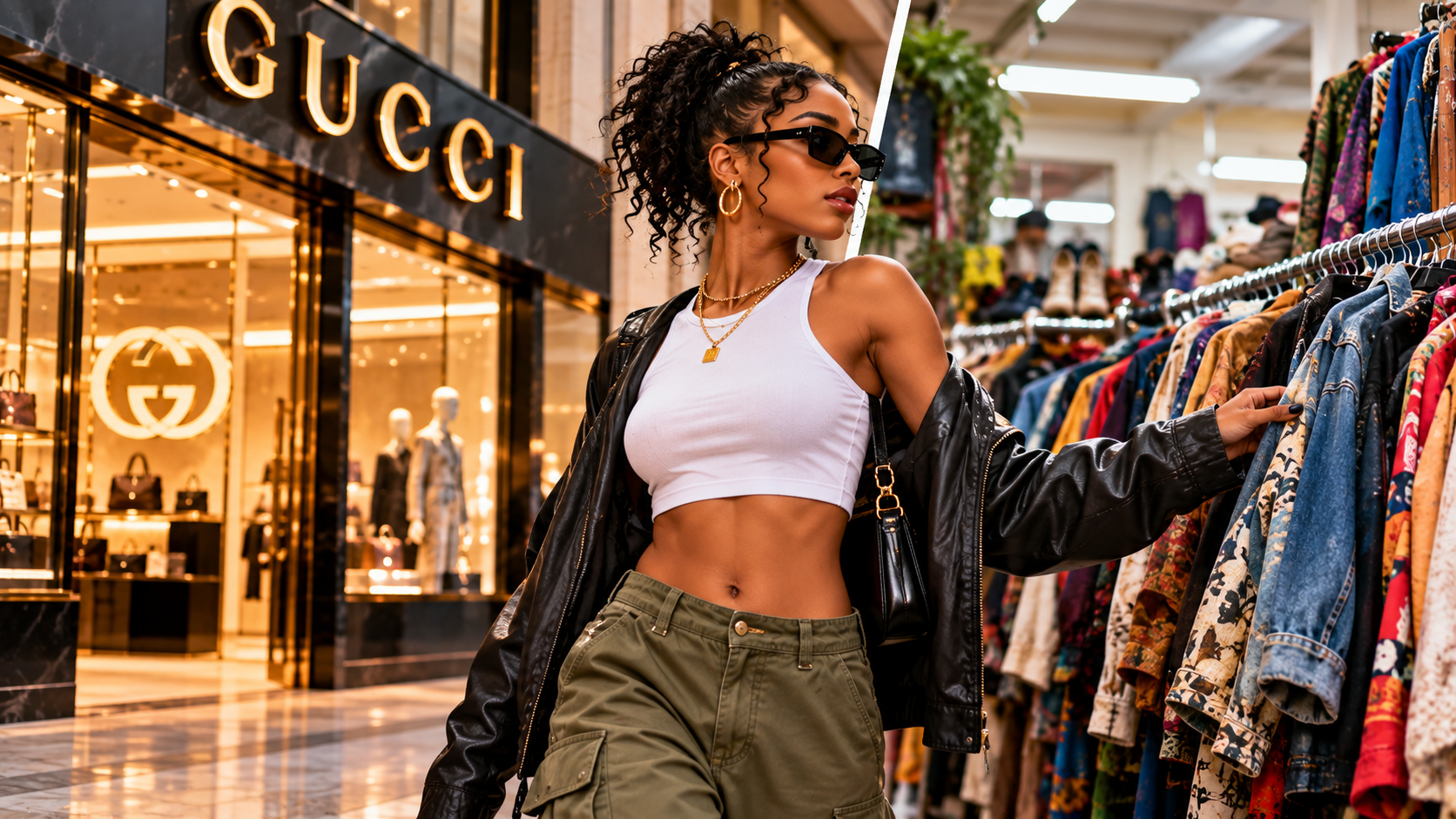
Luxury fashion used to have young shoppers in a chokehold, but lately, Gen Z is giving designer price tags a serious side eye.
For years, the fashion flex was obvious. The logo bag, the new sneakers, the fresh drop, the hard-to-get jacket, the designer belt, the “you know what this cost” outfit. But younger shoppers are moving differently now. They still care about style, but many are no longer convinced that looking fly has to mean paying full price for luxury. Thrifted, vintage, secondhand, upcycled, and resale pieces are not being treated like backup plans anymore. They are becoming the main character.
Part of this shift is money. Luxury prices have climbed so high that even fashion lovers are asking whether the bag is worth the bill. Vogue Business recently reported that several Gen Z consumers said they view spending large amounts on luxury as “distasteful” and do not see new luxury goods as worth the cost. The same report noted that some runway trends are now leaning into imperfect, worn, thrifted-looking style instead of the glossy rich girl uniform luxury has pushed for years.
That is a big deal because Gen Z is not broke in influence. Vogue Business cited NielsenIQ’s projection that Gen Z could reach $12 trillion in global spending power by 2030. So if young shoppers are cooling on traditional luxury, brands cannot just shrug it off. They are not only losing a sale. They may be losing cultural relevance.
The resale numbers explain why thrifted fashion is rising. ThredUp’s 2026 Resale Report found that secondhand is outpacing new clothing 2 to 1 and that Gen Z and Millennials are expected to drive 70% of resale market growth. That means this is not just a few fashionable people digging through racks for fun. It is a full shopping shift.
And let’s be real, TikTok has been a major reason thrifting got its glow-up. The app did not invent secondhand shopping, but it helped make it look fun, teachable, and stylish. TikTok’s own newsroom has described the #thriftok community as a space full of sustainable fashion hacks, tips on how to find deals, upcycling ideas, and DIY thrift projects. That matters because a lot of people do not know how to thrift until someone shows them what to look for, how to style it, what sections to check first, and how to tell the difference between a hidden gem and a dusty regret.
TikTok turned the thrift store into content. One creator finds a leather jacket for $12. Another shows how to turn oversized men’s trousers into a whole look. Someone else explains how to check seams, tags, fabric, and brand labels. Suddenly, thrifting is not just shopping. It is a hunt, a challenge, a styling class, a budget hack, and a personality all in one.
The platform has also made secondhand style feel less intimidating. Instead of walking into a thrift store overwhelmed by racks, creators break down the process. They show viewers how to scan sections fast, how to shop outside their gendered size area, how to build outfits from one statement piece, how to thrift workwear, how to thrift for vacations, and how to spot quality fabric. Vogue Business’ TikTok Trend Tracker noted that #vintagefashion remains strong on the app, with hundreds of thousands of users sharing retro finds, secondhand gems, and tips and tricks of the thrifting trade.
Black creators have been part of that style education, too. Who What Wear highlighted Hodan Yousuf among Black TikTokers to follow in fashion and beauty, noting that she takes thrifted fashion and androgynous style “to a whole new level.” Vogue also profiled Yousuf’s style, reporting that her wardrobe was “90 percent thrifted” and centered on power blazers, men’s ties, big shoulder pads, and expressive styling.
Lexson Millington is another creator worth mentioning in the Black thrift and vintage conversation. Dazed described the Toronto-based TikToker as a creator spreading Black Boy Joy through 70s-inspired style, thrifted fashion, and frequent thrifting adventures. In the interview, Millington said, “So I literally thrift all my clothes now; my closet is probably either all women’s thrift or gifts from people.”
@lexsonator Replying to @TOG.GALLERY ♬ original sound – Lexson Millington
Then there are thrift personalities like Iesha Gilchrist, the creator behind ThriftNTell, who built a following around secondhand styling, thrift flips, affordable fashion, and teaching people how to build a wardrobe without running straight to fast fashion. Society 18 notes that Gilchrist’s digital presence started with her passion for thrifting, style hacks, and affordable fashion, with her TikTok audience listed at 600,000.
@ieshathegr8 Still #thrifting ♬ original sound – DJMAYBACHZ
What makes this shift so interesting is that thrifted fashion gives young shoppers something luxury often cannot: individuality. A designer bag can signal money, but a thrifted outfit can signal taste. Anybody with enough cash can buy the same new season piece. It takes a sharper eye to build a fire look from a $9 blazer, vintage boots, a random silk scarf, and jeans that nobody else has.
Still, thrift culture is not perfect. As secondhand fashion has gotten popular, prices have gone up in some places. The Guardian reported that secondhand fashion has become more expensive, with thrift stores and resale platforms paying closer attention to labels, trends, and online resale values. That means the same social media hype helping people discover thrifting can also make the good finds harder and pricier to access.
But even with that complication, the larger movement is clear. Young shoppers are questioning whether luxury is always worth it. They are mixing high and low. They are choosing pieces with history. They are learning from TikTok. They are using thrifted fashion to save money, stand out, reject waste, and create looks that feel more personal than another logo-heavy outfit.
The bottom line is simple: luxury is not dead, but its grip is loosening. For Gen Z, style is becoming less about proving you can afford the newest thing and more about proving you know how to make anything look expensive. And right now, the thrift rack is eating.