

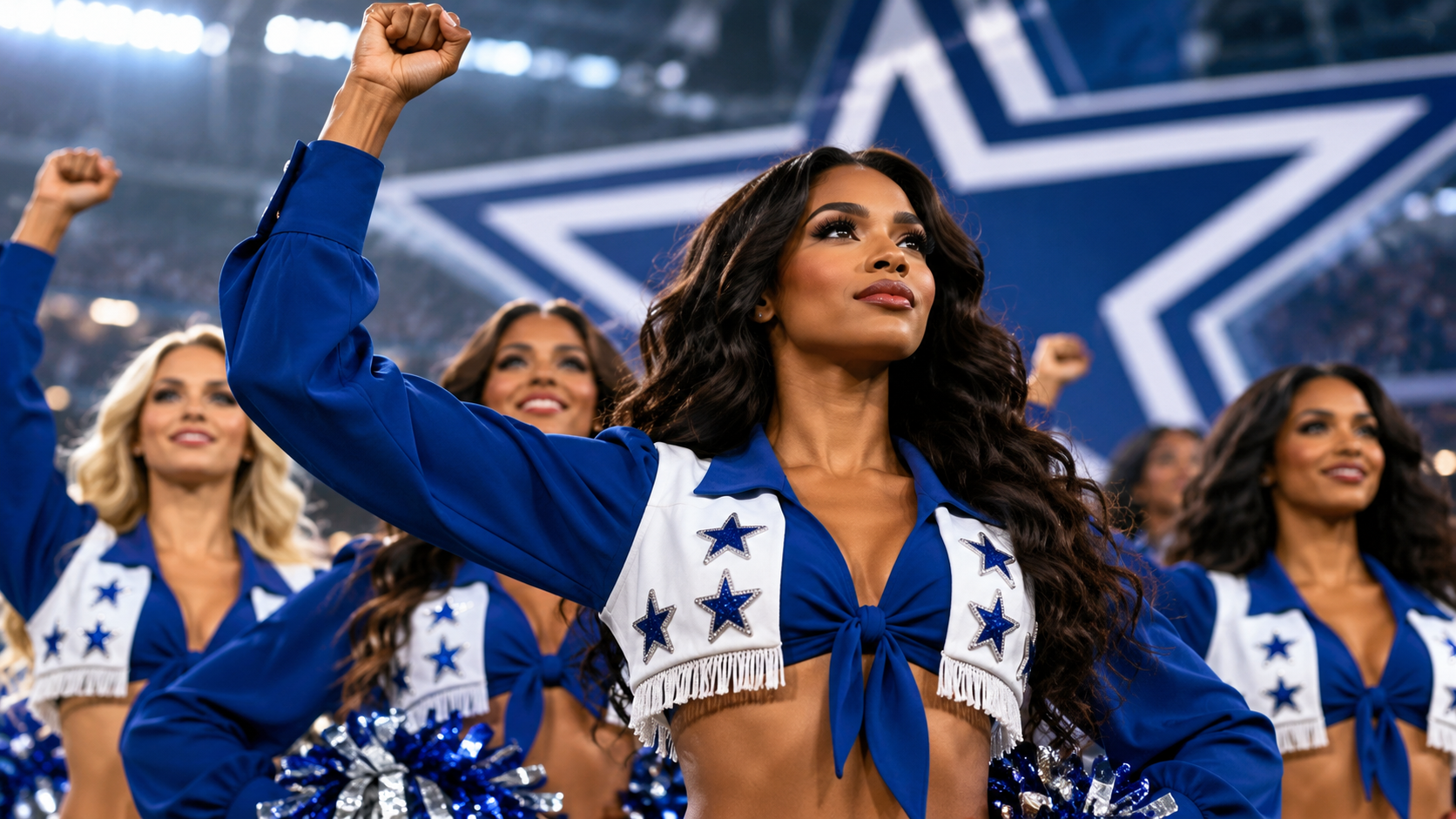
The Dallas Cowboys Cheerleaders are making a major power move, and this time, the victory isn’t happening on the football field. After years of fighting for better pay and recognition, the famous squad has officially formed a union, giving its members a stronger voice in how they’re compensated, treated, and protected while representing one of the NFL’s biggest franchises.
On Friday, October 23, 2026, the Dallas Cowboys organization announced it had voluntarily recognized the newly established Dallas Cowboys Cheerleaders Association (DCCA) as the squad’s collective bargaining representative. The decision marks a significant milestone for professional cheerleading, an industry where performers have historically faced criticism over low wages, demanding schedules, and limited benefits.
The announcement followed “meaningful discussion” between the organization and the association. Both sides are now preparing to negotiate a formal labor agreement that could reshape employment conditions for the team’s cheerleaders.
“The Dallas Cowboys Cheerleaders are an esteemed part of the Cowboys organization, deeply respected for their talent and dedication they exhibit,” the two groups said in their joint announcement.
The squad currently has 36 active members, although the exact number who will fall under the new bargaining agreement has not been publicly confirmed.
For decades, making the Dallas Cowboys Cheerleaders has been considered one of the most prestigious opportunities in professional dance. Their signature uniforms, synchronized performances, and international recognition have helped turn the squad into a brand of its own. However, the glamorous image hasn’t always matched the financial realities experienced by the women wearing those famous blue and white uniforms.
The team’s compensation history tells a much different story.
During the 1990s, some Dallas Cowboys Cheerleaders reportedly earned as little as $15 per game. Even as the franchise expanded into a multibillion-dollar sports empire, questions continued surrounding how much its sideline performers were actually taking home.
Those concerns became impossible to ignore in 2018 when former cheerleader Erica Wilkins filed a lawsuit accusing the Cowboys of unfair compensation practices. Wilkins claimed she earned less than minimum wage and was paid significantly less than the team’s male mascot, Rowdy.
The dispute ended in a 2019 settlement, which helped increase the cheerleaders’ game-day compensation from $200 to $400. Still, the broader conversation about fair wages was far from over.
The issue gained national attention through Netflix’s “America’s Sweethearts: Dallas Cowboys Cheerleaders,” which gave viewers an inside look at the demanding audition process, intense rehearsals, physical expectations, and financial pressures facing squad members.
While the series showcased the excitement of making the team, it also revealed how several women maintained additional jobs while balancing their cheerleading responsibilities.
In 2025, the squad finally celebrated a major financial breakthrough when members revealed they had secured a 400% pay increase.
Former cheerleader Jada McLean previously disclosed that she earned $15 an hour and $500 per appearance during the 2024 season. Following the raise, some veteran cheerleaders were expected to make more than $75 per hour.
However, an important distinction remained: a higher hourly rate didn’t automatically mean a full-time salary. The cheerleaders’ earnings still depended on their assignments, scheduled hours, and appearances.
Even more concerning, their improved compensation agreement still did not include employer-provided health insurance, despite the physical demands of professional dancing. Members did have access to team medical professionals, but that was not the same as comprehensive insurance coverage.
That’s where the newly recognized union becomes particularly important.
Instead of individual cheerleaders having to raise concerns or negotiate employment terms on their own, the association can now bargain collectively on behalf of the workers it represents.
That means the squad could push for more than just bigger paychecks. Health insurance, injury protections, rehearsal compensation, paid leave, scheduling requirements, and workplace safety could all become subjects of contract negotiations.
Under federal labor law, employers and recognized unions generally must negotiate in good faith over wages, hours, benefits, and other employment conditions. Neither side is required to accept every proposal, but the Cowboys can no longer treat collective bargaining as an optional conversation.
For performers who spend hours rehearsing physically demanding routines, that distinction matters.
Dance-related injuries can create medical expenses, missed work, and financial uncertainty. A formal labor agreement could establish clearer expectations surrounding injury treatment, compensation for required activities, and access to benefits.
It could also help protect future squad members from having to start the same compensation battles all over again.
And that’s another major piece of this announcement.
The Dallas Cowboys Cheerleaders aren’t just an entertainment attraction at NFL games. They participate in promotional appearances, represent the franchise at public events, and contribute to an internationally recognized brand.
Their work extends well beyond the few minutes fans see them performing on television.
Having a union creates an opportunity to address how that additional labor is recognized and compensated, including appearances, rehearsals, and other required responsibilities.
The potential impact also stretches beyond Dallas.
Professional cheerleading has long been dominated by women, many of whom enter the industry knowing that limited compensation and extensive personal commitments are part of the job.
Other NFL cheerleading squads have challenged those conditions through lawsuits and organizing efforts, but union representation has remained unusual.
The Buffalo Bills’ former cheerleading squad, known as the Buffalo Jills, pursued union representation during the 1990s. That effort was short-lived, and the squad eventually disbanded in 2014. The Cowboys’ move now raises the possibility of another major shift in how professional cheerleaders organize and negotiate.
If Dallas successfully negotiates a meaningful collective bargaining agreement, performers on other NFL teams could use that contract as an example when demanding improved compensation, stronger protections, and greater influence over their working conditions.
The implications could also resonate with professional dancers and entertainers outside football who regularly face similar questions about pay, workplace expectations, and access to benefits.
Still, union recognition does not mean the cheerleaders have already secured additional raises or new benefits. Their next major challenge will be negotiating and finalizing their first agreement with the organization.
The outcome will determine whether their newly established bargaining power translates into meaningful, enforceable workplace improvements.
For a squad that has spent decades helping build the Cowboys’ image, the shift carries considerable weight. The women have already demonstrated their ability to organize for higher wages, and now they have a formal opportunity to negotiate the conditions surrounding their work.
And if this agreement delivers the protections they’re seeking, the biggest impact of their latest move may be felt long after the current squad hangs up its boots.
