

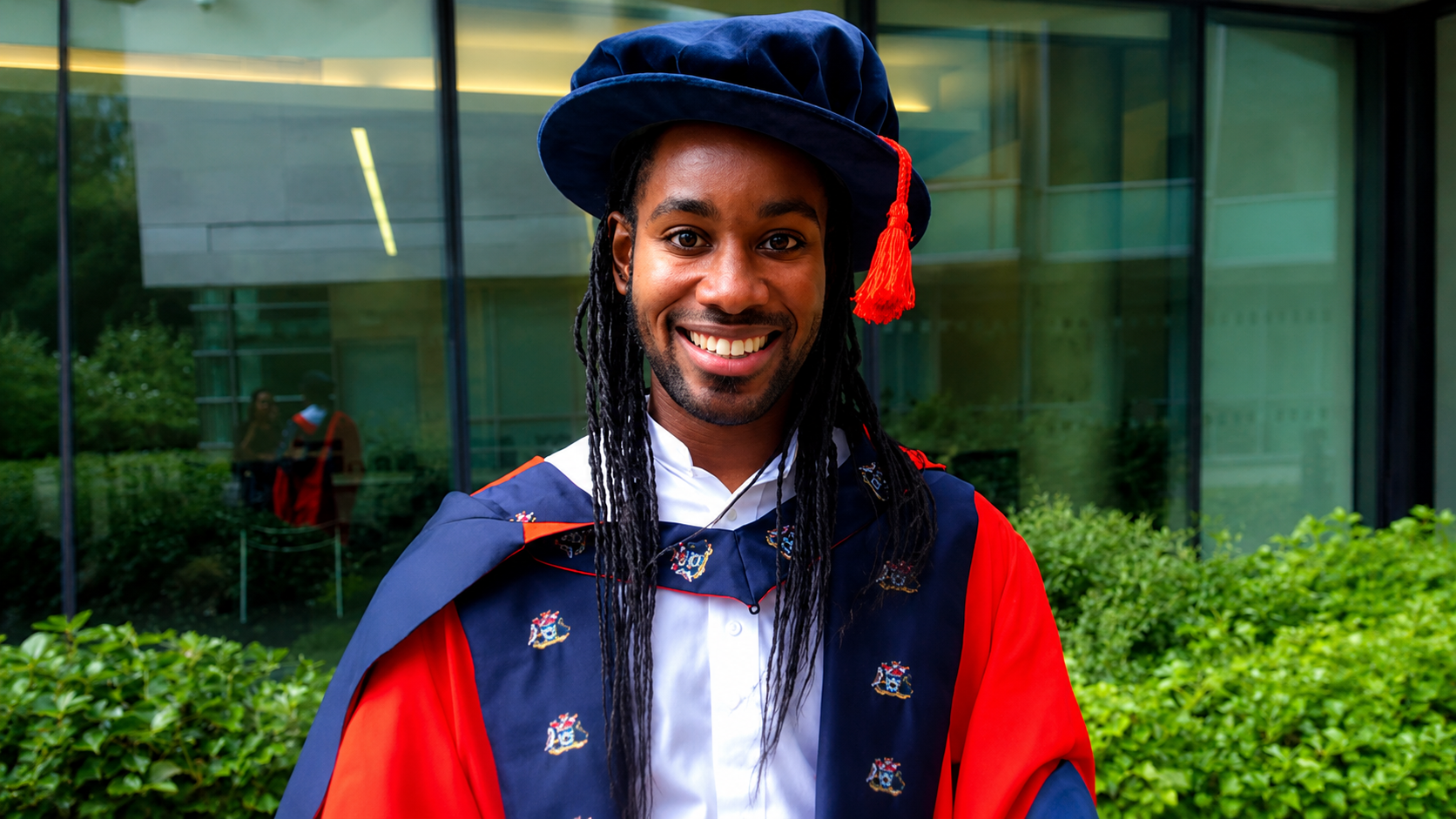
Jason Arday, the British academic whose 2023 appointment made him the youngest Black professor in the University of Cambridge’s history before his career became engulfed in controversy, has died at 41, according to The Guardian. The outlet reported that Arday was found at his home in south London on Friday, August 14, after the London Ambulance Service called Metropolitan Police shortly after 3 p.m.
A spokesperson for the Metropolitan Police told The Guardian: “A 41-year-old man was pronounced dead at the scene. His next of kin have been informed and are being supported by officers.
“At this time his death is being treated as unexpected, but is not believed to be suspicious. The case is being investigated by officers from the Met’s central south command unit. A file will be prepared for the coroner.”
Police have not publicly announced a cause of death. Authorities have also not publicly connected Jason Arday’s death to the professional controversy that unfolded before it. The police statement makes clear that investigators currently do not consider the circumstances suspicious, while the coroner will receive a file as part of the formal process.
Arday’s death comes after an extraordinary three years at Cambridge. In its 2023 announcement of his appointment, the University of Cambridge said Arday would become professor of sociology of education at age 37, making him the youngest Black person appointed to a professorship in the university’s history. Cambridge said his academic work focused heavily on race, inequality, education and the representation of minority ethnic communities in higher education. Before Cambridge, the university said Arday held academic positions at Roehampton and Durham and became a professor of sociology of education at the University of Glasgow in 2021.
His personal story became almost as prominent as his scholarship. Cambridge’s original profile said Arday was raised in Clapham, south London, was diagnosed with autism as a young child and did not speak until age 11 or read and write until 18. Those details were later repeated in his memoir, but they also became part of the broader scrutiny surrounding his biography. The Guardian reported this week that former schoolmates offered conflicting accounts about whether Arday spoke during primary school. Some challenged his account, while others who knew him as a child supported it. Arday rejected the accounts that contradicted his version of events.
Questions about his academic work had already triggered a separate and more consequential dispute. According to The Guardian’s reporting on his resignation, Arday faced accusations that portions of his doctoral thesis and other academic work contained plagiarism. Liverpool John Moores University, which awarded his doctorate in 2015, previously reviewed plagiarism allegations and did not uphold them, according to the outlet. Arday consistently denied committing plagiarism. Cambridge later said it had received new information concerning his academic qualifications and honorary appointments and opened another investigation, while separate academic misconduct complaints were also being handled under university procedures.
That escalating scrutiny led Jason Arday to resign from both Cambridge and Jesus College on August 5. In a resignation letter published by the Good Law Project, Arday wrote:
“It is with profound sadness that I write to resign, with immediate effect, from my position at the University of Cambridge and Jesus College.
“When I accepted the extraordinary honour of becoming professor of sociology at Cambridge, it was, without question, the greatest professional privilege of my life.”
Arday said the “relentless accusations, speculation and public commentary have taken a profound toll on me and on those I love”.
His resignation did not amount to an admission of the accusations against him. In the same statement, Arday maintained that leaving Cambridge should not be interpreted as accepting the narratives surrounding him. He said the personal cost of the ongoing scrutiny had become too great and that he wanted privacy for himself and his family.
The institutional fallout continued after his departure. On August 12, Cambridge vice-chancellor Deborah Prentice announced an independent examination of the circumstances surrounding Arday’s appointment, with the findings expected to inform a broader review of how senior academic positions are filled. Cambridge said the examination would involve senior academics from inside and outside the university.
A day later, Jesus College revealed that its master had begun a disciplinary process after the college became aware of inconsistencies in information Arday had provided. According to the college, that process ended when he resigned. Jesus College also clarified that Arday was a fellow rather than a college employee and said he had not undertaken teaching or admissions work for the college.
The controversy unfolded at the same time Arday was preparing to release his memoir, “Great and Unfortunate Things.” According to Simon & Schuster, the memoir was published in the United States through 37 Ink on August 11. The publisher’s United Kingdom listing currently shows an August 27 release date. The book focuses on Arday’s childhood, family, neurodivergence and rise through academia.
Following news of his death, Cambridge vice-chancellor Deborah Prentice said in a statement provided to The Guardian: “We are desperately saddened to hear this tragic news. Our heartfelt sympathies go to Jason Arday’s family and friends at this incredibly difficult time.”
Arday’s death closes a turbulent final chapter that moved rapidly from historic academic recognition to public scrutiny, resignation and institutional review. For now, the questions surrounding his scholarship and career remain separate from the investigation into his death. Metropolitan Police say the death is unexpected but is not believed to be suspicious, and a file will be prepared for the coroner as the cause of death remains publicly undisclosed.
