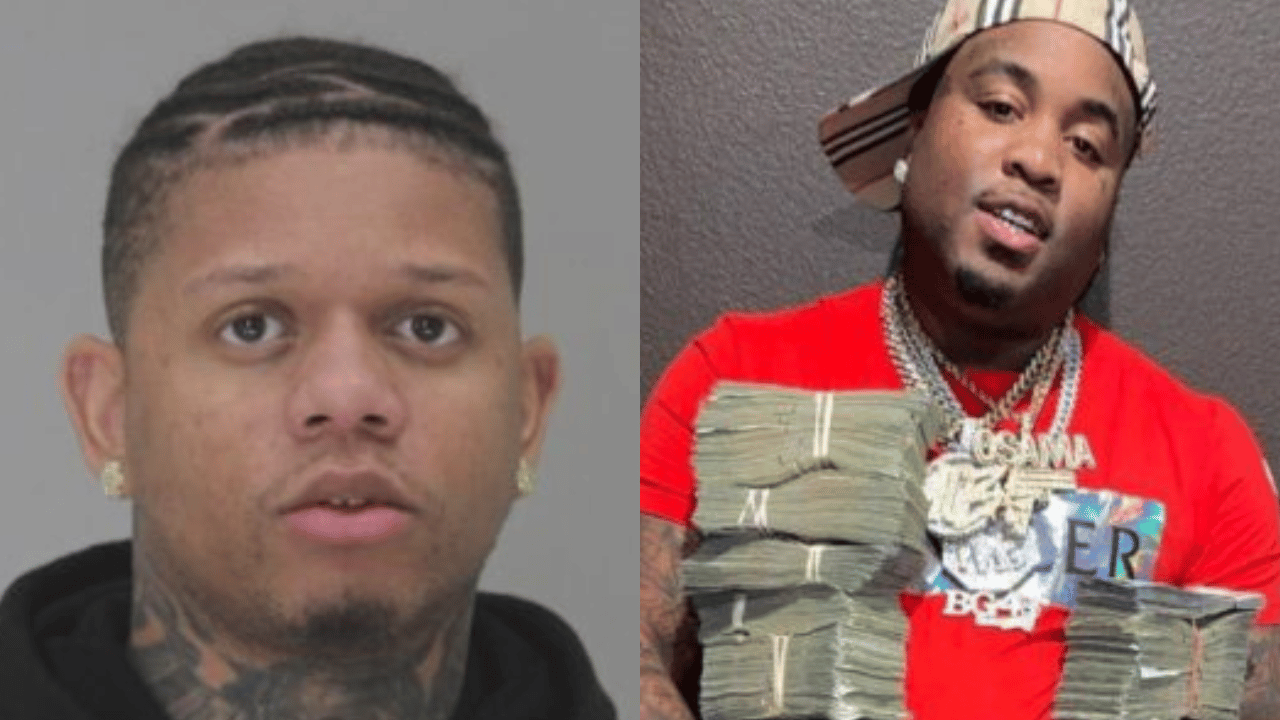
The Yella Beezy trial reached the jury deliberation stage Wednesday, November 11, exactly six years after Dallas rapper MO3 was murdered on Interstate 35. Jurors were scheduled to begin weighing whether Markies Conway, known professionally as Yella Beezy, paid to have Melvin Noble killed. Conway has pleaded not guilty to capital murder and denies arranging the shooting.
Closing arguments ended Tuesday following weeks of testimony. Jurors watched footage showing a gunman pursuing MO3 on foot along the freeway. Prosecutors said a vehicle had monitored Noble’s apartment complex for approximately 18 hours before the attack. Dr. Randall Graham testified that he encountered the masked shooter, suffered injuries from flying debris, and attempted to save Noble by performing CPR.
Kewon White, the gunman, was convicted of capital murder in September and sentenced to life without parole. Prosecutors allege Conway financed the killing through intermediaries following a longstanding feud between the artists. The central question in the Yella Beezy trial is whether prosecutors proved Conway arranged the murder in exchange for money or a promised payment.
One of the biggest courtroom reversals involved Theodore Thomas, a rapper known as Jose Bodega. Thomas previously told a grand jury that Conway and fellow Dallas rapper Trapboy Freddy supplied $40,000 for the killing. During trial testimony, Thomas repudiated that accusation, explaining that he invented the story while facing federal charges carrying potential life imprisonment.
Prosecutors confronted Thomas with his earlier testimony, and the judge permitted them to question him as a hostile witness. Defense attorneys challenged his credibility and scrutinized his extensive communications with the lead detective. Trapboy Freddy, whose legal name is Devarius Moore, has not been charged in Noble’s murder.
Another prosecution witness, a federal inmate who knew White, testified that the convicted gunman described shooting MO3 and complained about not receiving promised payment. Defense attorneys questioned the witness’s earlier denial of knowledge about the murder and his possible incentive to cooperate. Prosecutors argued that his account contained details consistent with the shooting.
Financial records became another major battleground in the Yella Beezy trial. Prosecutor Tommy Adams highlighted Conway’s brief return to North Texas following the killing, during which he withdrew $40,000 in cash. Adams also cited 15 phone calls between alleged intermediary Jerry Johnson and White during that visit, arguing the communications followed meetings involving Conway.


Made to order and shipped to your door.
The defense disputed the financial connection. Conway’s aunt testified that he routinely provided relatives with substantial cash for housing and living expenses. Attorneys also emphasized differences between the denominations Conway withdrew and the smaller bills recovered from White. Police seized $9,670 from White, but the defense maintained that prosecutors never traced those bills directly to Conway.
Jurors also heard about messages Conway allegedly sent his girlfriend two days before the shooting, referring to other people handling shootings. The judge admitted a redacted exchange but sustained an objection when prosecutors attempted to connect the language directly to the alleged murder plot. A separate jailhouse recording in which White allegedly discussed receiving payment was excluded from evidence.
Defense attorney Toby Shook offered another theory involving Devin Brown, who is separately charged in Noble’s death. Brown allegedly had a personal dispute involving the mother of his children, who had begun dating MO3. The defense presented evidence involving Noble displaying cash and jewelry around Brown’s children and argued that Brown had access to his own money.
Attorney John Gussio also emphasized records showing dozens of calls between Brown and White surrounding the murder. Brown awaits a separate trial and remains presumed innocent. Conway’s attorneys argued that investigators focused too heavily on Yella Beezy instead of thoroughly examining alternative motives.
Cellphone evidence produced competing interpretations. Defense expert Brian Ingram mapped Conway’s movements and placed White’s phone at Brown’s residence after the shooting. During cross-examination, Ingram acknowledged that cell tower records cannot establish who physically possessed a device. Prosecutors relied on location data, surveillance footage, and communications to argue that participants coordinated payments.
The prosecution also presented rap videos and the artists’ history of conflict as evidence of motive. Defense attorneys maintained that lyrics and public disputes could not establish a murder agreement. A music marketing executive testified that Conway’s extended California stay around the killing involved business commitments and a possible family relocation.
Judge Chika Anyiam instructed jurors to decide only the capital murder charge involving payment or promised payment. No lesser charges were included. The verdict must be unanimous, and prosecutors must prove guilt beyond a reasonable doubt.
A conviction could mean life imprisonment without parole. Under Texas law, that punishment is mandatory for adult capital murder defendants when prosecutors do not seek the death penalty. If jurors cannot reach a unanimous verdict, a mistrial is possible.