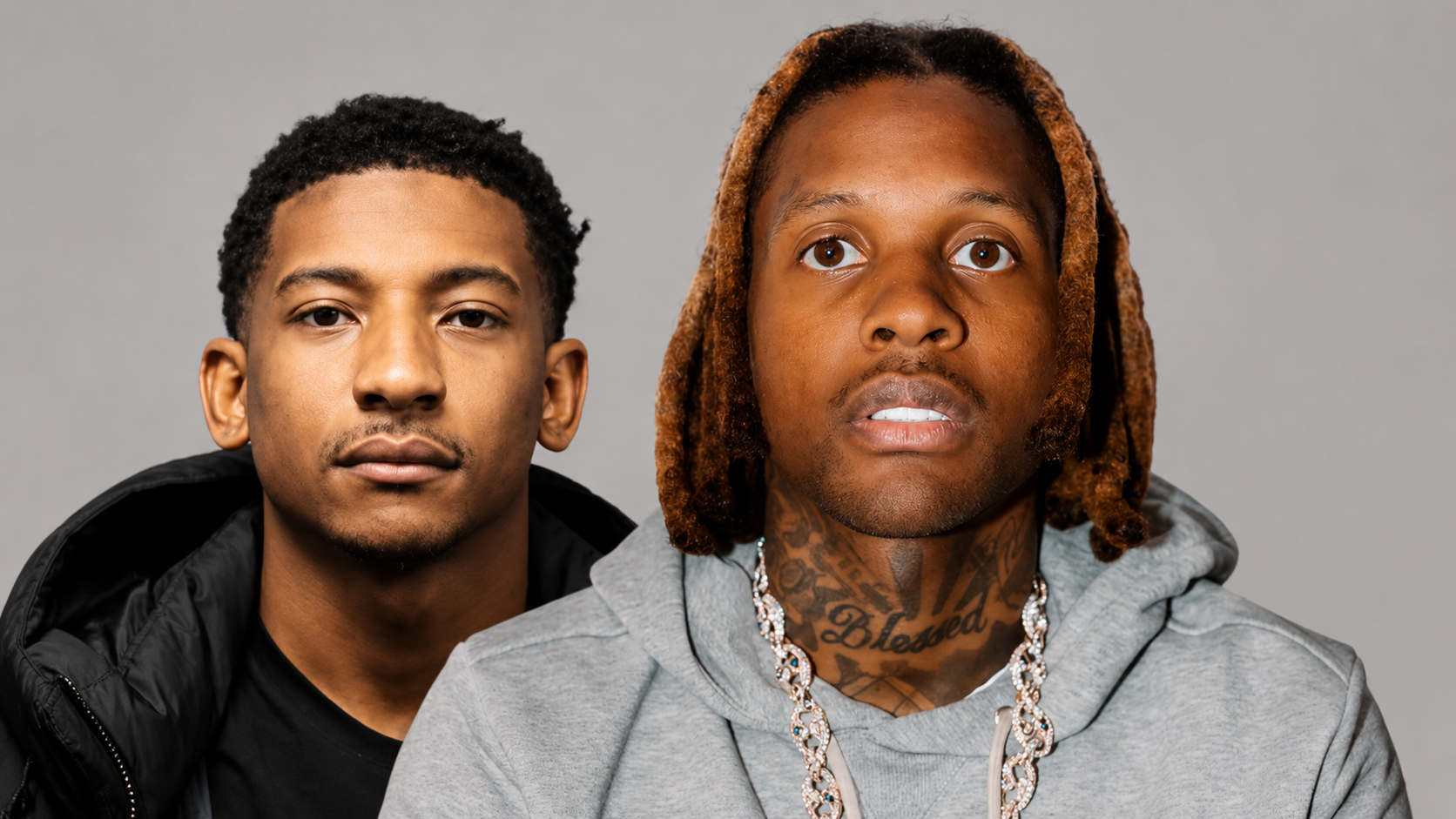
Lil Durk’s defense is telling jurors they have the wrong man at the center of the case. As opening statements began Monday in Los Angeles, attorneys for the Chicago rapper argued that Kavon Grant was originally viewed as the person “in charge” of the alleged murder plot, only to redirect investigators toward Durk once his own freedom was on the line.
According to Rolling Stone’s courtroom reporting, defense attorney Marissa Goldberg told jurors that Grant became a key government witness after authorities confronted him in October 2024. The defense theory in the Lil Durk trial is that Grant understood investigators wanted someone more prominent and decided Durk, born Durk Banks, could become his way toward a better outcome.
“They were pressing him about a big fish, and he thought, ‘Oh man…I’ve got an insurance policy,” Goldberg told jurors, according to Rolling Stone. The defense claims Grant sought to “minimize his own involvement” by portraying Durk as the person who directed the group.
That argument puts Grant’s credibility at the center of a case in which prosecutors are presenting an entirely different story.
Grant has pleaded guilty in connection with the alleged plot and is expected to testify for the government, according to Rolling Stone. Goldberg argued that Grant, who worked for Durk through the music management company Astronaut Soundz, had access to a company credit card and personally handled major pieces of the operation now being used to implicate Durk.
The defense says Grant arranged plane tickets, secured hotel accommodations and vehicles, purchased black ski masks and organized the group accused of traveling to Los Angeles to target rapper Quando Rondo, whose legal name is Tyquian Bowman. Prosecutors agree Grant handled several of those logistics, but they contend he was carrying out Durk’s orders.
That distinction could become one of the biggest questions in the Lil Durk trial: Does Grant’s involvement prove he was following instructions, or does it support the defense’s claim that he was directing the operation himself?
“Mr. Banks had nothing to do with it. He was not there. He had nothing to do with it,” Goldberg told the jury, according to Rolling Stone.
The defense also offered jurors a possible motive for Grant that does not depend on Durk directing him.
Goldberg said Grant had an especially close relationship with King Von, born Dayvon Bennett. According to the defense account reported by Rolling Stone, Grant personally managed Von in Atlanta, and the relationship between their families stretched back decades. Grant was also the person who rushed Von to the hospital after the November 2020 shooting that ultimately killed the rapper.
Goldberg described Grant as deeply affected by Von’s death and argued that he was the person driven to retaliate. Durk, the defense said, processed his anger differently by channeling it into “his artwork.”
Federal prosecutors are asking jurors to reach the opposite conclusion.
“This is a case about revenge, stalking, and premeditated murder,” Assistant U.S. Attorney Daniel Weiner told the jury during the government’s opening statement, according to Rolling Stone.
Per Billboard’s coverage of the opening statements, prosecutors allege Durk became consumed with getting revenge after Von’s death and ultimately put a bounty on Bowman. The government claims Durk used members and associates of his Only The Family organization to carry out the plan.
The underlying shooting happened on August 19, 2022, near the Beverly Center in Los Angeles. According to the U.S. Attorney’s Office for the Central District of California, prosecutors allege members of the group tracked Bowman for hours before gunmen opened fire at his vehicle at a gas station.
Federal authorities say at least 18 rounds were fired from multiple weapons, including a machine gun. Bowman survived, but his cousin Saviay’a Robinson, also known as Lul Pab, was fatally shot. The Justice Department has consistently stressed that the allegations contained in the indictments are accusations and that defendants are presumed innocent unless proven guilty.
Grant’s role has never been absent from the government’s own description of the case. The Justice Department previously alleged that Grant traveled to California on a private jet with Durk, bought ski masks for the alleged shooters and used a credit card in Durk’s name to pay for a hotel room.
What the defense is challenging in the Lil Durk trial is the government’s explanation for why Grant performed those actions.
Prosecutors say Durk was above him, giving directions. Durk’s attorneys say Grant was acting on his own and later used his access to Durk’s business resources to create a story that would make Durk appear responsible.
One message is expected to receive significant attention from both sides. Prosecutors say Durk texted Grant on August 18, 2022, “Don’t book no flights under no names involved wit me.” The government argues the message demonstrates Durk’s awareness of the operation. The defense disputes the broader interpretation of the communications and says Grant falsely claimed that Durk instructed him to book the travel.
Prosecutors also plan to rely on cooperating witnesses beyond Grant. Rolling Stone reported that Kacey “OTF Jam” Hester and Keith Jones have reached plea agreements and are cooperating with the government. Weiner told jurors Jones was one of the shooters at the gas station.
The government also highlighted a later message attributed to Durk concerning Hester: “Jam just ready to snitch … He gone tell soon.” Another message said, “As long as we don’t break they can tell em what ever.” Prosecutors are presenting the texts as evidence that Durk understood the group’s alleged criminal activity and worried about cooperation with authorities. Durk’s defense will have an opportunity to challenge that interpretation as testimony unfolds.
The current proceeding follows nearly two years of motions, superseding indictments and disputes over what evidence jurors should hear. City News Service via MyNewsLA reported that Banks has pleaded not guilty to the federal charges being tried and could face life imprisonment if convicted of all applicable counts.
The judge has also permitted prosecutors to introduce selected Lil Durk lyrics as evidence, a practice that has generated years of criticism from artists, legal scholars and advocates who argue that fictional or exaggerated rap lyrics can be stripped of artistic context inside criminal courtrooms.
But the defense’s opening strategy suggests this Lil Durk trial may ultimately revolve less around music than around Grant and the story jurors believe about his role.
The government wants the jury to see a subordinate carrying out orders from a powerful artist. Durk’s lawyers want them to see the alleged organizer himself, caught by federal authorities and suddenly possessing what the defense described as an “insurance policy”: the opportunity to hand investigators the “big fish” they were looking for.