

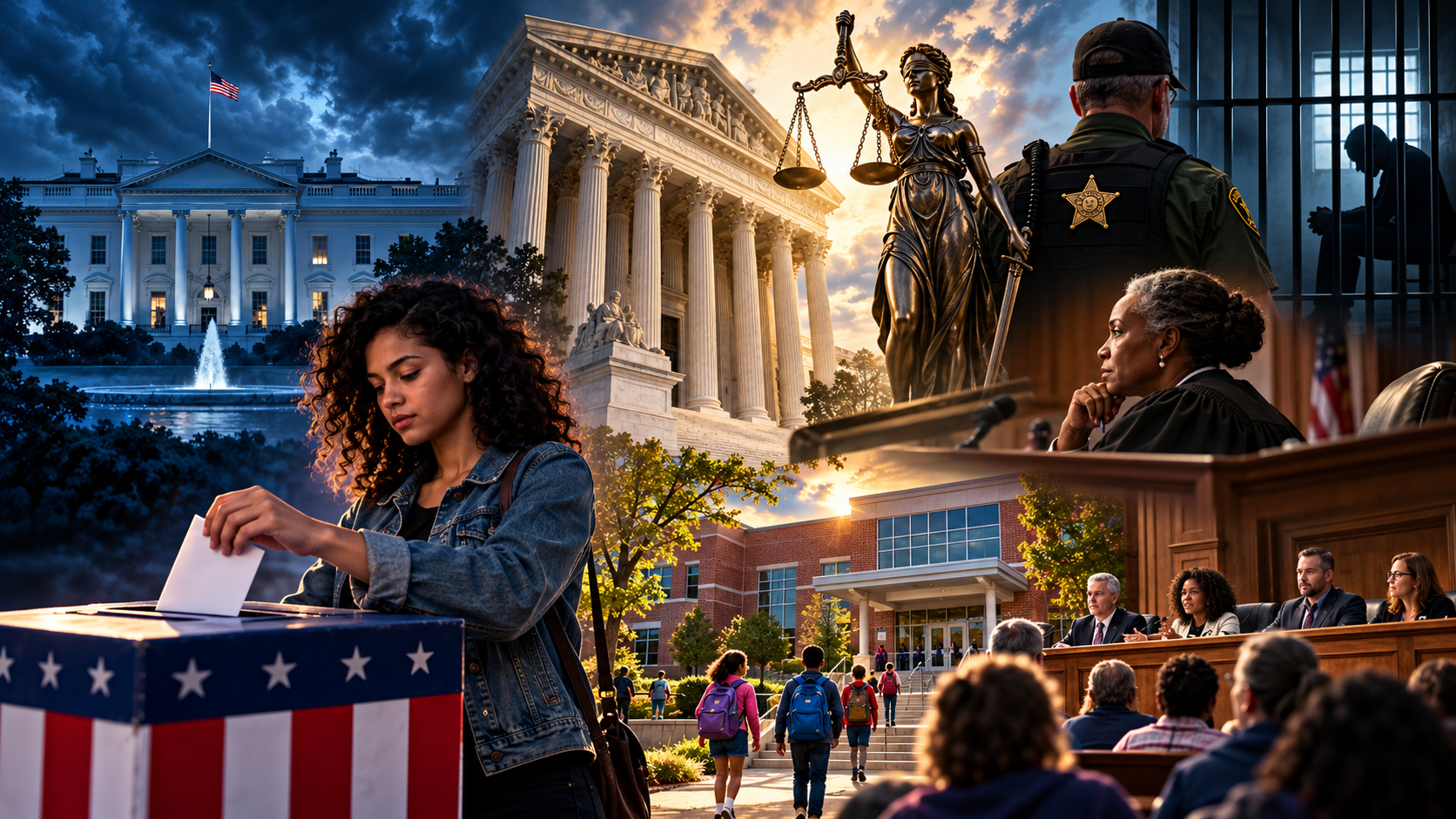
The White House gets most of the political attention, but some of the decisions that hit closest to home are being made by people whose names you might not even recognize.
Everybody has something to say about what’s happening in Washington. Political debates take over social media, national elections dominate the news, and presidential decisions spark conversations across the country. Meanwhile, the people deciding who gets prosecuted, how county jails operate, what happens inside local courtrooms, and how public schools function often receive a fraction of that attention.
That’s why local elections deserve just as much attention as national politics, especially when the decisions can affect your everyday life more directly.
On November 3, 2026, Americans will head to the polls for the midterm elections. While congressional races will attract much of the spotlight, some voters will also have opportunities to choose local officials who exercise significant authority over their communities.
The district attorney, sheriff, judges, and school board members may not have the national recognition of someone in the White House. However, their decisions can determine what happens when someone is arrested, whether a person remains behind bars while awaiting trial, and what resources children receive in school.
One Georgia community already showed just how much those local positions can matter.
In November 2020, voters in Georgia’s Brunswick Judicial Circuit removed longtime District Attorney Jackie Johnson from office following widespread criticism of how authorities handled the killing of Ahmaud Arbery.
According to Georgia Public Broadcasting, Johnson lost her reelection bid to Keith Higgins, a former prosecutor who ran as an independent. His campaign gained support as public frustration grew over the handling of Arbery’s case.
Arbery, a 25-year-old Black man, was shot and killed on February 23, 2020, after being pursued by Gregory and Travis McMichael in a Georgia neighborhood. Gregory McMichael had previously worked as an investigator in Johnson’s office.
The killing sparked national outrage, particularly after video of the encounter became public and questions intensified about why the men involved had not been arrested.
According to the Georgia Bureau of Investigation, Gregory and Travis McMichael were arrested on May 7, 2020, more than two months after Arbery was killed. State investigators had taken over the case just days earlier.
Johnson had recused herself because of her office’s connection to Gregory McMichael. However, criticism surrounding the initial investigation and the actions of local prosecutors continued to grow.
The backlash eventually reached the ballot box.
Georgia Public Broadcasting reported that people attending protests over Arbery’s killing also helped collect signatures to get Higgins on the ballot. Voters wanted another option for the office responsible for prosecuting crimes in their communities.
In February 2025, the criminal case against Johnson ended in her favor. According to the Associated Press, a judge ordered her acquittal on a misdemeanor obstruction charge because prosecutors had not presented evidence that she directed police against making an arrest. The judge also dismissed a felony oath of office charge because of problems with the indictment.
Johnson denied wrongdoing, while Arbery’s parents maintained their belief that she had played a role in protecting the men responsible for their son’s death.
But the election had already happened.
Voters did not need to wait for a criminal trial to decide whether they wanted different leadership in the district attorney’s office. They exercised their authority through the voting process.
That example illustrates why paying attention to local elections is about much more than recognizing familiar political names.
District attorneys hold enormous power within the criminal justice system. They help decide which cases move forward, what criminal charges prosecutors pursue, whether plea agreements are offered, and what sentences prosecutors request.
Those decisions can influence whether someone faces years in prison or receives an opportunity to resolve a case without going to trial.
Yet many voters know far more about national political figures than the prosecutors responsible for making those decisions in their own counties.
A 2015 analysis from the Women Donors Network examined 2,437 elected prosecutors who held office in 2014 and found that 95% were white. The research also cited a study by Wake Forest University law professor Ronald Wright showing that 85% of incumbent prosecutors ran unopposed.
Those figures are historical and do not describe the current composition of prosecutor offices. Still, they highlight longstanding concerns about representation and how often voters have meaningful choices in these powerful elections.
And prosecutors are only part of the picture.
Consider the county sheriff.
When people think about law enforcement, they often focus on police departments. However, sheriffs in many counties oversee jails, supervise deputies, and establish policies that affect people who are arrested or detained.
For example, Miami County’s government in Indiana identifies the sheriff as an elected constitutional officer responsible for several duties, including caring for the county jail and the people held inside it.
That means decisions involving jail operations, detention conditions, staffing, and enforcement priorities can fall under the authority of someone chosen through local elections.
For families with loved ones in custody, those responsibilities are anything but distant political issues. They can influence everyday experiences during some of the most difficult moments in a person’s life.
Then there are the judges.
While prosecutors decide which cases to pursue, judges make decisions involving bail, courtroom procedures, criminal sentences, and legal disputes. Depending on the jurisdiction and type of case, a judge’s ruling can affect whether someone returns home while awaiting trial or remains in custody.
Many state judges are selected through elections, while others face retention votes that allow voters to decide whether they should continue serving.
According to Utah’s official voter information website, the state uses judicial retention elections in which voters choose yes or no on whether an appointed judge should remain in office.
Utah’s 2026 judicial ballots include retention contests for positions across its court system, according to state election filings. These decisions receive nowhere near the attention of the White House, despite their direct connection to the administration of justice.
The same issue applies to school board elections, especially for parents.
Families spend years debating education policies at the national level, but school boards frequently have direct authority over district budgets, educational programs, school policies, and the resources available to students.
In Florida, for example, state law gives district school boards responsibility for operating, controlling, and supervising public schools within their districts, subject to state law.
That authority can affect everything from educational opportunities and discipline policies to funding decisions for music, athletics, and other school programs.
A school board member may never become a trending topic online. Still, their decisions can influence the classroom your child walks into every morning.
None of this means the White House is unimportant. Federal leadership shapes national laws, economic policy, government funding, and decisions with consequences throughout the country.
But national authority does not eliminate the influence of local government.
In fact, the two often operate together. Federal and state policies establish broad rules, while local officials make important decisions about enforcement, implementation, and the services residents actually experience.
That distinction becomes particularly important during the 2026 midterm elections.
Not every district attorney, sheriff, judge, or school board position will appear on the November 3 ballot. Election schedules and the offices being contested vary by state, county, and school district. Some local races take place in other election years.
That’s why voters should know exactly which positions are being decided where they live rather than assuming every community has the same ballot.
According to USAGov’s official voter guidance, sample ballots allow voters to review the candidates and ballot measures they will encounter before heading to the polls. Voter guides can also provide information about candidates’ experience and positions.
That preparation can make a significant difference when someone reaches an unfamiliar name or a judicial retention question.
Look beyond campaign advertisements and party labels. Research how candidates have handled their responsibilities, what policies they support, and what authority their offices actually hold.
For prosecutors, that might mean examining their approach to criminal charges and accountability. For sheriffs, it could involve jail management and public safety practices. For judges, voters can review professional evaluations where available. For school board candidates, their positions on education funding and district priorities may be especially relevant.
The larger point is that political power does not begin and end in Washington.
The White House may dominate the conversation, but local government is often where families encounter the consequences of public policy firsthand.
And when voters overlook those elections, they risk paying less attention to some of the officials making the most immediate decisions about their communities.
The people controlling your local courts, county jails, and public schools may never become household names, but your vote helps determine who holds that power and how it is used.
