

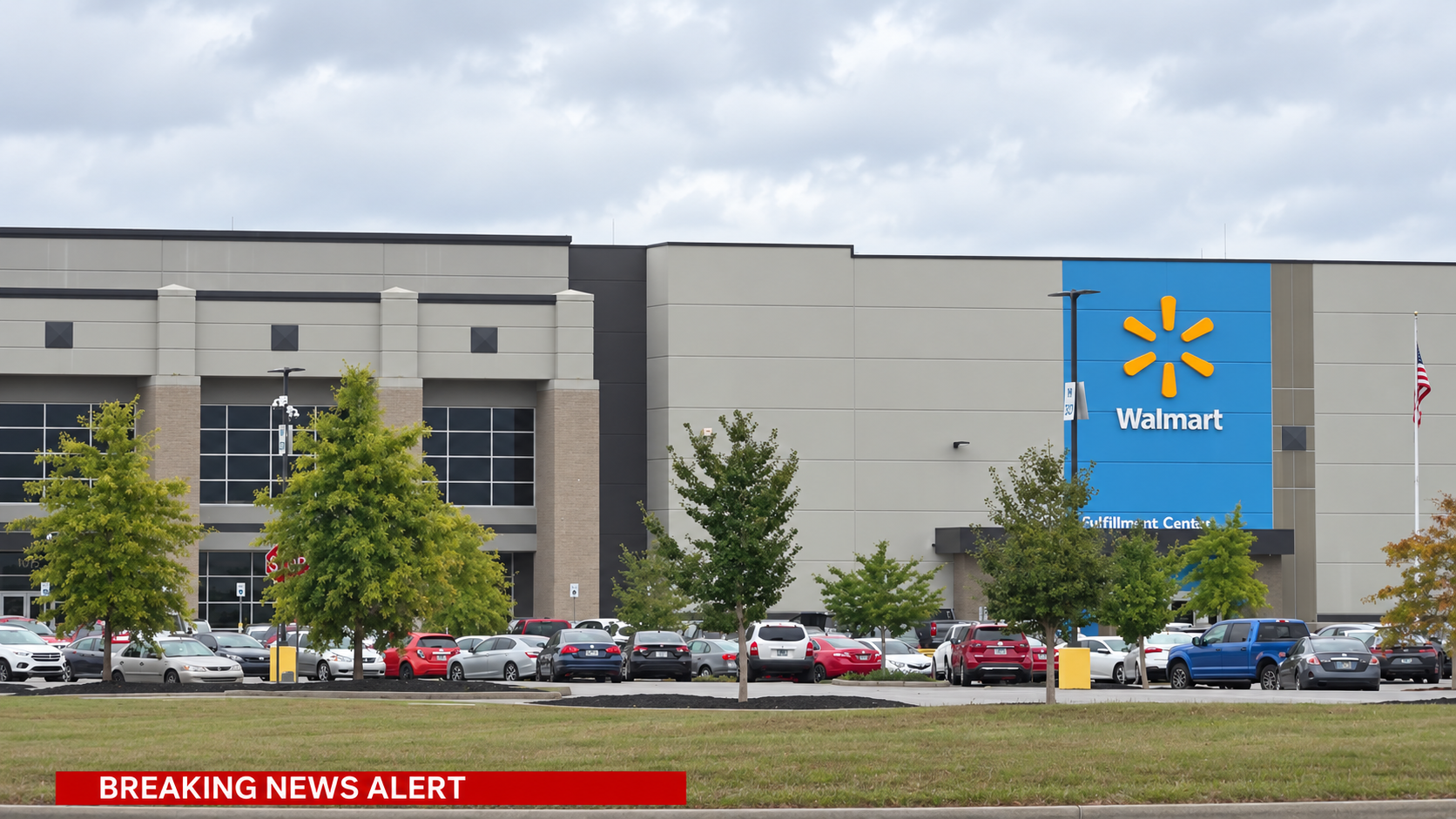
A workplace meal at a Walmart distribution center in Tennessee turned into a medical emergency after dozens of employees suddenly became ill, leaving 19 people hospitalized and authorities scrambling to determine what went wrong.
Video
The suspected mass food poisoning incident unfolded on October 8 at a Walmart facility in Lebanon, Tennessee, approximately 30 miles east of Nashville. What initially appeared to be an isolated medical emergency quickly escalated as more employees reported symptoms, prompting a large emergency response.According to WKRN News 2, Wilson County Emergency Management Agency responders arrived after receiving a report about a female employee experiencing possible foodborne illness symptoms. As additional workers began reporting similar problems, emergency personnel requested backup.
Officials initially received information suggesting that 80 or more people could be affected. However, emergency responders ultimately assessed approximately 25 to 30 individuals at the facility, transporting 19 to area hospitals.
Emergency medical teams from Wilson County, Mt. Juliet, and Rutherford County assisted with the response.
Newly released 911 recordings revealed just how quickly the situation intensified.
According to NewsChannel 5, one caller described an employee vomiting in a restroom and experiencing significant fatigue. During another call, someone at the facility reported that at least four workers were “very ill,” while the number of affected employees continued climbing.
Investigators are now examining whether food served during a workplace potluck caused the illnesses.
One particularly concerning detail emerged when a caller suggested the symptoms might be connected to “homemade rice that was brought into the facility.”
However, health officials have not confirmed that the rice caused the illnesses. No particular food, pathogen, or source of contamination has been identified as of yet. Still, the caller identifying the rice has led to speculation.
The Tennessee Department of Health said it was “investigating a possible foodborne illness outbreak linked to a meal” alongside the Mid-Cumberland Regional Health Office and Wilson County Health Department.
Walmart also addressed the situation.
“The health and safety of our associates is a top priority,” a Walmart spokesperson said in a statement reported by WSMV. “We’re working with local emergency management and health officials as they investigate.”
The company maintained that its retail food products were not involved and that the incident posed no danger to customers or the public.
As of October 15, authorities had not publicly identified the cause or provided a complete update on the hospitalized employees’ conditions.
While the Walmart investigation remains unresolved, this suspected mass food poisoning incident brings back memories of several highly publicized outbreaks that devastated families and exposed serious food safety failures.
One of America’s most infamous cases occurred in 1993, when contaminated hamburgers sold at Jack in the Box restaurants triggered a deadly E. coli outbreak.
According to the Centers for Disease Control and Prevention, more than 700 people became sick across four Western states, many of them children. Four children died, and more than one quarter of those affected required hospitalization.
The tragedy exposed the dangers of undercooked ground beef and helped prompt significant changes to restaurant food safety requirements.
Another catastrophic outbreak struck in 2011 when Listeria contamination was traced to cantaloupes produced by Jensen Farms in Colorado.
CDC investigators documented 147 infections across 28 states and 33 deaths. One pregnant woman also suffered a miscarriage. The outbreak demonstrated that even fresh produce could become the source of a deadly nationwide health emergency.
Fast forward to 2015, when Chipotle Mexican Grill became the center of repeated food safety controversies.
According to the U.S. Department of Justice, foodborne illness incidents connected to Chipotle restaurants between 2015 and 2018 sickened more than 1,100 people.
Among the incidents was a 2018 outbreak in Powell, Ohio, where approximately 647 customers reported becoming ill from bacteria associated with improperly maintained food temperatures.
Chipotle ultimately agreed to pay a $25 million criminal fine in 2020 and implement a comprehensive food safety compliance program.
More recently, McDonald’s faced a nationwide crisis involving its popular Quarter Pounder burgers.
In 2024, an E. coli outbreak linked to fresh slivered onions served at McDonald’s sickened 104 people across 14 states. According to the CDC’s final investigation, 34 people were hospitalized, and one person died.
The company temporarily removed affected ingredients while authorities investigated the contamination.
That same year, Boar’s Head faced an even deadlier crisis involving contaminated deli meats.
According to CDC findings, a Listeria outbreak associated with meats sliced at deli counters, including Boar’s Head liverwurst, caused 61 confirmed illnesses across 19 states. Sixty people were hospitalized, and 10 died.
These mass food poisoning outbreaks illustrate how contamination can spread through restaurants, grocery supply chains, and even foods commonly considered safe.
The CDC estimates that approximately 48 million Americans experience foodborne illnesses annually, with 128,000 hospitalizations and 3,000 deaths.
Symptoms can include vomiting, nausea, diarrhea, fever, and abdominal pain. Severe cases may cause dehydration, kidney complications, or life-threatening infections.
For communal meals, food safety experts emphasize proper cooking temperatures, prompt refrigeration, and avoiding extended periods when perishable dishes sit unrefrigerated.
At the Tennessee Walmart facility, investigators must still determine whether contaminated food caused the illnesses, which item may have been responsible, and how so many employees became sick around the same time.
Until those findings are released, the 19 hospitalizations remain a troubling reminder of how quickly an ordinary shared meal can become a major public health emergency.
