

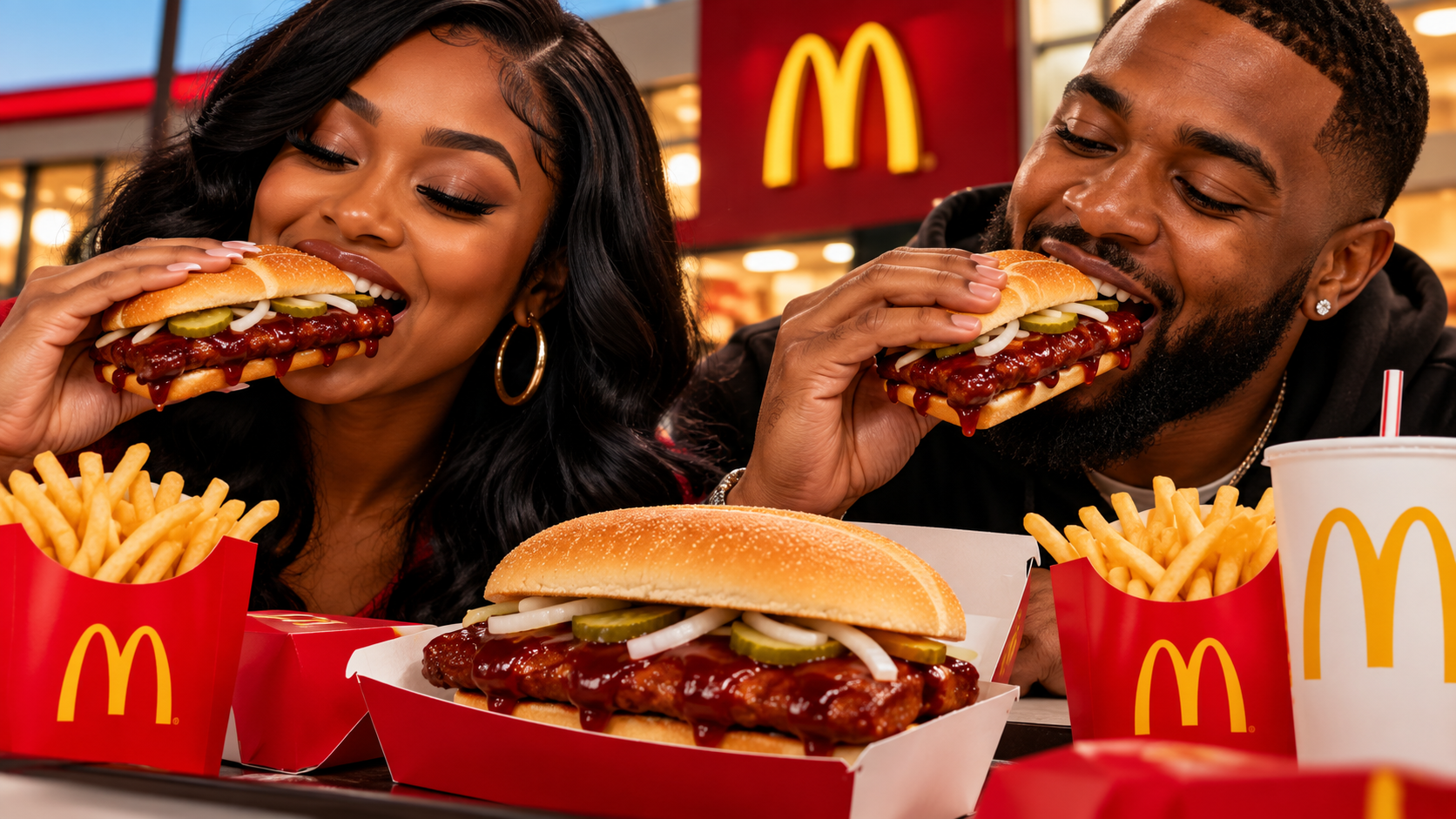
McDonald’s McRib lawsuit is moving forward after a federal judge ruled that customers have a legitimate argument about whether the famous sandwich misleads people into believing it contains actual pork rib meat.
On Friday, October 30, U.S. District Judge April Perry rejected McDonald’s attempt to throw out a proposed class action lawsuit accusing the fast-food giant of misleading customers about what goes into its popular McRib sandwich.
The lawsuit centers on something pretty simple: the sandwich is called the McRib, and its patty is shaped like a rack of ribs, but customers claim it doesn’t actually contain rib meat.
According to the lawsuit, McDonald’s intentionally gives the pork patty its signature ridges to resemble real ribs. The plaintiffs argue that the name, appearance, and advertising make customers believe they’re paying for a more expensive cut of pork.
Instead, the lawsuit alleges that McDonald’s uses less expensive pork products, including shoulder, heart, tripe, and stomach. Those claims about organ meat remain disputed, and McDonald’s has specifically denied using hearts, tripe, or stomach in the sandwich.
The customers argue that they paid premium prices for something they believed contained actual rib meat.
And with the McRib costing around $7, depending on location, they believe the difference between what was advertised and what was served is enough to support their case.


Made to order and shipped to your door.
Judge Perry wasn’t convinced by McDonald’s argument that reasonable customers should already know the McRib doesn’t necessarily contain pork ribs.
“Plaintiffs’ proffered understanding of ‘McRib’ is not unreasonable or fanciful,” Perry wrote.
The judge also pointed out that McDonald’s website describes the sandwich as containing pork without specifying a particular cut. She determined that customers shouldn’t have to conduct their own research before buying a fast-food sandwich.
The McDonald’s McRib lawsuit also raises questions about how much influence a product’s appearance can have on customers.
The plaintiffs claim that the rib-shaped patty isn’t just a design choice. They believe it’s part of the marketing that makes the sandwich appear to contain a more expensive cut of meat.
Perry ruled that advertising emphasizing the patty’s resemblance to ribs could help support allegations of intentional deception, although the customers will need additional evidence to prove their claims.
The lawsuit also includes survey findings submitted by the plaintiffs. According to court documents, 72% of surveyed consumers expected the McRib to contain rib meat, while 67% considered rib meat important to their purchasing decision.
McDonald’s, however, strongly disagrees with the allegations.
The company argued that having a distinctive product name doesn’t automatically mislead consumers. Its lawyers also maintained that customers preferring one cut of pork over another “doesn’t turn McDonald’s truthful marketing into consumer fraud.”
In a statement responding to the lawsuit, McDonald’s defended the sandwich’s ingredients and maintained that it has always been transparent about what customers are eating.
“This lawsuit distorts the facts and the claims are meritless,” the company said.
McDonald’s also stated that the McRib contains 100% pork sourced from American farmers and suppliers. The company specifically denied allegations that hearts, tripe, or stomach are included in the patty.
The McRib has been a recognizable part of the McDonald’s menu since 1981. Unlike the Big Mac or Quarter Pounder, the barbecue-covered pork sandwich is typically offered for limited periods, creating anticipation whenever it returns.
Its familiar combination of a boneless pork patty, barbecue sauce, onions, and pickles has helped make it one of the chain’s most talked-about menu items.
Now, the McDonald’s McRib lawsuit is putting the sandwich’s marketing under legal scrutiny.
The case was filed by four consumers in December 2025. Although Judge Perry dismissed five claims without prejudice, she allowed allegations involving consumer deception, fraud, and unjust enrichment to continue.
That ruling does not mean McDonald’s has been found guilty of misleading customers. It simply lets major portions of the lawsuit proceed instead of ending the case before further evidence is examined.
Thiago Coelho, an attorney representing the plaintiffs, said his clients intend to continue pursuing accountability over what they believe is deceptive marketing.
McDonald’s isn’t the only fast-food company to face complaints about how it advertises its menu items. Burger King and Wendy’s have also faced lawsuits alleging that promotional images make food appear larger than what customers actually receive.
