

Meta has spent five years trying to make smart glasses feel inevitable, but every reinvention seems to arrive after the previous version exposes a new problem.
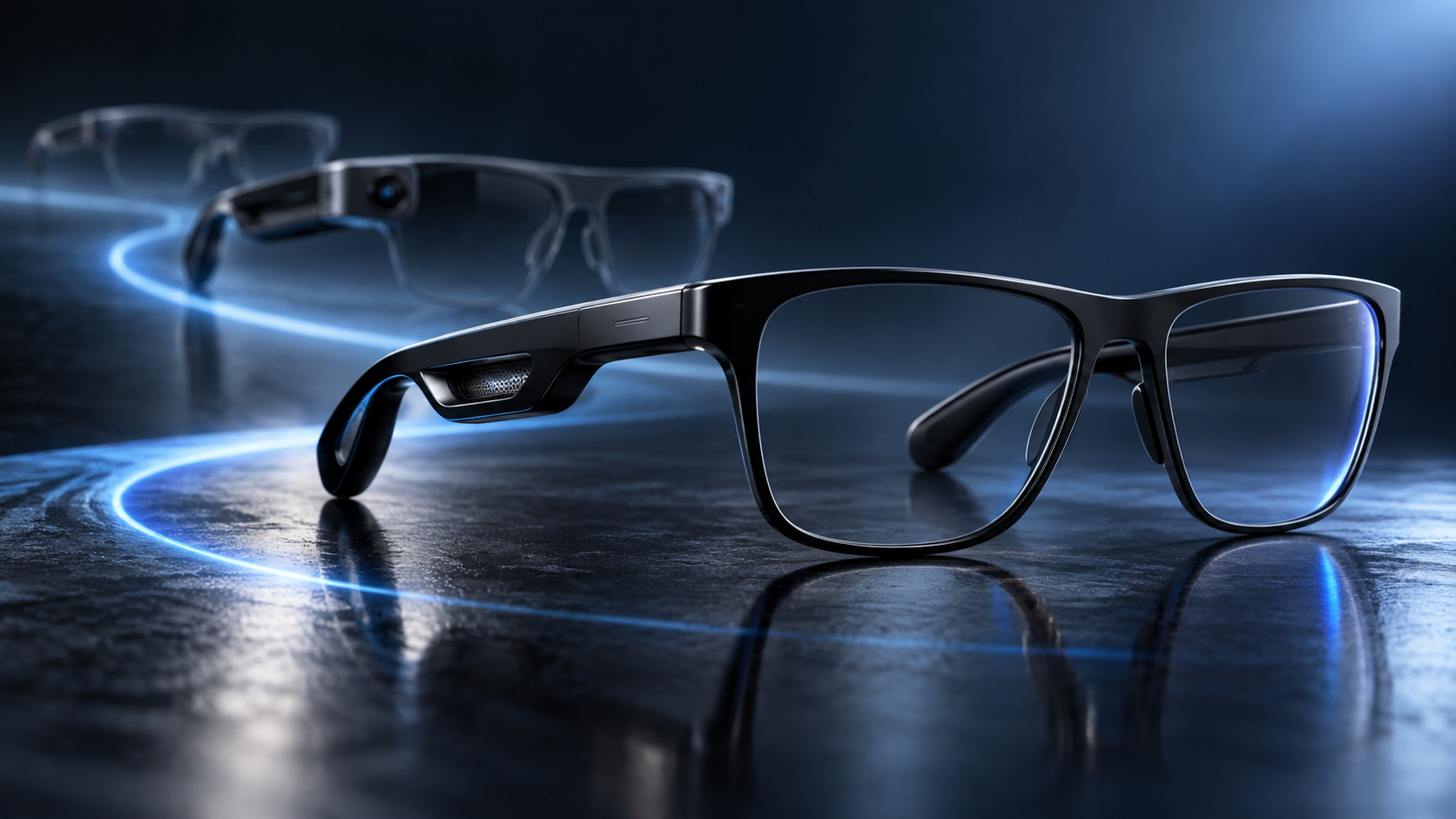
The latest attempt is Ray-Ban Meta Audio, a new pair of Meta AI glasses that removes the camera completely. According to Meta’s Connect 2026 announcement, the $349 glasses use open-ear audio for music, podcasts, and phone calls while giving wearers access to the company’s Muse AI assistant. Meta says the frames weigh 43 grams, offer up to 12 hours of battery life and can receive another 48 hours of power through the included charging case.
Removing the camera is a major change, but Meta has been rewriting its smart glasses playbook almost from the beginning. According to Meta’s original Ray-Ban Stories announcement, Facebook and EssilorLuxottica launched Ray-Ban Stories in 2021 starting at $299. The glasses included two 5-megapixel cameras, microphones, and open-ear speakers, allowing owners to capture photos and short videos, listen to music, and make calls. Meta later described that first generation as a building block toward its larger augmented reality ambitions.
The problem was getting people to keep wearing them. Reporting based on internal Meta documents found that the company had sold roughly 300,000 Ray-Ban Stories by February 2023 but had only about 27,000 monthly active users. Ars Technica reported that the documents pointed to complaints involving connectivity, battery life, audio, and other hardware issues. The figures suggested that fewer than 10 percent of buyers were still using the glasses regularly.
Meta did not abandon the idea. It rebuilt it.
The second-generation Ray-Ban Meta glasses arrived with better cameras, stronger audio, and eventually Meta AI. That version changed the commercial trajectory. In 2024, Reuters reported that EssilorLuxottica CEO Francesco Milleri said the newer Ray-Ban Meta glasses had already outsold the original Ray-Ban Stories. By 2025, EssilorLuxottica said more than 7 million units of its AI glasses developed with Meta, including Ray-Ban Meta and Oakley Meta models, had been sold during the year.
So the continuing reinvention of Meta AI glasses is no longer simply about fixing a product people will not buy. The newer problem is what happens when millions of people actually do.
As camera-equipped glasses became more common, privacy concerns followed them into restaurants, workplaces, theaters, and public spaces. Reuters reported in September 2026 that regulators and authorities in multiple countries were examining the challenges created by wearable cameras that can record people discreetly. Reuters also reported that some businesses and institutions had restricted smart glasses while legal and privacy questions continued to grow.
Meta has tried to address that concern without abandoning cameras altogether. According to Meta’s explanation of its privacy safeguards, its camera-equipped AI glasses include a white capture light that flashes during recording. Meta says covering the light disables the camera, and the company later expanded its software to detect physical tampering with the indicator. Still, the fact that Meta is now selling an entirely camera-free model shows how central the privacy question has become to the future of the product category.
Ray-Ban Meta Audio takes the company back to a simpler proposition. Instead of putting a camera on someone’s face, Meta wants the glasses to compete for the same everyday territory occupied by headphones and earbuds. Users can listen to media, take calls, translate speech, and talk with Muse without pulling out a phone.
“Once you get used to high-quality audio, it’s just a thing that you want all the time, right?” Meta CEO Mark Zuckerberg said during the Connect keynote.
That creates another challenge for Meta AI glasses. Without a camera or display, the company has to convince people that putting speakers, microphones, and an AI assistant inside Ray-Ban frames offers something meaningfully different from wireless earbuds. Before the launch, Reuters reported that analysts questioned whether removing the camera would reduce privacy concerns enough to justify losing one of the product’s most popular functions. Analysts also noted that microphones and audio collection could create their own concerns.
That tension has followed Meta’s glasses strategy from the start. Ray-Ban Stories needed more usefulness. Their successors found a larger audience but created a much bigger privacy debate. Display glasses added another level of technology and cost. Now Ray-Ban Meta Audio strips the idea back again.
Meta may eventually find the version of smart glasses that feels as ordinary as putting on headphones or checking a phone. Until then, the company’s most consistent feature might be reinvention itself, because every generation of Meta AI glasses appears to answer a question raised by the one that came before it.
