

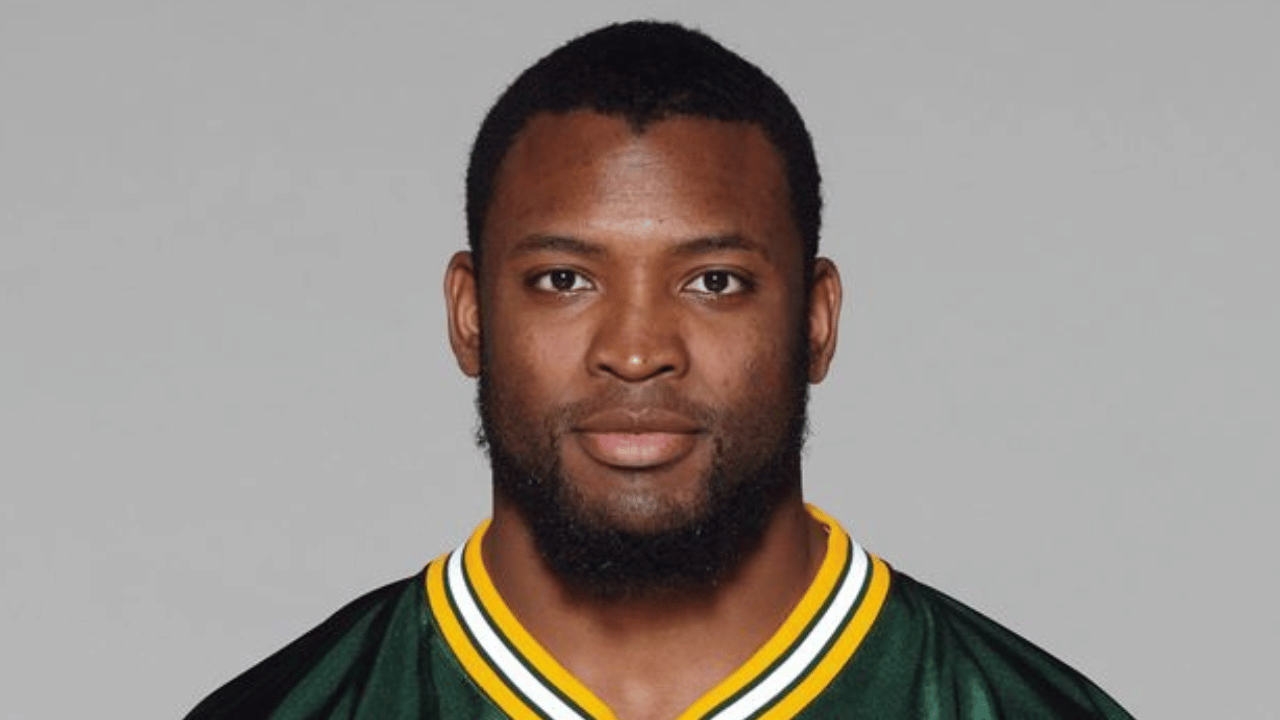
Ahman Green Parkinson’s diagnosis is bringing renewed attention to the longterm health of former NFL players after the Green Bay Packers legend revealed he has been living with the disease for more than a year.
Green said he was diagnosed with early onset Parkinson’s disease in January 2025 after noticing symptoms that included twitching in his feet while sleeping. He kept the diagnosis private outside of family and close friends before speaking publicly about it this week.
During his conversation with Tyler Dunne, Green also spoke candidly about changes in his short term memory and the adjustments he has made since receiving the diagnosis. The former running back has approached the disease with the same determination that defined his playing career. Green told Dunne that he is following his doctors’ treatment plan while making nutrition and exercise major parts of his routine.
“I got the reins,” Green said. “I’m in control. I’m not going to let this control me.”
The news hits especially hard for longtime Packers fans because Green remains one of the most accomplished running backs in franchise history. Green finished his Packers career with a franchise record 8,322 rushing yards after passing Jim Taylor during his second stint with the team in 2009. The organization also credits him with six seasons of at least 1,000 rushing yards in Green Bay and four Pro Bowl selections. His biggest season came in 2003, when he rushed for 1,883 yards and also set a franchise single game mark with 218 rushing yards against Denver.
Green’s disclosure comes at a moment when scientists are continuing to study what years of football exposure may mean for brain health after retirement. According to the Parkinson’s Foundation, Parkinson’s develops through a complex mix of genetic, environmental and lifestyle factors. The disease involves the progressive loss of brain cells that produce dopamine, which plays an important role in controlling movement. Head injury is among the environmental factors associated with an increased risk of Parkinson’s, but researchers do not consider it the sole cause of the disease.
That distinction matters when discussing Ahman Green Parkinson’s diagnosis. There is currently no evidence establishing that Green’s individual case was caused by football, and a player’s history of collisions cannot by itself explain why that person developed Parkinson’s. However, research involving former football players continues to raise questions about repetitive head impacts and neurodegenerative disease at the population level.
Those questions became even more urgent earlier this month. According to a July 2026 study highlighted by Boston University, researchers examined 19,824 current and former NFL players who debuted between 1960 and 2019. Among players who had died, researchers found that Parkinson’s mortality was 3.88 times higher than expected compared with the general population. Overall mortality from neurodegenerative diseases was nearly four times higher, even though NFL players had lower overall mortality from several other causes.
The study, conducted by researchers connected to Boston University, Mass General Brigham and the Concussion and CTE Foundation, also found that longer NFL careers were associated with greater neurodegenerative mortality. Players who spent at least five years in the league had roughly twice the risk of neurodegenerative death as those whose careers lasted between one and four seasons. Researchers cautioned through the findings that they were examining mortality patterns across a large group rather than proving what caused disease in any particular player.
Green is also not the first major NFL name to publicly reveal a Parkinson’s diagnosis. Brett Favre disclosed his condition in September 2024 while testifying before a congressional committee. Favre revealed that he had recently been diagnosed while discussing his investment in a company that had been developing concussion treatments. Favre later said he had received the diagnosis in January 2024 after experiencing problems with his right arm. Medical experts have not established that Favre’s football career caused his disease.
Former Cleveland Browns quarterback Bernie Kosar has also dealt with Parkinson’s. Kosar said an independent NFL doctor diagnosed him with Parkinson’s in February 2024. The diagnosis became public that July as Kosar was also discussing serious liver disease and other health challenges.
The history stretches back further. Pro Football Hall of Fame offensive lineman Forrest Gregg, another Green Bay great, announced in 2011 that he had Parkinson’s disease. Gregg experienced symptoms including hand tremors, changes in posture, a shorter stride and a softer voice before receiving his diagnosis. Gregg, his family and his neurologist discussed the possibility that his history of concussions had contributed to the disease, while acknowledging that Parkinson’s did not have one established cause. Gregg became an advocate for Parkinson’s awareness after his diagnosis.
Taken together, Green, Favre and Gregg create an especially striking history inside one franchise, with three prominent former Packers publicly confronting Parkinson’s across different generations of football. Kosar’s diagnosis and the latest population level research show that the conversation extends beyond Green Bay.
For Green, however, the focus remains personal. The story is not simply another statistic in football’s ongoing discussion about brain health. It is the story of a former player adjusting to a life changing diagnosis while choosing to speak publicly about something he initially kept within his closest circle.
