
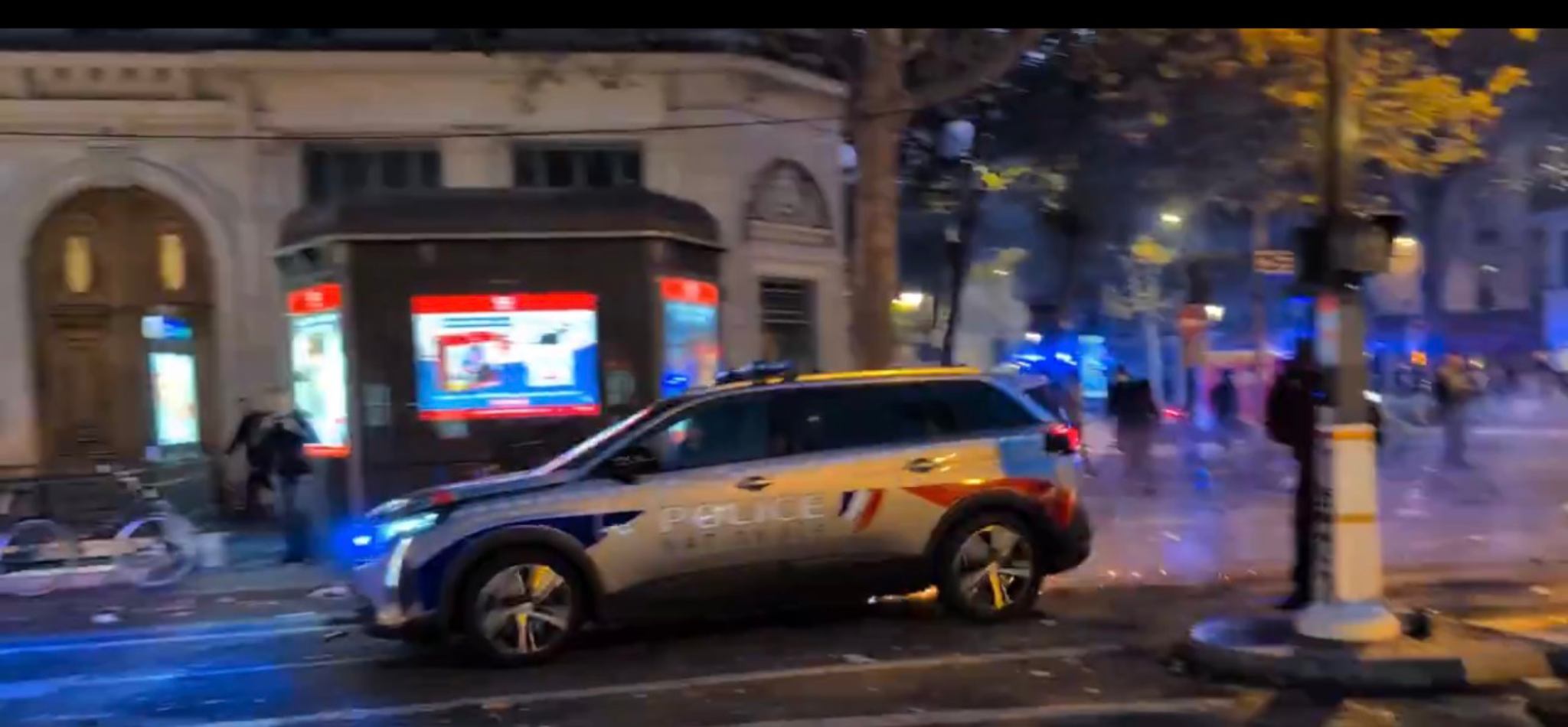
Paris riots left entire streets of the French capital in ruins this weekend, as protests over rising prices and failing schools turned into looting, fires and clashes with police across France.
Video:
Hundreds of stores were looted in Paris alone on Saturday, October 17. Paris Mayor Emmanuel Grégoire said whole streets had been systematically wrecked, and the newspaper Le Parisien reported that rioters left almost no business untouched around Les Halles, a major shopping district in the center of the city. Video showed looters cleaning out phone stores and tossing merchandise to people waiting outside. Tourists ran down streets thick with tear gas, dragging their suitcases behind them.
The morning after the Paris riots, Place de la République was covered in torn up cobblestones, shattered storefronts and broken glass. Parisians stopped to photograph the base of the square’s statue of Marianne, the woman who stands as the national symbol of France, which had been partly torn apart. Deputy Mayor Lamia El Aaraje said the city saw a level of violence she believes it has never seen before. A 78 year old resident told France 24 it was “like we had a war.”
Police arrested 855 people in the Paris region, and prosecutors kept 557 of them in custody. One person died during the main Paris march. Paris police said it was a heart attack, and officials said the death was health related and not caused by the violence. CNN reported that one police officer and one protester died overall, while other outlets have confirmed only the one death in Paris.
The Paris riots were part of a much bigger day. Authorities counted about 550,000 marchers across the country, while organizers put the number closer to 800,000. Most marched peacefully. Smaller groups of masked rioters attacked police, set fires and looted in Marseille, Lyon and Lille. Nationwide, at least 1,800 people were arrested, and more than 500 police officers, gendarmes (France’s military police) and firefighters were injured. Prime Minister Sébastien Lecornu said it was a “miracle” the number of casualties was not higher.
In Limoges, a city in central France, a group the regional prefect called “radical troublemakers” broke into the 143 year old City Hall while officials, employees and members of the public were still inside, and set it on fire. The roof and spire collapsed, and the building was largely destroyed. Mayor Guillaume Guérin has threatened to resign if the city does not get enough money to rebuild it.
The movement started last month at high schools in the poor suburbs north of Paris, where students were fed up with missing teachers and run down buildings. It grew into a national revolt over inequality, cuts to public services and a cost of living that keeps climbing while paychecks do not. The Yellow Vests, the movement that shut down France over fuel taxes in 2018, called on its members to march with the students on Saturday.
Fuel prices are where Trump comes in. On February 28, the United States and Israel launched air strikes on Iran. The war choked off the Strait of Hormuz, the narrow channel between Iran and the Arabian Peninsula that roughly a fifth of the world’s oil travels through. Oil prices jumped, and Europe paid for it at the pump. French diesel has climbed about 45 percent since the start of the year. The average price of petrol across the European Union set a record of €2.10 a liter in late September. A ceasefire eased prices over the summer, but the strait closed again in July. This past week, reports that Iran attacked ships in the strait pushed oil back above $107 a barrel.
Trump’s tariffs have done damage too, though less directly. Tariffs are taxes collected on goods coming into the United States, so they do not raise prices in French stores. They hit French businesses that sell to Americans instead. In 2025, François Bayrou, who was prime minister at the time, warned the tariffs could cost France more than half a percent of its economic output, and a Bank of France survey found that farming and food companies were hit hardest.
France also has its own money problems. The government has been struggling to cut its debt, and investors have been dumping French bonds, pushing the country’s borrowing costs to their highest point in more than 20 years.
The government accused France Unbowed, the hard left party led by Jean-Luc Mélenchon, of inflaming the protests, and the party denies it. Mélenchon marched in Paris on Saturday and said those who share the movement’s fight “have no business in looting or destruction.” The mayors of Paris, Marseille and Lyon, the country’s three largest cities, asked to meet with the prime minister over the damage.
French President Emmanuel Macron addressed the nation Sunday night, a day after the Paris riots. “Those who looted will have to pay back for the damage,” he said. “And those who sought to bring down the Republic will be held accountable.” He also said the government needs to listen to the grievances that brought people into the streets, and he is meeting with mayors on Monday. France’s next presidential election is in April.
