

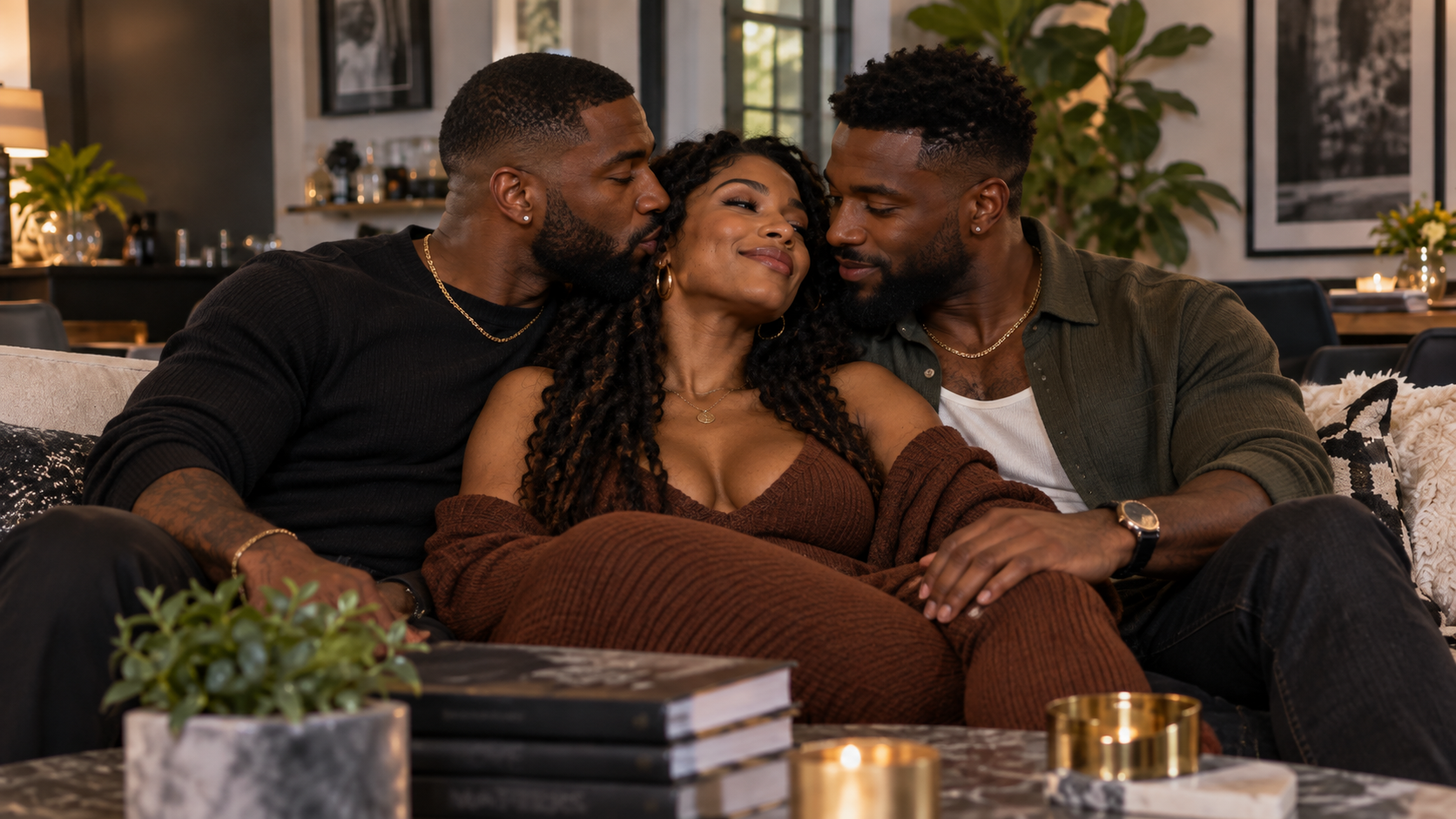
More Americans have tried polyamory than the stereotypes might suggest, and research increasingly shows that the relationship structure itself does not determine whether people will be happy, fulfilled, or committed. The bigger question for anyone considering polyamorous relationships is whether they actually have the communication skills, emotional bandwidth, boundaries, and desire to build one successfully.
Polyamory falls under the broader category of consensual nonmonogamy, meaning everyone involved knows about and agrees to having more than one romantic or sexual relationship. According to research published in Frontiers in Psychology, a national sample of 3,438 single American adults found that 16.8 percent had some desire to engage in polyamory and 10.7 percent reported having experienced a polyamorous relationship at some point. Race was not a significant predictor of previous engagement in that study.
That matters when talking about Black relationships because polyamory is sometimes framed as something foreign to Black dating culture. The research does not support such a simple conclusion. A separate national study of consensual nonmonogamy found lifetime experience was relatively consistent across race, while gender and sexual orientation showed bigger differences. The Journal of Sex & Marital Therapy study surveyed two large samples totaling more than 8,000 single Americans.
There is also research focused specifically on African Americans. A 2021 Archives of Sexual Behavior study surveyed 1,050 African American adults ages 18 through 40. Sexual orientation was the only significant predictor of consensual nonmonogamy in the researchers’ model. Age, gender, household income, religiosity, and education were not significant predictors. Participants described several reasons for choosing nonmonogamy, including excitement, bisexuality, viewing it as natural, and wanting to “maintain honesty, trust, and integrity.”
That honesty may be one of the strongest potential benefits of polyamorous relationships when they are genuinely consensual. Instead of pretending attraction to other people does not exist, partners can establish agreements about dating, sex, emotional intimacy, disclosure, testing, and boundaries. That does not automatically make the relationship healthier, but research does challenge the assumption that monogamy produces greater satisfaction by default.
A major 2026 meta-analysis in The Journal of Sex Research reviewed 35 studies involving 24,489 people. Researchers found no statistically significant overall difference in relationship satisfaction or sexual satisfaction between monogamous and nonmonogamous participants. Those results also did not significantly change based on whether the nonmonogamous relationship involved polyamory, an open relationship, or another agreement type.
There is an important racial limitation, however. The same meta-analysis reported that only one included study specifically sampled people of color. Twenty-two studies had majority White samples, while another 12 did not report participant ethnicity. That makes it important not to treat broad polyamory research as a perfect description of Black experiences.
Sexual health is another area where assumptions can get ahead of the evidence. Having multiple partners can create additional exposure opportunities, which makes testing, barrier use, disclosure, and clear sexual health agreements especially important. But consensual nonmonogamy should not be confused with secretly cheating. A Journal of Sexual Medicine study comparing openly nonmonogamous people with people who had been sexually unfaithful found that the openly nonmonogamous participants reported more protective sexual health behavior, more frequent STI testing, and more communication about safer sex. The finding does not mean polyamory is automatically safer than monogamy. It shows that consent and risk management matter.
Then there is jealousy, which does not disappear because everyone agrees to polyamory. The Frontiers study found that among people who had previously tried polyamory, 21.1 percent reported being too possessive to cope with it, while 32.8 percent said the emotional aspects were too difficult to navigate.
For Black adults considering the lifestyle, values may matter just as much as jealousy. A second Archives of Sexual Behavior study focused on African Americans surveyed 904 Black adults ages 18 through 40 who had never practiced consensual nonmonogamy. People who had considered it commonly cited curiosity, excitement, improving a relationship, or being open under the right circumstances. Those who rejected it commonly mentioned religious or moral beliefs, commitment to one partner, STI concerns, viewing nonmonogamy as cheating, or believing it would create drama.
Social pressure can become another downside. Research published in Personality and Social Psychology Bulletin found that people practicing consensual nonmonogamy reported experiences including relationship devaluation, character judgment, expressions of disapproval, and loss of resources or threatening behavior. Experienced stigma was also associated with greater psychological distress. Separate research involving 339 consensually nonmonogamous adults found that internalizing negative beliefs about their relationship style was associated with lower commitment and relationship satisfaction.
So, are polyamorous relationships right for you? Research cannot make that decision. Your answer probably depends less on whether polyamory sounds exciting and more on whether you can handle what happens after the excitement arrives. Can you communicate before resentment builds? Can you hear that your partner desires someone else without treating honesty as betrayal? Can everyone freely say no? Are your rules mutual instead of controlling? Can you manage time, safer sex expectations, jealousy, privacy, and emotional responsibility across multiple relationships?
Polyamory is not automatically more evolved than monogamy, and monogamy is not automatically more secure than polyamory. The research increasingly points toward something more practical: relationship quality depends on what the people involved actually agree to, how honestly they communicate, and whether the structure fits their values rather than somebody else’s idea of what love is supposed to look like.
