

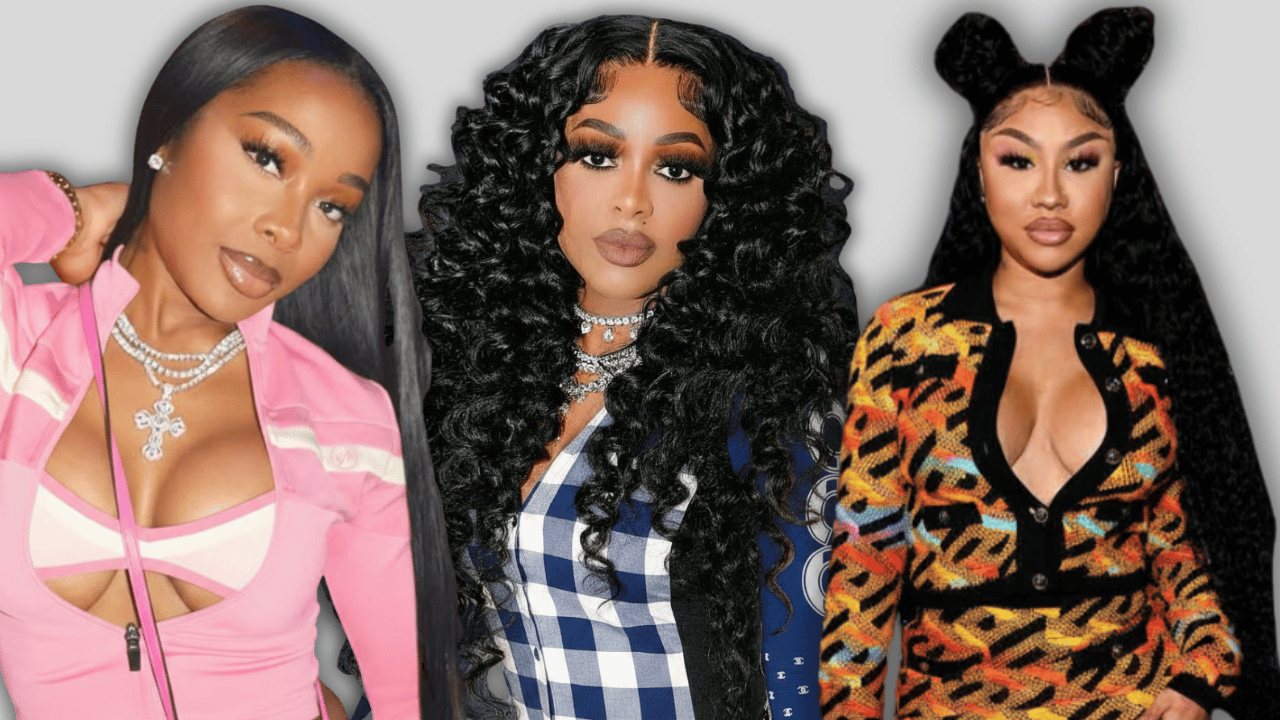
Hip-hop has always loved a “rapper’s girlfriend” storyline, but the women attached to some of rap’s biggest names have spent years flipping that label on its head. What used to be framed as “the girl beside the rapper” has evolved into something much bigger: CEOs, beauty founders, fashion bosses, influencers, reality TV stars, mothers, and women with their own audiences powerful enough to move product without a major label machine behind them.
Jayda Cheaves is one of the clearest examples of the modern rap girlfriend becoming her own brand. Publicly, many fans know her from her on-and-off relationship with Lil Baby, with whom she shares their son, Loyal Armani. The two were together for years, with Jayda once hinting online that she had been “played with” for six years. But Jayda’s money story did not begin with Lil Baby. Before the relationship became daily blog conversation, she was already selling, branding, and building. AfroTech reported that Jayda said she made $2.5 million from hair between 2016 and 2018, and Teen Vogue later profiled her as a self-made mogul who built Waydamin, a clothing brand that repeatedly sold out while she stayed hands-on in the warehouse, meetings, product selection, and marketing.
View this post on Instagram
Ari Fletcher’s story is another blueprint for how women in hip-hop-adjacent spaces can become the main event. She shares her son, Yosohn, with Chicago rapper G Herbo. The former couple welcomed their child in 2018 before splitting in 2019. By late 2019, Ari was being romantically linked to Moneybagg Yo, who confirmed their relationship in a 2020 interview by saying, “What you see is what you get.” But Ari did not sit back and let the relationships define her. She became one of the most recognizable influencers of her era, turning beauty, lifestyle, fashion, hosting, and social media into a real business lane. She launched Remedy by Ari in 2022 as an inclusive makeup line with glosses, lip liners, and an eyeshadow palette. Even when she later publicly separated from the Remedy name after alleging a former manager locked her out of brand accounts, Ari framed it as an evolution, not an ending.
View this post on Instagram
Keyshia Ka’oir may be the ultimate “don’t call me just a wife” example. She and Gucci Mane met in 2010 on the set of his “911 Emergency” music video, and the couple married in 2017 after years together, including Gucci’s time behind bars. Their loyalty story became part of hip-hop relationship lore, but Keyshia’s empire is the bigger headline. The model launched Ka’oir Cosmetics in 2010 and Ka’oir Fitness in 2013, with The Cut describing her business portfolio as a three-headed beauty empire made up of Ka’oir Cosmetics, Ka’oir Fitness, and Ka’oir Hair. Keyshia has also been blunt about not wanting to be viewed as a trophy wife, making it clear that her business identity stands on its own.
View this post on Instagram
Blac Chyna, now also known as Angela White, represents the video vixen-to-mogul era in its rawest form. She met Tyga after appearing in his “Rack City” music video in 2011. They broke up by August 2014 after welcoming a son, King Cairo. Their breakup, and the later Kardashian-Jenner drama surrounding Tyga, Kylie Jenner, Rob Kardashian, and Chyna, kept her in the headlines for years. But Chyna also turned notoriety into business. She founded Lashed in 2014, before Kylie Lip Kits existed, and expanded the brand into lip products, lashes, facial powders, skin care, and a California salon offering beauty services. Her journey has had public highs and lows, but she remains one of the clearest examples of a woman who turned music-video visibility into a full celebrity brand.
View this post on Instagram
Tammy Rivera built her lane through love, reality TV, music, and fashion. She married Waka Flocka Flame in 2014. The former “Love & Hip Hop: Atlanta” stars officially separated in 2022 and later divorced. Their relationship played out on television, but Tammy used that exposure to expand her own name. She launched T-Rivera, a swimwear brand, with Tammy explaining that she created the line because she had plus-size family members, including her sister and niece, and wanted stylish options for curvier women. She officially closed T-Rivera in 2024, though she continues to make boss moves in her post-divorce life.
View this post on Instagram
These women demonstrate how the “rap girlfriend” label has changed. In the old days, women in these spaces were often reduced to arm candy, baby mama drama, or background characters in a rapper’s rise. Now, many of them are building businesses, launching products, commanding social media followings, and turning public attention into long-term income.
The rapper may have introduced some fans to their names, but the mogul moves are what kept people watching.
