

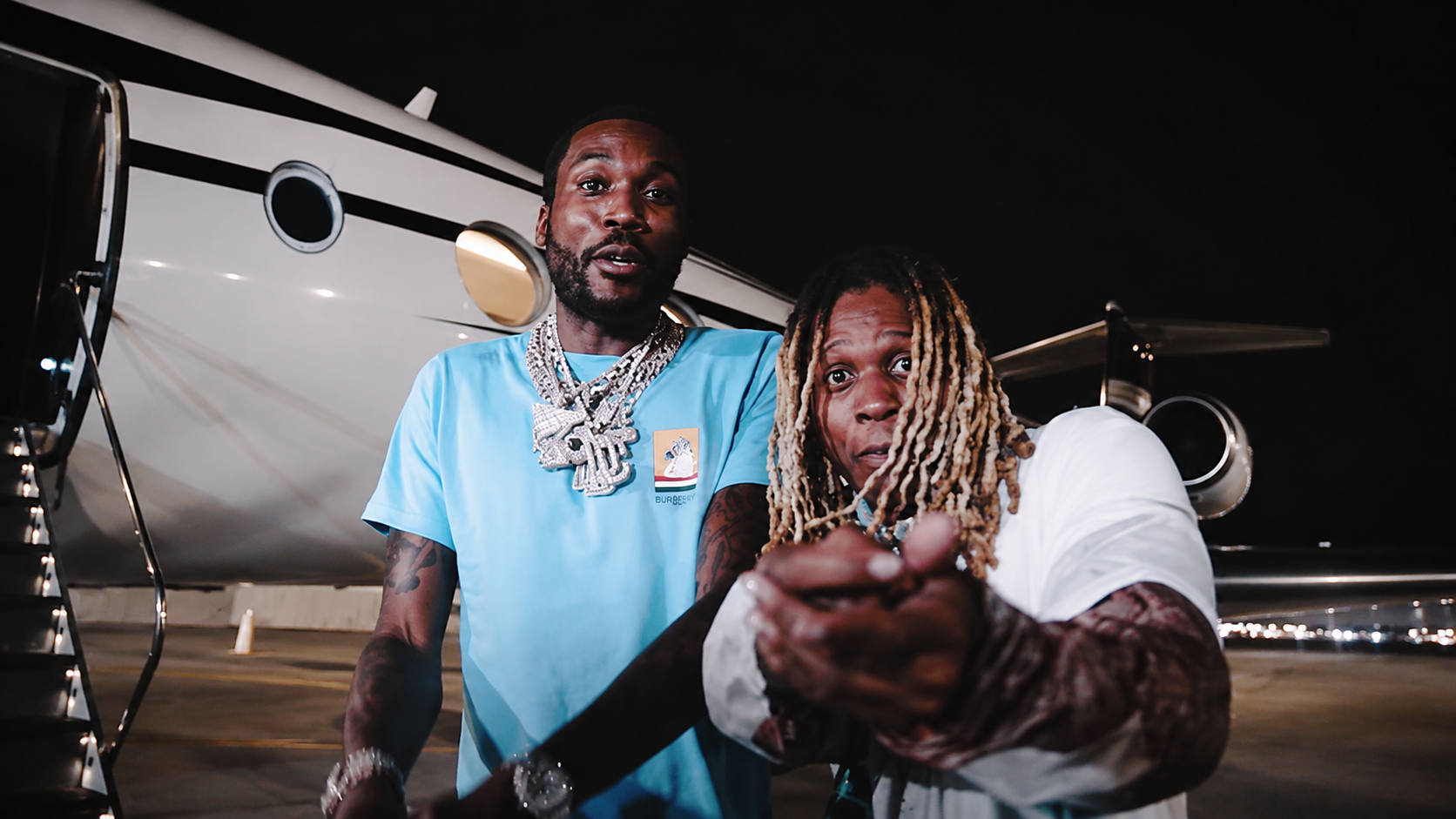
Meek Mill posted a public defense of Lil Durk on Friday, September 4, one day after both sides rested their cases in the Lil Durk trial in Los Angeles federal court. Writing on X, Meek described Durk as “just a innocent kid from Chicago” and then turned the question outward, asking why Durk’s brothers, cousins and friends were killed in what he called the greatest country on earth. He wrote that the two of them grew up playing Sega, drawing, and watching ‘The Lion King,’ and closed with a line aimed at everybody watching the case: “yall failed us and blamed us for everything.”
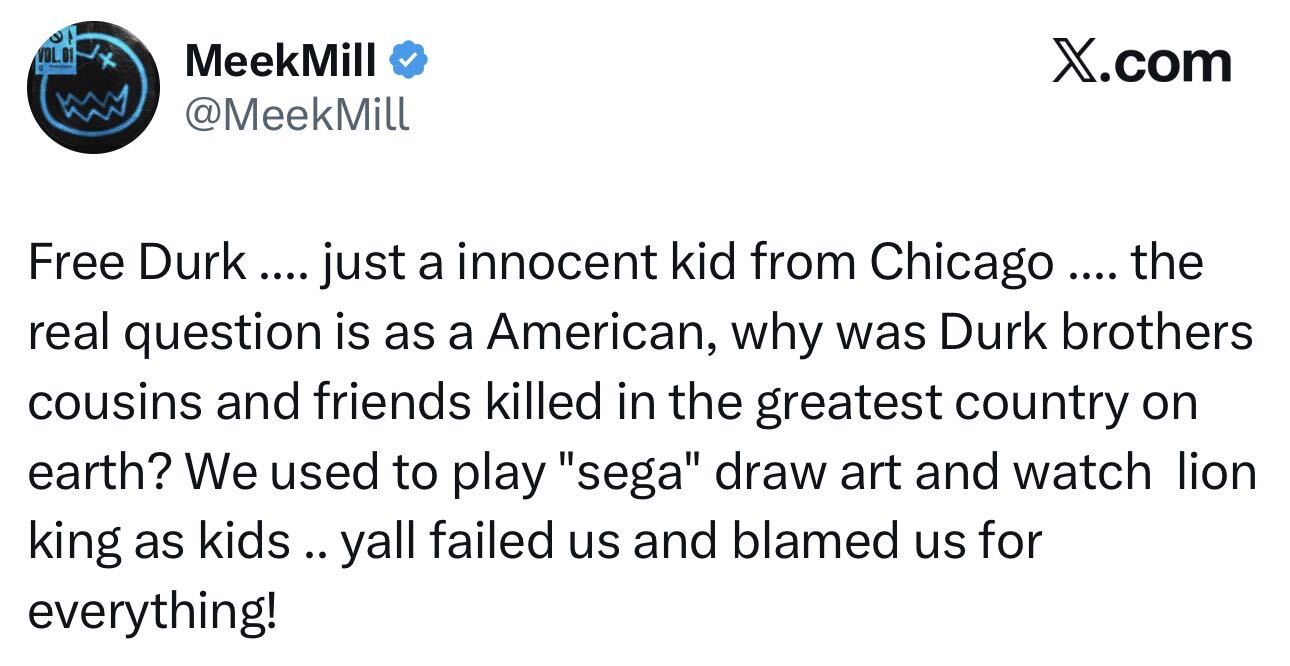
Plenty of people on X agreed with him and said Durk is innocent. Plenty of others wrote that the childhood nostalgia does not answer the charges, pointing out that Durk is a grown man in his thirties who built a career on the exact world Meek is now describing as something that happened to him. A repeated response was that Meek should have stopped at “Free Durk” and left it there.Testimony in the Lil Durk trial began August 24, and on Thursday, September 3, prosecutors and the defense both rested. U.S. District Judge Michael W. Fitzgerald sent jurors home until Tuesday, September 8 for closing arguments, since Monday is Labor Day. He has told the courtroom he expects deliberations to begin Tuesday or Wednesday.
Durk, whose legal name is Durk Banks, is charged with conspiracy, murder for hire resulting in death, and using a firearm to commit a violent crime. He has pleaded not guilty. If the jury convicts him, he faces life in prison. Prosecutors say he ordered a hit on rapper Quando Rondo in retaliation for the November 2020 killing of King Von, his closest friend and the biggest artist on his Only The Family label. The shooting happened August 19, 2022 at a gas station near the Beverly Center in Los Angeles. Rondo survived it. His cousin, Saviay’a “Lul Pab” Robinson, was killed.
The government built the Lil Durk trial around three cooperating witnesses. A cooperating witness is someone who admits his own role in a crime, pleads guilty, and agrees to testify for the government, typically hoping for a lighter sentence in return. In this case that was Kacey “OTF Jam” Hester, Keith “Flacka” Jones and Kavon “OTF Vonnie” Grant. Hester told jurors that before the shooting, Durk addressed a group at an Atlanta studio and let it be known that whoever handled Rondo would be taken care of, and testified that the figure discussed was a million dollars or half a million. Jones testified that he was one of the shooters and that he was never paid, and said he approached Durk in person after a United Center show asking for the money. Grant, who was working as Durk’s personal assistant at the time, testified that he took part in the shooting because Durk told them to.
Durk’s defense team, led by Drew Findling, Brian Steel and Marissa Goldberg, has spent the Lil Durk trial attacking those three men rather than disputing that the shooting happened. Their theory is that Grant organized the whole thing himself out of his own grief over King Von, and they have leaned on the argument that all three witnesses have a personal reason to hand the government the name it wants. In their own case, the defense called Hester’s wife, who told jurors she never heard a phone call her husband had described on the stand. They also called Shekema Springfield, a U.S. Army officer who dated King Von and had a son with him, to push back on Grant’s account.
Prosecutors also asked the jury to read meaning into Durk’s music, presenting lyrics they argue point to retaliation. The defense pushed to enter a podcast interview into evidence in which Durk said he was trying to turn the hate into love, arguing the government had used clips from that same sit down selectively.
This was not Meek’s first post about the case. On August 27, after Hester spent two days on the stand, Meek called him “the definition of a heathen” and said he would not believe a word out of him. Hester had testified that he still has love for Durk but no longer respects him, that he felt bad about testifying, and that cooperating could get him killed under the rules of the set he came up in.
What Meek is arguing on X and what the jury has been asked to decide are two different questions. The jury is not being asked whether a generation of young men in Chicago was failed. It is being asked whether prosecutors proved beyond a reasonable doubt that Durk gave the order. Closing arguments start Tuesday.
