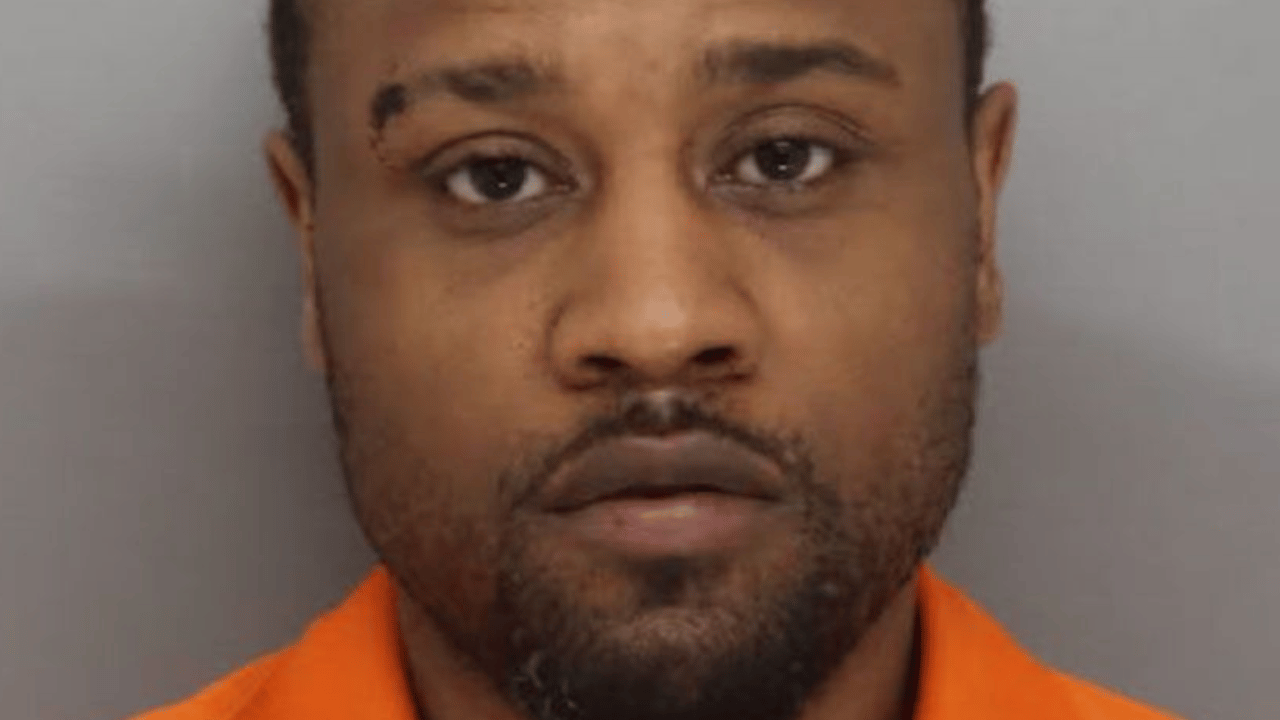
Rodney Hinton Jr.’s murder trial entered its first full day of testimony Thursday, October 8, as attorneys presented two very different explanations for why a grieving Cincinnati father drove his vehicle into a sheriff’s deputy just hours after watching footage of police fatally shooting his teenage son.
Video
The Rodney Hinton trial has become a closely watched case involving mental illness, police use of force, and criminal responsibility. According to WLWT News 5, Hinton’s attorneys maintain that he was experiencing a psychotic break when he struck Hamilton County Deputy Larry Henderson Jr. on May 2, 2025. Prosecutors argue the collision was intentional and motivated by revenge.Opening statements began Wednesday, October 7, before Hamilton County Common Pleas Judge Jody Luebbers. Jurors also visited the location where Henderson was killed near the University of Cincinnati.
According to WCPO 9’s courtroom coverage, Assistant Prosecutor Heidi Rosales told jurors that Hinton drove along Martin Luther King Jr. Drive, waited for opposing traffic to clear, and accelerated across several lanes toward Henderson. The deputy was directing traffic during the university’s graduation weekend and wearing a bright safety vest.
Rosales argued that Hinton’s driving before the collision demonstrated awareness and deliberate decision making. She maintained that he knew his actions were wrong, even while dealing with the emotional aftermath of his son’s death.
As FOX19 reported, Rosales told the jury, “Emotional distress does not excuse murder.”
But Hinton’s defense attorney, Clyde Bennett II, challenged the prosecution’s interpretation of his client’s actions. Bennett argued that Hinton had struggled with serious psychiatric conditions long before the deaths of his son and Henderson.
During opening statements, Bennett described a history of depression, hallucinations, psychiatric treatment, and episodes of psychosis. He cited an incident in 2023 when Hinton was found walking unclothed through Middletown, Ohio, and subsequently received hospital treatment.
Bennett also told jurors that Hinton had received diagnoses including schizoaffective disorder and had previously taken antipsychotic medication. The defense contends that his condition deteriorated after he stopped taking prescribed treatment and worsened significantly after learning how his son died.
“He did not understand the wrongness of his conduct when he killed Deputy Henderson,” Bennett told jurors, according to WCPO.
That distinction is central to the Rodney Hinton trial. His attorneys are not disputing that Hinton’s vehicle struck Henderson. Instead, they must persuade jurors that his psychiatric condition prevented him from recognizing the wrongfulness of his actions at the time.
Courtroom testimony on Wednesday also brought attention to Henderson’s family. His widow, Lori Henderson, became the prosecution’s first witness and emotionally recalled the morning her husband left home for work.
According to FOX19, Lori described their final exchange, including a hug and expressions of love before Henderson headed to his traffic assignment. A sheriff’s office captain later testified about the uniform and reflective vest Henderson was wearing when he was struck.
Hinton’s aunt, Markita Robinson, also took the witness stand. She testified that Hinton appeared quiet and deeply saddened after viewing video of his son’s shooting. Robinson said relatives followed Hinton’s vehicle because they became concerned about his behavior. She described him obeying traffic laws during part of the drive before accelerating rapidly near the intersection where Henderson was working.
The events behind the Rodney Hinton trial began on May 1, 2025, when Cincinnati police fatally shot Hinton’s 18-year-old son, Ryan Hinton, during an investigation involving a stolen vehicle.
According to WVXU’s reporting on the shooting investigation, officers approached a vehicle at an apartment complex in Cincinnati’s East Price Hill neighborhood. Four people reportedly ran from the vehicle, including Ryan.
During the foot pursuit, police said Ryan was carrying a handgun. Body camera footage showed him stumbling and falling before moving between two dumpsters. An officer fired at Ryan shortly afterward, fatally wounding him.
Police maintained that Ryan pointed his weapon toward an officer, prompting the use of deadly force. However, the body camera footage was blurry, and the Hinton family’s attorneys disputed whether it established that Ryan had threatened the officer with his gun.
On June 17, 2025, Hamilton County Prosecutor Connie Pillich announced that the officer’s actions were legally justified and that her office would not pursue criminal charges.
In the prosecutor’s official findings, Pillich said investigators determined Ryan had a loaded firearm and pointed it toward the officer. The case was not presented to a grand jury.
Ryan’s relatives challenged that conclusion. Family attorney Fanon Rucker questioned whether the available footage supported the officer’s account and announced plans to pursue civil litigation. The family also called for further scrutiny of the shooting.
The following morning, May 2, Ryan’s relatives gathered at Cincinnati police headquarters to review body camera footage of his final moments. His father was among those present.
According to WCPO’s timeline of both deaths, Hinton became visibly distressed during the meeting. Family members described him as withdrawn and emotionally shaken.
A few hours later, Hinton was driving near the University of Cincinnati when his vehicle struck Henderson, who was standing outside directing traffic. The deputy suffered fatal injuries.
Henderson was not involved in Ryan Hinton’s shooting. He worked for the Hamilton County Sheriff’s Office, while the officer who killed Ryan belonged to the Cincinnati Police Department.
That difference is important to the prosecution’s theory. Authorities allege Hinton deliberately targeted an uninvolved law enforcement officer after witnessing footage of his son’s death, rather than acting without an understanding of what he was doing.
Henderson had served the sheriff’s office for approximately 33 years before retiring in December 2024. He continued working special assignments, including the graduation traffic detail. Sheriff Charmaine McGuffey previously credited him with training hundreds of deputies and making a lasting impact on the department.
Hinton was arrested following the collision. A Hamilton County grand jury initially indicted him on two aggravated murder counts, one murder count, and two felonious assault counts in May 2025.
However, the criminal proceedings took a significant turn after mental health evaluations were presented to the court.
According to FOX19’s reporting on the case, Hinton now faces one murder count and two felonious assault counts after the capital charges were dismissed.
In January 2026, Judge Luebbers removed the possibility of a death sentence after prosecutors and defense attorneys agreed that Hinton met Ohio’s legal standard for serious mental illness that disqualifies a defendant from capital punishment.
That decision did not establish that Hinton was legally insane when Henderson died.
Under Ohio Revised Code Section 2901.01, a defendant seeking a verdict of not guilty by reason of insanity must establish that a severe mental disease or defect prevented them from knowing their actions were wrong at the time of the offense.
Simply having a psychiatric diagnosis, experiencing extreme emotional distress, or struggling with impaired judgment does not automatically satisfy that requirement.
The distinction has become one of the biggest issues in the Rodney Hinton trial. Although mental health evaluations supported removing the death penalty, the experts assessing his criminal responsibility have reached different conclusions.
According to WCPO, a court-appointed psychologist and an expert for prosecutors concluded that Hinton did not meet the legal definition of insanity. An expert retained by the defense reached the opposite conclusion.
Jurors are expected to hear extensive testimony about those evaluations, Hinton’s psychiatric history, his behavior following Ryan’s death, and the circumstances surrounding the fatal collision.
The trial is expected to last approximately three weeks, with dozens of witnesses and substantial video and photographic evidence. If convicted, Hinton could face life imprisonment without the possibility of parole.
The Rodney Hinton trial now turns on whether prosecutors can establish criminal responsibility despite his documented mental illness, or whether the defense can prove that his condition prevented him from understanding the wrongfulness of killing Henderson. The jury’s decision will determine the legal outcome of a case that began with the deaths of an 18-year-old son and a veteran sheriff’s deputy just one day apart.