

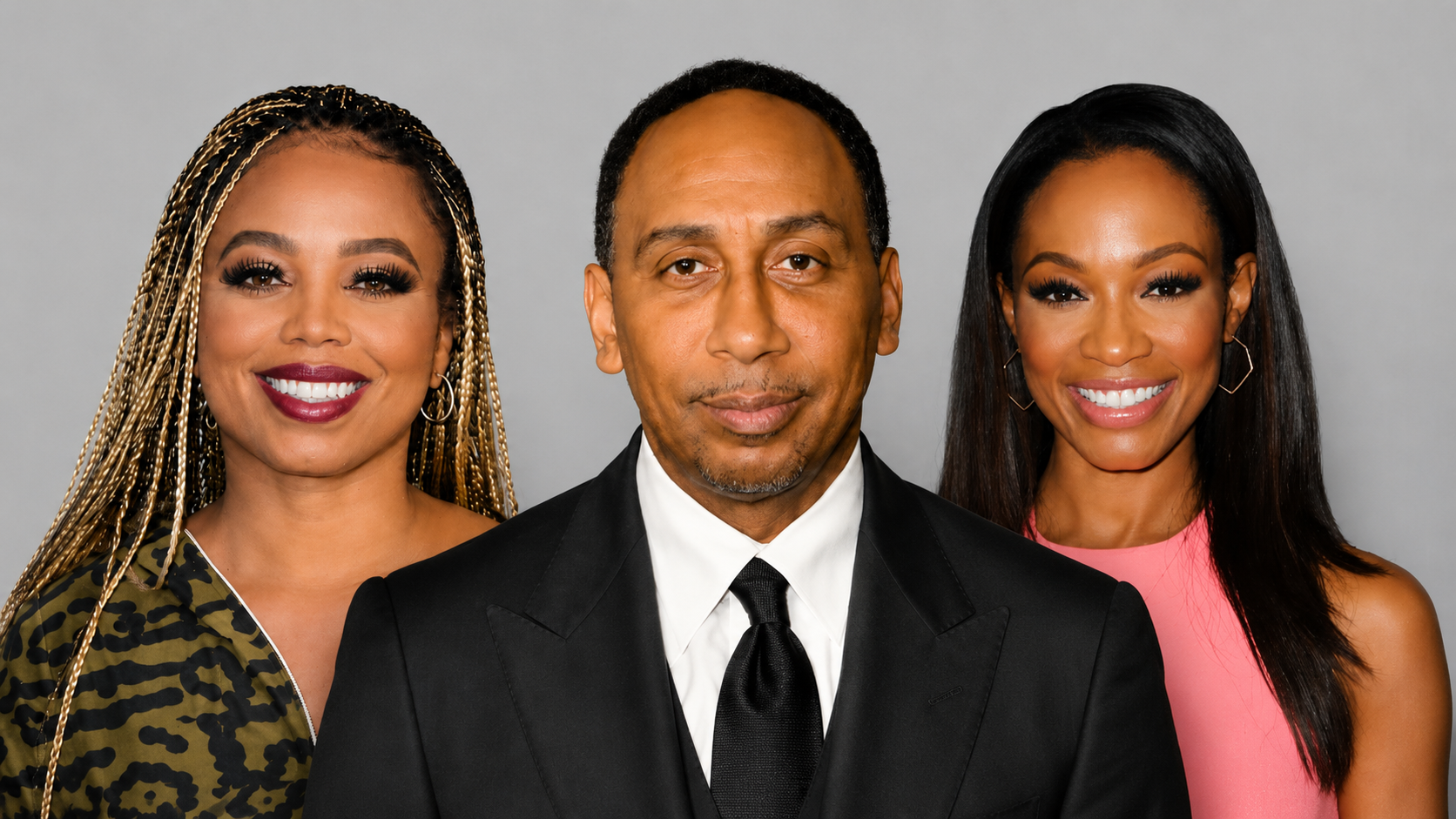
Stephen A. Smith walked into a conversation with two former ESPN colleagues and quickly found himself answering for the same controversies that have followed him across sports, politics, and Black media.
Video
Jemele Hill and Cari Champion welcomed Smith to their “Flagrant and Funny” podcast for a lengthy and candid discussion that put their complicated history, public disagreements, and recent criticism of Smith directly on the table. Part 1 was released September 2 and runs one hour and 42 minutes, with the trio discussing their perceptions of one another, politics, sports, supporting athletes, and Black women.The Stephen A. Smith conversation carries extra weight because Hill and Champion are not outsiders reacting to his television persona from a distance. Both worked at ESPN, and Champion previously shared the “First Take” desk with Smith. Their relationships with him stretch back years, which allowed the discussion to move beyond social media clips and into questions about how each person interpreted comments that have created friction between them.
That tension became especially public in November 2025. Champion questioned whether Smith brought the same level of criticism to Michelle Beadle that he had directed toward Black women, including Jasmine Crockett, Michelle Obama, Jemele Hill, and Champion herself. She also referenced the controversy surrounding Smith’s comments during the Ray Rice domestic violence scandal.
Smith responded forcefully at the time. Mediaite reported that he told Champion she should be “ashamed” and argued that he had supported her career, including her move to “First Take.” He also questioned why someone he considered a friend would publicly criticize him after receiving that support. The exchange immediately opened a larger conversation about whether professional sponsorship should have any bearing on a former colleague’s ability to challenge someone publicly.
Months later, that debate became even bigger when the National Association of Black Journalists publicly rebuked Stephen A. Smith.
NABJ presented Smith with a 2026 Thumbs Down Award during its annual convention in Atlanta. The organization said Smith had established a “recurring public pattern of disparaging commentary directed at prominent Black women across politics, sports and media.” NABJ also said the commentary undermined fair and respectful representation of Black women in public discourse.
Smith strongly rejected that characterization.
Smith later called the award a political and “personal hit job.” He argued that NABJ had failed to fairly examine his record, including his support for Black journalists and women throughout his career. Smith also disputed the idea that criticizing the statements or actions of individual Black women automatically amounted to disparaging Black women as a group.
That distinction became a major point in the larger Stephen A. Smith debate. Critics have argued that the issue is not simply whether Smith has criticized Black women, but whether his language, tone, and intensity shift depending on who is receiving the criticism. Smith has maintained that he responds to public figures based on what they say and do, regardless of their race or gender.
Hill has offered a more complicated assessment.
During an August appearance on “The Don Lemon Show,” Hill said criticism directed at Smith had been fair and valid in several instances, particularly questions surrounding what she described as different energy when he addresses certain Black people and Black women. At the same time, according to The Don Lemon Show, Hill also acknowledged Smith’s history of helping Black journalists gain opportunities and visibility inside the media industry.
That nuance is important because the “Flagrant and Funny” sit-down was never simply positioned as two women confronting an enemy. These are journalists with history, disagreements, professional respect, and very different interpretations of what accountability should look like.
The official podcast description says the three discussed what is real versus what has been amplified through media coverage. That framing gives Stephen A. Smith an opportunity to explain his intentions directly to two women who have challenged him publicly while also requiring him to hear their criticism without the distance of separate podcasts, television appearances, and social media responses.
It also comes after Hill publicly questioned aspects of Smith’s response to the NABJ controversy. Following his appearance with Sean Hannity, the Los Angeles Times reported that Hill criticized the decision to discuss grievances involving Black journalists on Fox News, arguing that the network’s broader treatment of Black political and cultural figures made the venue especially troubling to her.
Still, the conversation with Hill and Champion appears to leave room for something that has been missing from much of the public back-and-forth: people actually speaking to each other instead of about each other.
Smith reportedly pushed back when he disagreed, while Hill and Champion challenged his reasoning and raised questions about the impact of his commentary. Yet the discussion also gave Smith space to acknowledge both women and recognize their work, suggesting that disagreement did not erase the professional respect between them.
