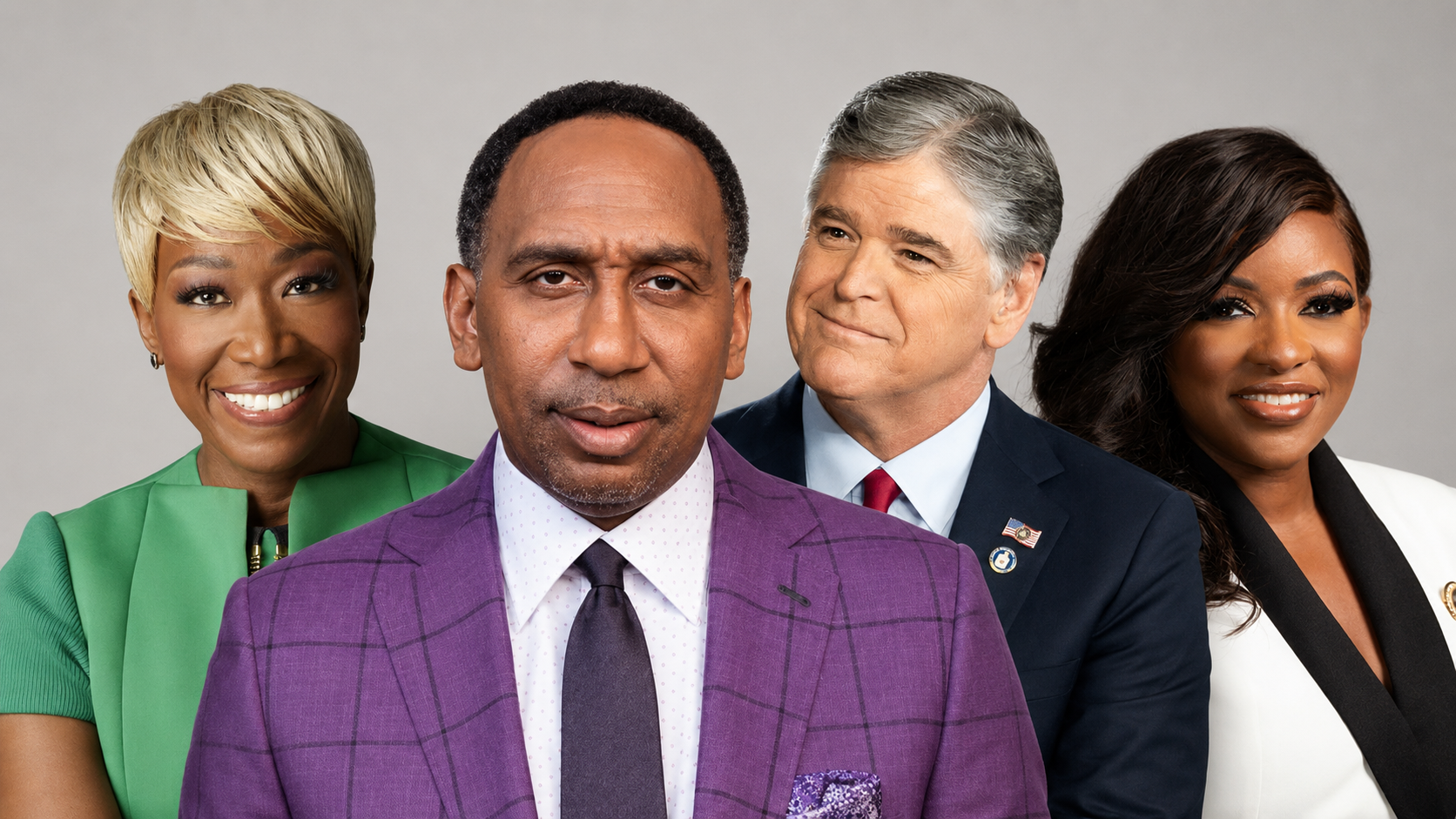
Stephen A. Smith is not backing down from his fight with the National Association of Black Journalists, and this week he took the dispute to Sean Hannity’s Fox News show.
Video
Smith appeared on “Hannity” to discuss NABJ’s decision to give him its “Thumbs Down” award, a distinction that has sparked a public war of words between the longtime ESPN personality and the journalism organization.The award was announced during NABJ’s annual convention in Atlanta. According to Capital B, the organization handed out five “Thumbs Down” awards this year, the most in its history, with Smith joining CBS News, The Washington Post, Federal Communications Commission Chair Brendan Carr and media executive DuJuan McCoy among the recipients.
NABJ specifically accused Stephen A. Smith of establishing a “recurring public pattern of disparaging commentary directed at prominent Black women across politics, sports and media.” The organization said the award is intended to call attention to individuals and institutions whose conduct it believes conflicts with its goals surrounding diversity, fairness and press freedom.
Smith has rejected that characterization forcefully.
During his Hannity appearance, Smith said, “I find it highly offensive they would label me in this way, give me a thumbs down award specifically for disparaging Black women. I want everybody out there to know, there’s no such thing. That did not happen.”
Smith told Hannity that what NABJ described as disparagement was instead disagreement with statements made by public figures. He argued that criticizing the opinions or actions of Black women should not automatically be interpreted as attacking Black women as a group.
Hannity quickly placed the Stephen A. Smith controversy inside a broader political argument.
Hannity brought up Rep. Jasmine Crockett and journalist Joy Reid while asking Smith whether criticism from the political left was driving the backlash against him. Hannity described comments from Crockett and Reid as “nutty” while questioning whether Smith had become a target because of his willingness to criticize prominent liberal voices.
Smith agreed that politics played a role. He called NABJ’s characterization “utterly ridiculous” and continued denying that his criticism of individual Black women amounted to a pattern of disparagement. Smith also pointed to being raised by his mother and five sisters while rejecting the organization’s description of him.
The Hannity appearance comes after Stephen A. Smith delivered an even longer response to NABJ on his own platform. Smith used a lengthy YouTube response to describe the award as a political and personal “hit job.” He said it was among the lowest insults he had received and accused NABJ of allowing political disagreements to influence its decision. Smith, who identifies as an independent, also argued that some criticism directed toward him stems from his refusal to consistently praise the Democratic Party.
NABJ leadership has offered a substantially different explanation.
In an interview with Capital B, NABJ President Errin Haines said the organization had heard concerns about Smith’s commentary involving Black women across sports, media and politics. Haines specifically referenced his past commentary involving Kamala Harris, Jasmine Crockett and his public dispute with Joy Reid as examples that contributed to NABJ’s conclusion that there was a broader pattern.
Haines also acknowledged Smith’s history with NABJ and the support he has provided to Black journalists. According to Capital B, she said Smith has done good work for journalists within the organization and expressed hope that the two sides could eventually have a conversation about the disagreement and how to move forward.
That distinction is central to the fight. Stephen A. Smith maintains that his commentary focuses on what specific public figures say or do, while NABJ argues that the frequency and framing of his criticism toward prominent Black women has created a pattern that deserves scrutiny.
Haines told Capital B that NABJ does not view the award as punishment based on whether leadership personally likes or dislikes a recipient. She said the organization uses the distinction as an accountability mechanism when it believes influential people or institutions are causing harm to Black journalists or Black communities.
NABJ has also disputed portions of Smith’s account of its response to him. According to the Los Angeles Times, the organization said Haines welcomed a conversation with Smith and proposed beginning privately before potentially moving to a public discussion. NABJ said Haines had not rejected speaking with him publicly altogether.
Smith, however, appears determined to challenge the organization’s conclusion in public.
By bringing the dispute to Hannity, the conversation also moved beyond an internal debate within Black journalism and into the wider political media ecosystem. Hannity framed the criticism around Smith’s willingness to challenge liberal figures such as Crockett and Reid, while Smith maintained that NABJ had unfairly transformed political and cultural disagreements into accusations that he disparages Black women.
For now, neither side appears to agree on the fundamental question at the center of the controversy: whether Stephen A. Smith’s record reflects tough commentary aimed at individual public figures or a broader pattern in how one of the country’s most visible media personalities talks about prominent Black women.