

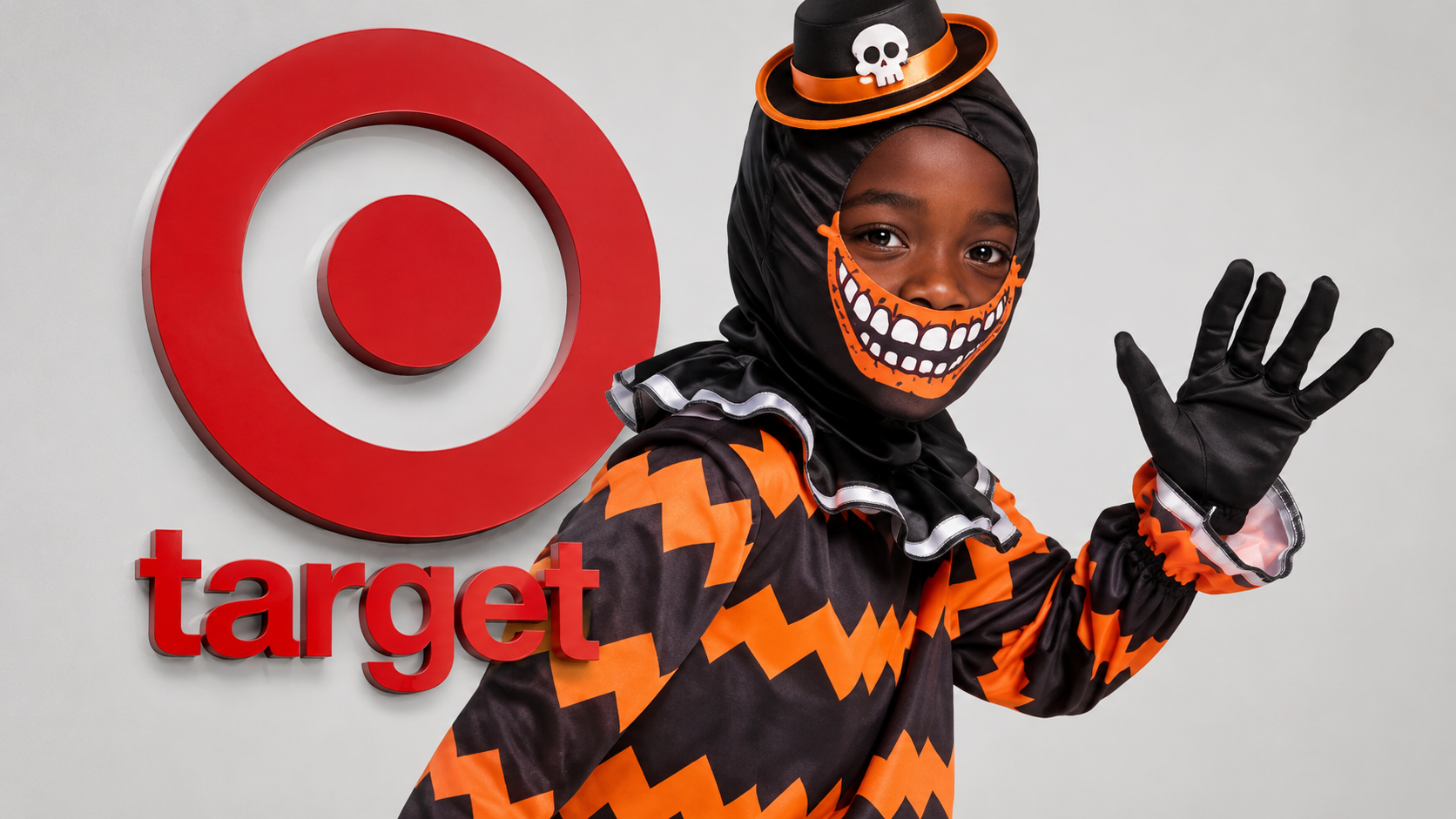
Target is facing another crisis of trust after pulling a children’s Halloween costume that critics said echoed blackface and minstrel show imagery, with the controversy hitting just as the retailer was showing signs of rebuilding momentum with shoppers and investors. According to Reuters, Target shares fell about 5 percent in early trading Tuesday, August 25, one day after the company apologized for selling the offensive costume. The stock had reached a near two year high Monday and had climbed roughly 70 percent in 2026 before the latest backlash.
@elliottspeaksTarget confirmed their costume was racist. So who exactly was ‘playing the victim’ when Black people called it out? Let me explain what actually happened here.
The Target Halloween costume was listed as the “Kids’ Glows Under Blacklight Circus Clown Halloween Costume.” The $25 outfit was shown on a Black child wearing an orange and black clown costume with a ruffled collar, black gloves, and a dark face covering displaying an exaggerated, wide, toothy smile. The look also included baggy checkered pants and a small top hat. The combination immediately drew comparisons online to racist caricatures associated with blackface and American minstrel shows.
The criticism was not simply about a clown wearing dark colors. Much of the outrage centered on the face covering, which obscured the child’s real features and replaced them with an oversized, stylized grin. The fact that a Black child was used to model the Target Halloween costume intensified the reaction because critics saw the image as visually placing a racist caricature directly over a Black child’s face. Consumers described the design as resembling blackface and minstrel imagery, while Target ultimately agreed that the product was offensive.
The historical comparison carries weight because blackface was never just theatrical makeup. According to the Smithsonian National Museum of African American History and Culture, minstrel shows emerged in the 1830s with white performers darkening their faces using materials such as burnt cork or shoe polish while exaggerating Black appearance, speech, movement, and behavior for entertainment. Those performances portrayed Black people through stereotypes that framed them as ignorant, lazy, foolish, or otherwise inferior. The museum explains that these images helped turn racial mockery into popular culture while reinforcing ideas used to deny Black Americans dignity and equal citizenship.
That history is why the oversized mouth and darkened face in the Target Halloween costume triggered such a specific response. Blackface minstrelsy repeatedly used distorted facial features and exaggerated expressions to turn Black identity into a joke. The Smithsonian notes that minstrelsy distorted not only the appearance of African Americans but also their language, dancing, and character. In that context, a modern children’s costume featuring a Black child behind a nearly blacked-out face and cartoonishly broad grin can evoke imagery with a long history of dehumanizing Black people even if the costume was marketed simply as a circus clown.
There is currently no public evidence that Target intentionally set out to create a minstrel costume. What remains unanswered is how the design made it through whatever merchandising, branding and review process Target used before it appeared for sale. Target declined to identify who designed the costume or explain how it was approved. The item was part of Target’s seasonal Hyde and EEK Boutique brand.
In its official response, Target said the costume “should never have been part of our assortment” and confirmed that it had been removed from sale. The company added, “As a company, we know we got this wrong, and we are deeply sorry,” while acknowledging that the incident was “especially hurtful for our Black guests, team members and partners.” Target said it is reviewing how the product was approved and what needs to change to prevent another incident.
For some Black consumers, however, the apology landed against a much larger backdrop. Minneapolis entrepreneur Sheletta Brundidge, who previously protested the retailer over its diversity decisions, told Reuters that she connected the costume controversy to Target’s decision to scale back parts of its diversity, equity and inclusion structure. Brundidge questioned who was left in decision-making rooms to recognize that the imagery was offensive after the company reduced its diversity efforts.
That frustration dates back to January 2025, when Target announced significant changes to programs that had helped build its reputation as one of corporate America’s more visible champions of inclusion. According to Target’s own Belonging at the Bullseye strategy, the retailer said it would conclude its three-year diversity, equity, and inclusion goals, end its Racial Equity Action and Change initiatives, stop participating in external diversity surveys such as the Human Rights Campaign’s Corporate Equality Index, and rename its Supplier Diversity operation as Supplier Engagement. Target maintained that the REACH program had already been scheduled to conclude in 2025.
Target has since updated that same corporate fact sheet to say it fulfilled its commitment to invest $2 billion in Black-owned businesses in early 2026. That distinction matters because the company did not eliminate every initiative involving Black entrepreneurs or underrepresented communities. Still, the broader rollback became a symbolic breaking point for customers who believed Target had spent years marketing itself around inclusion and then retreated when the political environment changed.
The response quickly became organized. According to The Associated Press, Rev. Jamal Bryant, senior pastor of New Birth Missionary Baptist Church near Atlanta, launched a 40-day “Target Fast” on March 5, 2025, alongside other faith and civil rights leaders. Participants were encouraged to stop spending at Target and redirect their money toward Black-owned businesses. Bryant told The Washington Post at the time that roughly 110,000 people had signed up. Protest organizers demanded that Target restore its diversity commitments and honor its previously announced investment in Black businesses.
The financial effect became more than a social media talking point. In May 2025, Reuters reported that Target’s first quarter comparable sales fell 3.8 percent and that then CEO Brian Cornell acknowledged consumer reaction to the company’s diversity changes had played a role in the quarter’s performance. Cornell said Target could not quantify exactly how much of the decline came from that backlash. Reuters also reported that tariffs, economic uncertainty and cautious consumer spending were pressuring the company, meaning the boycott cannot accurately be treated as the sole explanation for Target’s weaker results.
Target itself later acknowledged the broader protest movement. In its 2025 annual report, the retailer told investors that changes to its diversity initiatives produced adverse reactions from customers, shareholders, and others, along with “consumer boycotts organized throughout 2025.” The filing also warned that controversies involving social and political issues could damage Target’s reputation and financial results.
The Halloween controversy also arrives after Target spent years navigating another inclusion battle around LGBTQ communities. In May 2023, the company removed certain Pride products after employees experienced threats and confrontations. In an official statement, Target said employee safety drove the decision. LGBTQ advocates then criticized the retailer for retreating under pressure, and Target subsequently reduced how broadly its Pride merchandise appeared in physical stores. The Associated Press reported in 2024 that the retailer would use sales performance and consumer research to determine which stores carried the collection while continuing to sell the full assortment online.
Those controversies reveal the difficult position Target has repeatedly created for itself. The company built significant brand equity around welcoming diverse shoppers, then faced backlash both when it embraced inclusion and when it pulled back from it. Target’s own annual report says its 2023 Pride assortment resulted in boycotts and litigation, while its 2025 diversity changes produced another wave of organized consumer resistance.
That history is also what makes the newest Target Halloween costume controversy more damaging than an isolated bad product. Target was already trying to rebuild consumer loyalty under CEO Michael Fiddelke when the costume surfaced. Reuters reported Tuesday that shareholder group SOC Investment Group viewed the incident as part of a broader pattern in which Target has lost trust with parts of its customer base. The costume has been removed, but the larger question now facing Target is why an image carrying such obvious echoes of one of America’s oldest racist entertainment traditions reached customers in the first place.

Time to boycott Target. If they are that insensitive and clearly they are. Now they will circle the wagons and say how it was an accident or we won’t do it again. JUST BOYCOTT THEM. Talk about FATIGUE with all these racist b.s actions. Just the other day another black man at 38 was found hanging from a tree. When white people show you who they are. BELIEVE THEM. BOYCOTT TARGET.