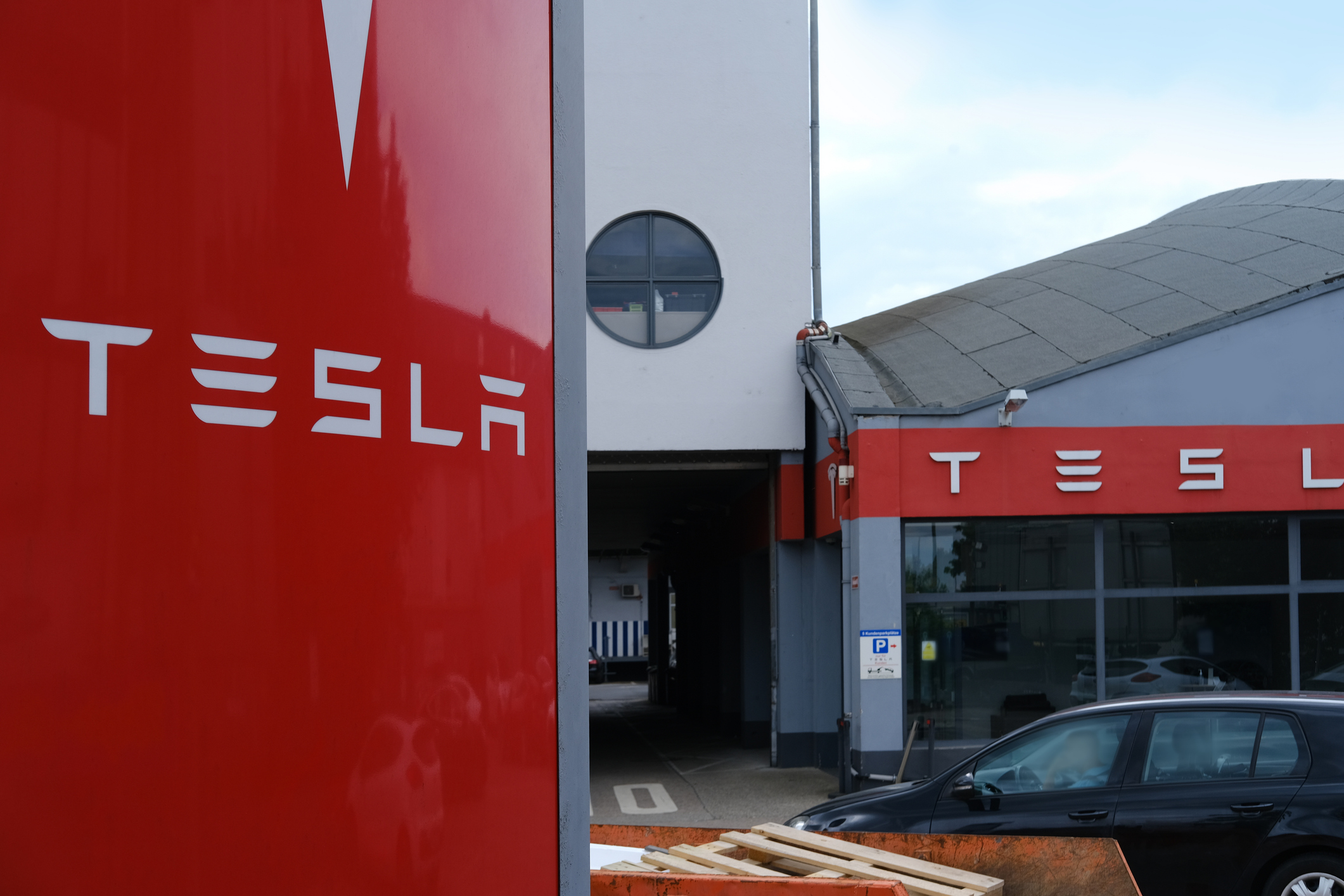
Las Vegas is about to become an even bigger testing ground for driverless transportation after Nevada regulators opened the door for Tesla to dramatically expand its Robotaxi operation across Clark County.
According to the Nevada Transportation Authority, commissioners unanimously approved Tesla Robotaxi LLC to operate as an Autonomous Vehicle Network Company during an August 20 meeting. The authorization allows Tesla to provide paid rides using fully autonomous vehicles in Clark County, which includes Las Vegas.
The approval represents a major expansion from the limited authority Tesla received just weeks earlier. According to Axios, Nevada regulators had previously allowed Tesla to operate only 10 vehicles under an interim arrangement after the company sought permission for as many as 5,000. The broader approval now gives Tesla significantly more room to grow its Nevada Robotaxi fleet.
Still, 5,000 Tesla robotaxis should not be confused with 5,000 vehicles arriving on Las Vegas streets immediately. During the August 20 regulatory meeting, Cybercab chief engineer Eric Earley made clear that Tesla views the number as maximum capacity rather than a short-term deployment forecast.
“The 5,000 has always been a ceiling for us,” Earley said. “I don’t think we’ll be in a position by this time next year to deploy 5,000 vehicles, and it’s not [because of] the technology. … I think we would be extremely happy and satisfied if we could get ourselves up to 2,500, maybe a bit higher than that in the next year.”
The remarks offer a more measured picture of Tesla’s Nevada ambitions. Even if the company eventually reaches roughly half of its permitted maximum, thousands of Tesla robotaxis operating around Las Vegas would represent a substantial change to the city’s already crowded ride-hailing and taxi market.
Tesla will also have competition. The Nevada Transportation Authority approved applications from Waymo and Aviari Services during the same August 20 meeting. Nevada regulatory records identify Aviari Services as a wholly owned Uber subsidiary. Waymo and Uber each received authorization for fleets of up to 1,000 autonomous vehicles.
Uber was already introducing autonomous rides in Las Vegas before the latest regulatory vote. In March, Uber announced that it and Hyundai-backed Motional had launched robotaxi rides in Las Vegas using all-electric IONIQ 5 vehicles. The initial service included designated locations on Las Vegas Boulevard, Downtown Las Vegas, and the Town Square area.
Amazon-owned Zoox has also become part of the growing driverless vehicle race in Nevada. According to Reuters, Zoox began offering paid robotaxi rides in Las Vegas in August 2026 after previously operating free rides during earlier stages of its rollout. That means Tesla robotaxis will enter a market where multiple major technology and transportation companies are already competing for riders.
There is one important limitation for travelers. Although Tesla’s approved operating territory includes Harry Reid International Airport, the Nevada Transportation Authority said autonomous vehicle companies cannot begin serving the airport until they receive separate authorization from the Clark County Department of Aviation. That distinction could matter in Las Vegas, where airport transportation represents one of the city’s most important ride markets.
Tesla’s Nevada expansion also comes at a critical moment for its larger autonomous driving strategy. According to Tesla’s official Robotaxi website, the company currently offers autonomous Robotaxi rides using Model Y vehicles in Austin, Dallas and Houston, Texas, along with Miami, Orlando and Tampa, Florida. Tesla says the Cybercab will eventually join the service as its purpose-built autonomous vehicle.
The company has already moved beyond the concept stage. In its second quarter 2026 shareholder update, Tesla said Cybercab production had started and that engineering test drives using production vehicles had begun on public roads. Tesla also said employees started taking Cybercab rides on the Gigafactory Texas campus in July.
Unlike the Model Y vehicles currently being used for Tesla robotaxis, the two-seat Cybercab was designed without a steering wheel or pedals.
That design is central to Tesla’s vision of a future transportation network built around vehicles that never require a human driver. Tesla has said its autonomous strategy relies heavily on cameras and artificial intelligence rather than the lidar-heavy sensor approach used by competitors such as Waymo.
The timing puts even more pressure on Tesla to demonstrate that Cybercab can move beyond presentations and controlled testing. Tesla’s Robotaxi expansion had progressed more slowly than some of the company’s earlier projections, despite its expansion into several Texas and Florida cities. Tesla told investors that it had expanded unsupervised operations while continuing testing, permitting and first responder training ahead of additional launches.
Safety will remain central as those deployments grow. In July, the National Highway Traffic Safety Administration called on autonomous vehicle developers across the industry to improve how driverless vehicles interact with police, firefighters and other first responders after the agency identified incidents involving autonomous vehicles interfering with emergency operations.
For Tesla, Nevada represents both an opportunity and a test. The state has given the company enough regulatory room to make Las Vegas one of its largest Robotaxi markets, while Tesla’s own engineer has already tempered expectations about how quickly the fleet will grow. With Waymo, Uber, Motional and Zoox also building their autonomous businesses in and around Las Vegas, the next stage will be less about who has the biggest permit and more about who can safely put vehicles on the road, attract riders and keep them operating at scale.