

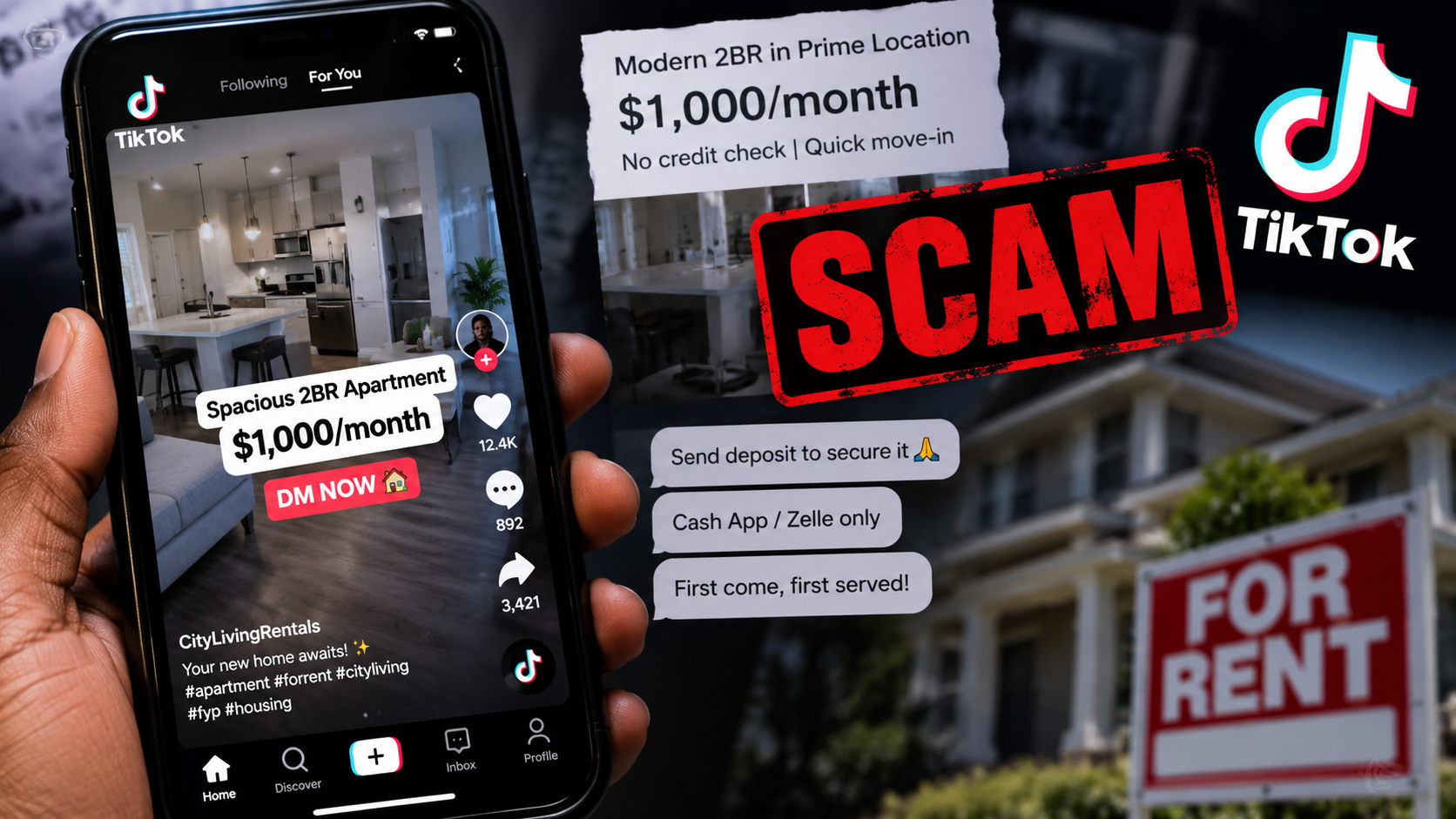
A cheap apartment on TikTok can look like the break a renter has been waiting for, but a new study suggests some of those deals deserve a much closer look. Rental scams that have circulated for years on Craigslist and Facebook Marketplace are now appearing in TikTok videos, giving scammers another way to reach people searching for affordable housing.
According to CNC Intelligence, researchers analyzed 3,141 TikTok rental listings across 16 U.S. cities in August 2026 and found that 68 percent carried either medium or strong scam warning signs. Importantly, CNC Intelligence said the findings do not establish that 68 percent of TikTok rentals are fraudulent. The study measured suspicious characteristics that researchers could not reconcile with property records, rental data, or other publicly available information.
The data shows how convincing rental scams can be. CNC Intelligence said 2,216 of the 2,791 listings it was able to compare with pricing data were advertised at least 25 percent below the relevant market benchmark. Researchers also found 174 listings advertising homes that public records showed were for sale rather than for rent. Among listings that included phone numbers, 76 percent used area codes outside the city being advertised. Half of the accounts studied were less than six months old, while 72 had been created less than two weeks before researchers found them.
The presentation is part of what makes these rental scams effective. According to CNC Intelligence, scammers can reuse photos and videos taken from legitimate property listings, then advertise the same home at a much lower price. Some posts give only a neighborhood, monthly rent, and phone number, leaving prospective renters with little information to independently verify. Researchers said 1,407 listings in their sample did not provide a street address.
The conversation can then move quickly from scrolling to sending money. CNC Intelligence said that when its researchers contacted one flagged account, they were told to pay a $60 refundable application fee before a viewing could be arranged. The application requested personal information including date of birth, income, and other background details. The account offered payment options including Zelle, PayPal, Apple Pay, Chime, Venmo, and Cash App.
That pattern also surfaced in Jacksonville. According to News4JAX, one TikTok post advertised a San Marco property for $990 per month while Zillow showed the same property listed for $1,890. News4JAX also found another TikTok account advertising a Jacksonville home as a rental while Zillow showed the property listed for sale. The TikTok poster was requesting a $1,000 deposit from prospective renters.
The problem extends far beyond TikTok. The Federal Trade Commission says consumers reported nearly 65,000 rental scams from January 2020 through June 2025, totaling approximately $65 million in reported losses. The median reported loss during that period was $1,000. The agency also cautions that reported cases likely represent only a portion of the actual damage because many fraud victims never report what happened.
Facebook remains a major part of the rental scam problem. According to an FTC analysis, about half of consumers who reported a rental scam during the 12 months ending in June 2025 said it began with a fake advertisement on Facebook. The FTC also found that adults ages 18 to 29 were three times more likely than other adults to report losing money to a rental scam, making younger renters an especially important target for consumer warnings.
Recent complaints submitted to the Better Business Bureau Scam Tracker show how the pitch can unfold on Facebook Marketplace. In one July 2026 report, a person searching for an apartment said someone requested a $29.95 supposedly refundable application payment before the renter could see the property. The BBB notes that Scam Tracker entries are reports submitted by consumers and are not independently proven fraud cases, but they offer a look at tactics people say they are encountering.
Another July 2026 BBB Scam Tracker report described a Facebook Marketplace rental conversation that moved to WhatsApp. The consumer said they were asked to send $150 as a refundable deposit simply to view an apartment. After the payment, someone claiming to be a lawyer allegedly requested another $350 to secure the property. The consumer reported losing the original $150 before ending communication.
Other rental scams focus as much on stealing information as on stealing a deposit. The FTC warns that scammers may copy a real property listing, replace the legitimate agent’s contact information, and repost it elsewhere. Others invent properties that are not available at all. After making contact, the fake landlord may pressure the renter to pay an application fee, security deposit, or first month’s rent before the property can be properly verified.
Even getting inside a property does not automatically prove the person advertising it is authorized to rent it. The FTC says some scammers have exploited legitimate self-guided tour systems by copying listings from landlords that use lockboxes, then helping potential victims access the home to make the scam appear authentic. The agency recommends verifying the rental company or property manager independently rather than relying only on information supplied by the person who posted the ad.
The financial stakes can extend well beyond the narrower category of rental fraud. The FBI Boston Division reported that 12,368 people nationwide submitted complaints involving the broader category of real estate scams in 2025, with reported losses totaling more than $275 million. The FBI warns that criminals can duplicate legitimate real estate advertisements, impersonate owners or brokers, and demand wire transfers or digital payments before disappearing.
For renters, the best defense is verification before payment. The FTC recommends searching the full property address online, comparing prices and contact information across listings, confirming the property through the official management company, and seeing the rental before paying whenever possible. The agency also warns against anyone demanding payment through methods that are difficult to reverse, including cryptocurrency, wire transfers, and certain payment apps.
The bigger warning is that rental scams no longer have to look sloppy. A scammer can copy professional photos, reuse a real address, impersonate a legitimate agent and build a polished social media account around a property they do not own. Whether the listing appears on TikTok, Facebook Marketplace, Craigslist, or inside a housing group, an unusually good price paired with urgency, an upfront viewing fee, or a refusal to independently verify ownership should give renters a reason to stop before sending money.
