

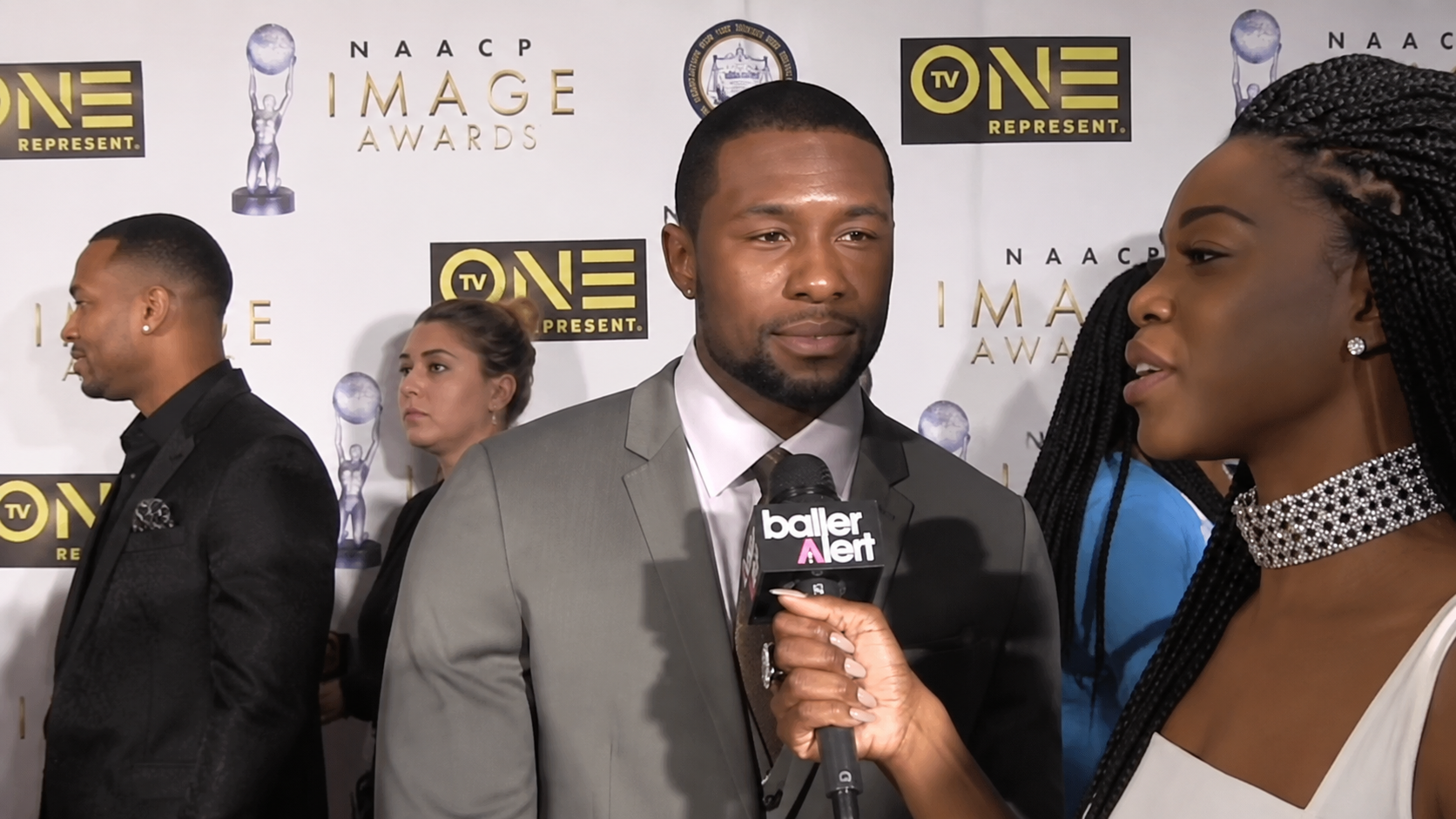
The InterviewHere’s what he told Baller Alert, back when it all still felt new:
On the moment he knew he had to be in this film:
“So you’re reading the script, you get ‘Moonlight,’ and what page, what scene made you say absolutely?”
Rhodes: “I’ll say page 3. By the time you see that this kid is this person and he’s struggling with this; I knew what my chapter was gonna be before I even finished the first chapter. The third chapter was just like an affirmation of who this person was, and it was so beautiful. It was just so, like I’ve never seen that before. Like it was gorgeous.”
That’s the whole film in miniature, honestly. Rhodes is describing the exact structure that made Moonlight so radical: you meet Chiron three separate times, as three different people, and the third time is the one where he finally gets to just be. Rhodes knew that before he’d even read his own part.
On what the film says about masculinity:
“With a story like ‘Moonlight,’ do you feel like there’s this other conversation, masculinity, that now you’re obviously a part of? What is that like now? What does masculinity look like? Has it changed so much?”
Rhodes: “I’m hoping. I’m hoping that, because we try to mask how we feel all the time, just so we can put on this facade and be this amazing person all the time, but it’s really about being your truth, living in your truth, and being your honest self. When we do that, as a collective, everything is gonna be amazing, I feel like. I don’t know. So I’m hoping that people kind of follow suit, and we’ll see.”
“At the end, I was like, I wanted more. It’s weird, it’s a long movie, and I was like, ‘Oh, that’s it?'”
Rhodes: “That’s good, though; it makes you want more. And at the same time, I like the fact that it ended the way it did, because it prompts you to think, again, ‘I want more.’ And I love films like that.”
“So do you know what we’re all thinking when it was over, was it the same thing you were thinking?”
Rhodes: “I mean, I hope so. I was thinking, with the ending, I say this often, I was thinking that after that, they grow old together. 80 years old, walking in the park, hand in hand, with the puppies. I was thinking, how come he wasn’t able to be with anybody else before that? Like he’s been by himself that whole time. Because when you find the one, you’re 10. I say it often, but I feel like love is on a scale of 1 to 10. We settle for 6s and 7s and end up divorced. But when you find your 10, why would you waste your time with anyone else? Stop wasting time. Bust your ass to get it and keep it. It’s amazing.”
That’s not a press-tour soundbite. That’s a man who genuinely lived inside this character for months, still trying to write Chiron and Kevin’s ending in his head months after the cameras stopped rolling.
Ten years is long enough for a lot of “important” movies to fade into “the one that won that year.” “Moonlight” hasn’t. It’s still being taught, still topping best-of-the-century lists, still the answer when someone asks what a $1.5 million film can do when every single frame is intentional. And listening back to Rhodes talk about it in real time, before the retrospectives, before the “10 years later” thinkpieces, before he even knew how the film would land, you get to hear someone falling in love with a role in real time, not performing, having loved it in hindsight.
Happy 10th, “Moonlight.” You’re still a 10.
