

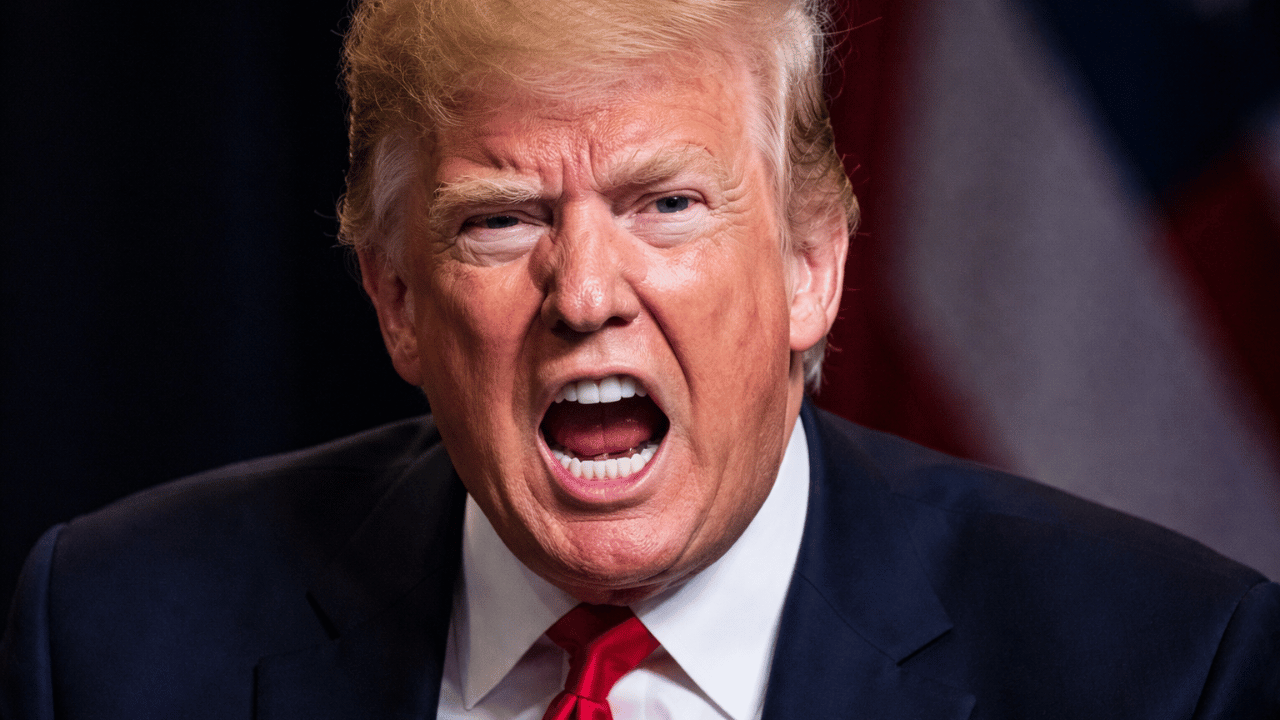
Trump said Thursday that foreigners taking advantage of birth tourism number in the hundreds of thousands, and that one family who came in claimed 98 children. Asked directly how many individuals take advantage of birth tourism, he said he would tell you right now, hundreds of thousands, then described one man who came in with a family and said he had 56 children, and another who came in and said they had 98. In the same clip, Solicitor General D. John Sauer, the administration’s own top courtroom lawyer, did not have an answer when the question of how many came up.
Video
That gap is the story. The 56 figure is one Trump has used publicly for months, usually attached to Chinese billionaires, and no reporting has ever produced a single documented case of anyone obtaining U.S. citizenship for dozens of children by giving birth here. The 98 version is new. It also has no source behind it beyond his telling of it.The actual numbers are much smaller and nobody has exact ones, because no federal agency tracks birth tourism. The Migration Policy Institute estimated in 2026 that roughly 26,000 births a year might fall into that category, out of about 3.5 million total births in the United States annually. That is well under one percent. The CDC counted about 9,500 births in 2024 to parents who listed a non U.S. address as their residence, a figure that is likely an undercount but nowhere near hundreds of thousands. He said all of this while signing two executive orders on August 6 aimed at limiting who gets citizenship by being born here.The context is a loss. On June 30, in a case called Trump v. Barbara, the Supreme Court ruled 6 to 3 that his original birthright citizenship order was unlawful and out of step with the 14th Amendment. Chief Justice John Roberts wrote the opinion, Justice Amy Coney Barrett joined the three liberal justices, and Justice Brett Kavanaugh also voted to block it, though on statutory grounds, meaning he found it violated a law Congress passed rather than the Constitution itself.That first order, signed the opening day of the second term in January 2025, would have denied citizenship to babies born here to parents who were undocumented or living here legally on temporary visas. The reasoning was that those parents are not subject to the jurisdiction of the United States, a phrase taken from the Citizenship Clause. It never took effect. Every lower court that reviewed it blocked it, with one judge calling it blatantly unconstitutional.Thursday’s orders take a different route. Rather than fight over what the amendment means, they try to widen the small set of exceptions courts already recognize. Four exist: children born here to foreign sovereigns and diplomats, children of foreign forces during a hostile occupation, children born on foreign public ships, and children of members of Native American tribes. The diplomat one is the target.The first order expands the administration’s list of who falls outside birthright citizenship to include alien enemies of the United States, members of designated foreign terrorist organizations, and what Stephen Miller called large categories of people who lobby and act on behalf of foreign governments. It reaches below the ambassador level into diplomatic staff, and touches children born in United States territories, though Congress would have to rewrite existing statutes for that piece to mean anything, since federal law currently makes people born in places like Puerto Rico citizens.The second order directs the secretaries of State and Homeland Security to deny visas to people entering to give birth. Trump promised very big crackdowns on organized operations and described people building businesses around it and buying their way in. Federal regulations already prohibit getting a tourist visa primarily to give birth here for citizenship, so a good portion of that order tells agencies to enforce what already exists.Both orders apply only to future births. Nobody who already holds citizenship is affected.Trump called the June ruling very unfortunate, said it was close, and said his administration is making adjustments because the situation is unfair. Asked what makes him confident this version survives court, he said he thinks it will and handed the question to White House staff secretary Will Scharf, who said the orders rely on existing authorities and legally validated means that do not conflict with the ruling.The framing underneath all of it is the one worth holding onto. Miller repeated the administration’s position that the 14th Amendment was passed to guarantee citizenship for the children of enslaved people and is now being exploited. Trump has said the same for months, arguing the timing proves it because the legislation lands at the exact end of the Civil War. Roberts took that argument on directly in the June opinion, writing that the men who drafted the amendment defined citizenship in broad terms on purpose and specifically rejected the people who wanted it kept narrow.More legal challenges are expected almost immediately. The 14th Amendment, ratified in 1868, says all persons born or naturalized in the United States, and subject to the jurisdiction thereof, are citizens of the United States and of the state where they live.
