

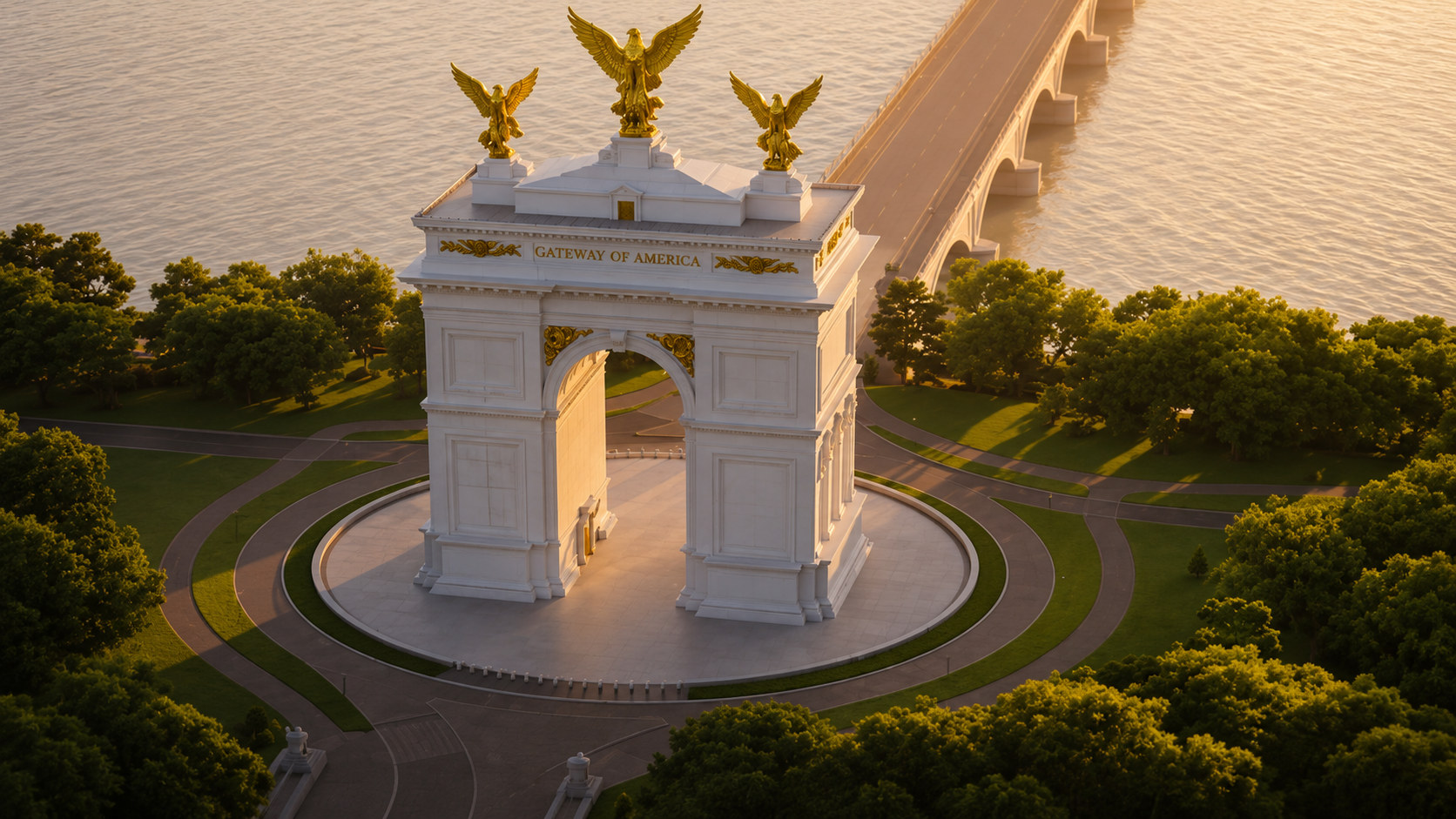
The Trump triumphal arch project has been stopped by a federal judge just hours after receiving final approval, throwing Donald Trump’s plan for a towering monument near Arlington National Cemetery into legal uncertainty.
On Thursday, November 5, the National Capital Planning Commission voted 8 to 4 to approve the proposed 250-foot structure at Memorial Circle, between the Lincoln Memorial and Arlington National Cemetery. The approval appeared to clear the way for construction, but U.S. District Judge Tanya Chutkan intervened later that evening, granting a temporary restraining order that prohibits work for 14 days.
The ruling followed a legal challenge from Washington, D.C., and Virginia, whose attorneys argue that the administration is attempting to build a massive federal monument without obtaining congressional authorization. Their lawsuit also raises concerns about traffic congestion, environmental damage, emergency services, and the potential disruption of one of the country’s most recognizable historic landscapes.
In her decision, Chutkan determined that the jurisdictions had demonstrated a credible threat of immediate harm if construction began. Addressing the anticipated consequences, she wrote, “The threatened harms will materialize as soon as construction begins.”
The Trump triumphal arch would rise approximately 25 stories above Memorial Circle, a traffic roundabout connecting Arlington Memorial Bridge to the entrance of Arlington National Cemetery. At that height, the monument would be more than twice as tall as the Lincoln Memorial and taller than the Arc de Triomphe in Paris, the famous French landmark that helped inspire its design.
Architectural renderings depict a classical stone-colored arch decorated with golden sculptures, including a winged figure positioned at the top. The proposed structure is intended to commemorate America’s 250th anniversary, although that milestone was celebrated on July 4, 2026.
Trump initially announced the concept in October 2025, presenting the monument as an ambitious addition to Washington’s landscape. His administration has promoted the structure as a tribute to American history, military service, and national achievement.


Made to order and shipped to your door.
However, the project has faced resistance from veterans, preservation advocates, local officials, and residents who believe its location threatens the solemn atmosphere surrounding Arlington National Cemetery.
Three Vietnam War veterans and an architectural historian filed a separate lawsuit challenging the proposal. Among their concerns is the possibility that the enormous structure would interrupt the historic sightline between the Lincoln Memorial and Arlington National Cemetery.
That visual connection was deliberately incorporated into the landscape surrounding Arlington Memorial Bridge, which symbolizes national reconciliation following the Civil War. Opponents argue that placing a monumental arch directly along that route would permanently change the experience for visitors and military families.
During earlier court proceedings, Vietnam veterans Michael Lemmon and Shaun Byrnes described how the planned monument could affect their visits to graves at Arlington.
The arch has also generated controversy over its proposed military functions. In September, Trump described the structure as potentially serving national security purposes, including accommodating drones, ammunition storage, and positions for military personnel.
Those features were not detailed in the final architectural plans submitted for federal review. Administration officials have maintained that the design could accommodate the security capabilities Trump discussed.
The legal disagreement extends to whether the federal government already possesses the authority to construct the monument.
Administration attorneys have relied partly on legislation dating back to 1925, arguing that Congress previously authorized improvements connected to the Arlington Memorial Bridge area. Chutkan questioned whether that century-old authorization could reasonably extend to building an entirely new 250-foot monument.
Construction itself could create extensive disruptions. Justice Department filings indicated that foundation work might begin immediately following federal approval, with the overall project expected to take approximately 33 to 39 months.
Virginia and D.C. officials contend that excavation, road closures, pollution, and disruptions to emergency response routes could impose high costs on surrounding communities.
The National Capital Planning Commission nevertheless approved the final plans after a lengthy public hearing featuring testimony from veterans, lawmakers, architects, and residents. More than 100 people participated in the public comment process, with substantial opposition expressed during the proceedings.
The commission’s approval recognized the proposed monument’s commemorative purpose and accepted the administration’s explanations concerning the building’s height and design. Commissioners also encouraged officials to monitor construction noise to limit potential disturbances near Arlington National Cemetery.
For now, the Trump triumphal arch remains approved by federal planning authorities but legally prohibited from moving into construction.
Chutkan has ordered the government to submit a compliance report by Monday, November 9, while the lawsuits continue. The temporary restraining order does not permanently prohibit the monument, and additional court proceedings will determine whether construction can move forward.
