
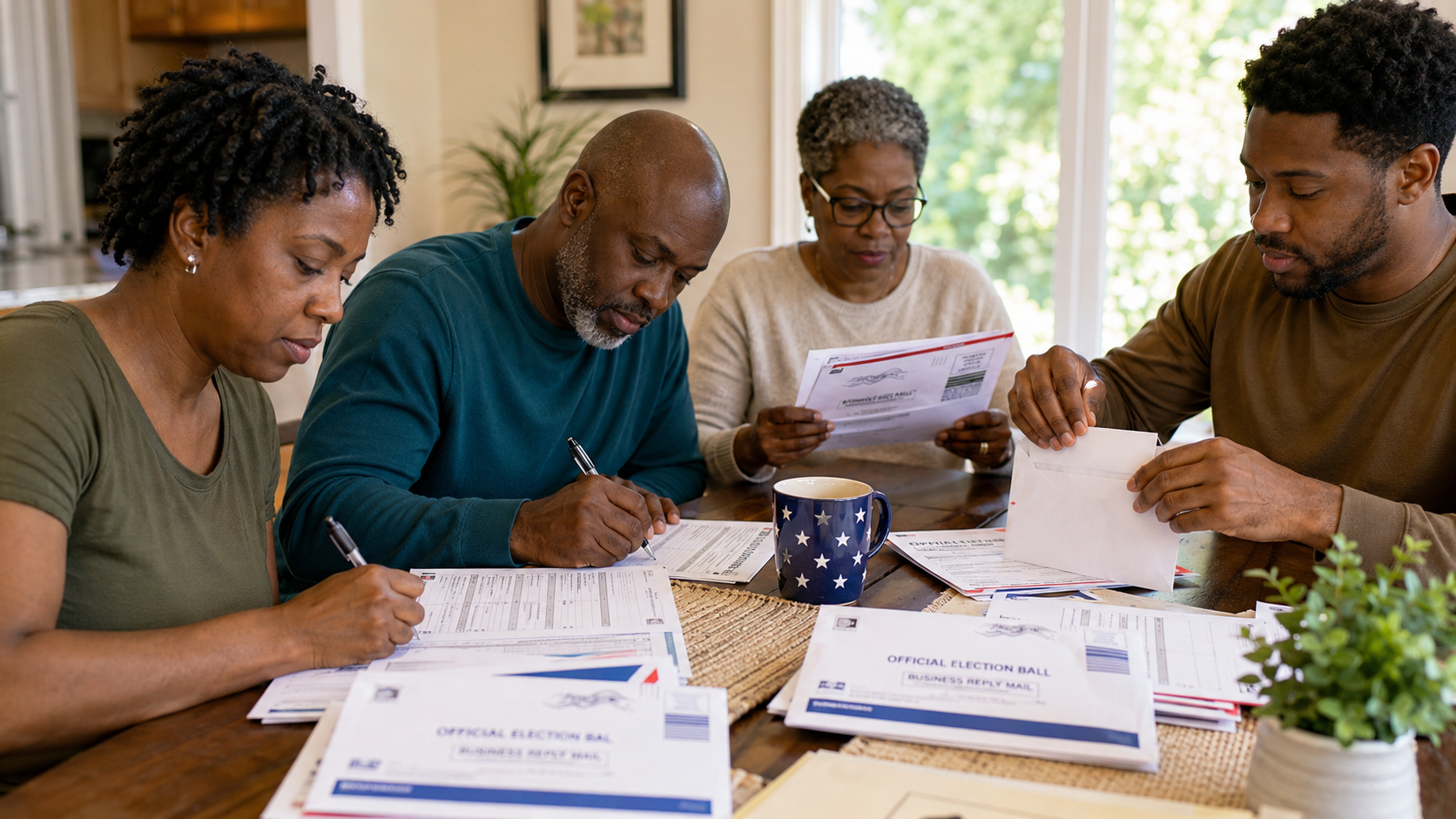
A USPS whistleblower has set off alarm bells on Capitol Hill and among civil rights advocates, warning that a rushed ballot verification system could block mail ballots for thousands of voters before they ever reach a mailbox.
According to Axios, the disclosure describes a system the Postal Service built in a matter of weeks rather than the nine months to a year such a complex platform would normally take. Per Rolling Stone, the whistleblower alleges USPS adopted an “impracticable zero percent failure rate” for the new portal, meaning if even one ballot in a large batch fails to scan or match a state’s voter list, the entire batch, sometimes thousands of ballots, gets rejected and bounced back to election officials. Mail carriers are expected to sample roughly 400 ballots out of a batch of 10,000 or more to check them against the federal portal before the batch can move forward.
The USPS whistleblower disclosure traces back to an executive order Trump signed in March, directing federal agencies to compile lists of confirmed eligible citizens and ordering the Postal Service to withhold ballots from anyone not on a state’s approved list. That final rule landed in the Federal Register late last month. Sen. Richard Blumenthal of Connecticut wants answers. He sent a letter to Postmaster General David Steiner demanding the agency explain its process and whether it defied court orders while quietly building the system. According to Axio, Blumenthal wrote that USPS should “abandon this ill-conceived, unconscionable plan” and let Americans vote by mail without interference. He also called the shift a deeply troubling departure from a Postal Service that has historically stuck to logistics like envelope guidance rather than deciding whether a ballot gets delivered at all.
House Oversight Committee ranking member Rep. Robert Garcia of California echoed concerns raised by the USPS whistleblower disclosure, describing the plan as an unconstitutional power grab that needs to be blocked before it can do damage. Garcia and other Democrats say they intend to keep fighting the executive order in court while pushing federal agencies for more transparency about how the new verification system actually works.
The White House isn’t backing down. Spokesperson Lauren Bis said the new verification software is “neither complex nor unique for USPS,” pointing to the agency’s existing experience scanning barcodes for large bulk mailers. The administration maintains the changes are about election integrity rather than ballot access, even as the USPS whistleblower disclosure raises new questions about how ready the system really is.
This fight has been playing out in federal court for months. According to Votebeat, U.S. District Judge Indira Talwani initially blocked key parts of Trump’s order for the 23 states and Washington, D.C., that sued to stop it. Per SCOTUSblog, the Supreme Court later lifted that block, ruling the states had sued before federal agencies finished their implementation plans, though the justices stressed the decision said nothing about whether the underlying policy is actually legal. Those same states, joined by Pennsylvania Gov. Josh Shapiro, filed a new lawsuit once USPS released its finalized rule, and the case is back in front of Talwani on an accelerated schedule as ballot printing deadlines close in.
For Black voters, the stakes tied to this USPS whistleblower fight go well beyond bureaucratic process. Restrictions on mail voting could hit Black voters who are elderly, disabled, or serving overseas in the military especially hard. The outlet highlighted the case of an 81-year-old Black woman living in a Philadelphia nursing facility who relies on mail ballots to vote at all. NAACP President and CEO Derrick Johnson has called mail voting “a secure, vital lifeline for millions,” pointing specifically to Black elderly voters, working families, and rural communities that already face steep barriers at the polls.
Organizations like Black Voters Matter have spent months warning that the administration is using every tool available, legal or not, to shape turnout ahead of the midterms. Cofounder LaTosha Brown has argued that access to the ballot has always been the real fight, not just the outcome of any single election cycle.
With printing and mailing deadlines approaching fast, the question now is whether courts step in again before USPS runs its new verification system for real. Blumenthal has given the Postal Service until Friday to answer his questions and until next Tuesday to hand over records tied to the disclosure. As the USPS whistleblower saga continues to unfold, whether the system performs as promised once it goes live could shape how millions of Americans, and disproportionately the Black voters who depend on mail ballots most, are able to cast a vote this November.
Angle note: This draft leads with the direct impact on Black, elderly, and disabled mail voters, an angle legacy outlets like Axios and NPR touch only lightly. Anchoring the piece around NAACP and Black Voters Matter voices gives it a distinct lane and a natural tie to Capital B News reporting; most mainstream coverage hasn’t linked to this specific whistleblower story yet.