

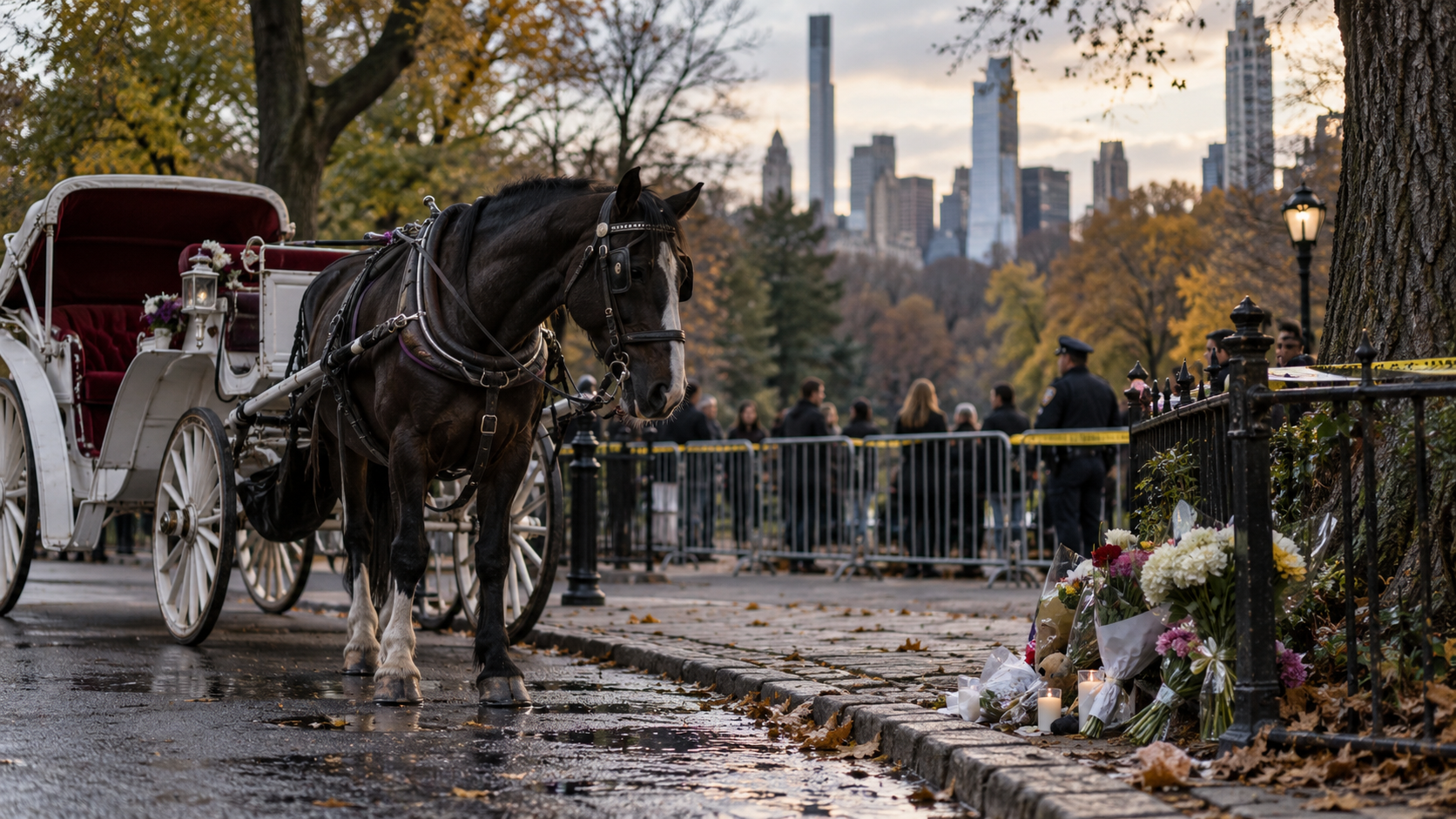
Central Park horse carriages are on their way out. On Thursday, the New York City Council voted 40 to 7 to ban horse drawn carriages from operating in the city starting June 1, 2028, ending a tradition that has been part of Central Park for more than 150 years.
The vote came four months after the death of Romanch Mahajan, an 18 year old tourist from India who was visiting New York with his family. In June, the family was on a carriage ride when the driver stepped off to take their picture and the horse bolted. Mahajan’s mother fell from the carriage, and when he tried to help her, he fell too and hit his head on the ground. He did not survive.
His death turned a decades long fight into a law. The bill, named Romanch’s Law in his honor, was pushed by Council Speaker Julie Menin and backed by Mayor Zohran Mamdani. “The tragic and preventable death of 18 year old Romanch Mahajan made clear that the status quo is no longer acceptable,” Menin said when she announced the vote. Mahajan’s parents had pleaded with council members over video from their home in India, and several family members were in the council chambers on Thursday to watch the bill pass. The family has also taken steps toward a wrongful death lawsuit against the city and Con Edison, claiming stray voltage agitated the horse.
Here’s what the law does. No new carriage licenses will be issued, and the city has to create a transition plan for the industry by next April. That matters for the roughly 200 owners, drivers and stablehands who make a living from the carriages, along with about 180 horses. The bill bars the horses from being sold for slaughter, but it leaves a lot of the details about where they will go, and how workers will be supported, to be worked out over the next two years.
The ban is not final in every sense yet. Mamdani has said he supports it but has not said whether he will sign it, and the Transport Workers Union Local 100, which represents the carriage workers, has vowed to take the city to court. TWU international president John Samuelsen said the bill does “not have any protections in it” for workers and has accused Menin of using a “contrived public safety crisis” to push the ban through.
Opponents of the ban point out that Mahajan’s death was the first known death of a carriage passenger in the industry’s history in Central Park. They argue cyclists, e bikes and pedicabs are a bigger danger in the park, noting that since June a cyclist died after colliding with an unleashed dog and a pedestrian was killed after being hit by a cyclist.
Trump also weighed in on Thursday. “The Horse-drawn Carriage in New York City is a quintessential New York experience,” he wrote on social media. “So sad that, for political reasons, we will see it go!”
For animal rights groups that have been fighting the Central Park horse carriages for years, the vote is a long awaited win. Three straight mayors before Mamdani tried and failed to end the rides. For now, the carriages will keep running through spring 2028.
