

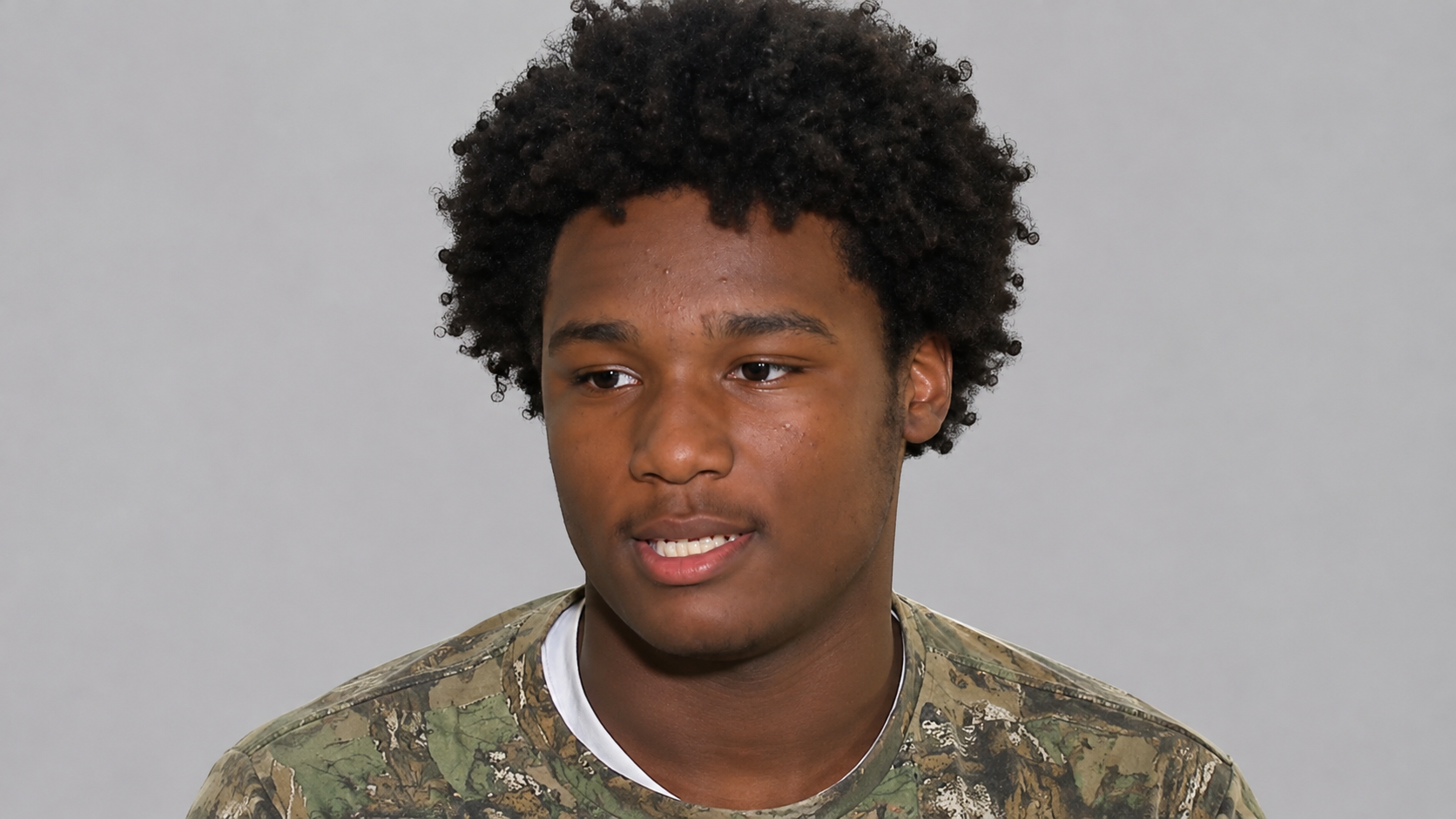
Four Black current and former Kenwood High School students are suing Baltimore County Public Schools, county police officers, their school principal and the AI company Omnilert after the school’s gun detection system mistook a Doritos bag for a firearm and armed officers handcuffed them outside the school.
Taki Allen, Yui-Osa Ogbeide, Devon Thompson Jr. and Keith Winfield III filed the civil rights lawsuit on Tuesday, November 17, in Baltimore County Circuit Court. A civil rights lawsuit claims the government violated someone’s constitutional protections. Here that means the right not to be stopped, held or searched without a good reason. The suit also accuses the defendants of false arrest, false imprisonment and negligence. False imprisonment means holding someone against their will without legal justification.
The incident happened on October 20, 2025. The four teammates were sitting outside the Essex, Maryland, school after football practice, waiting for a ride home. Allen, who was 16 at the time, was eating a bag of Cool Ranch Doritos his coach had handed out to the team. He finished the chips, balled up the Doritos bag and put it in his pocket.
Shortly before 7:04 p.m., Omnilert’s system flagged a possible gun on the school’s cameras and rated the threat at 90% confidence. Omnilert’s monitoring team reviewed the image and sent the alert to school administrators and selected police personnel. According to the lawsuit, within two minutes school safety officials and a Baltimore County police representative looked at the image, decided there was no gun and canceled the alert.
That should have been the end of it, but the lawsuit says about 15 minutes later, between 7:17 and 7:19 p.m., Principal Catherine “Kate” Smith opened the original alert, zoomed in on the video and took a screenshot of Allen holding the Doritos bag. The complaint says she never acknowledged that the alert had been canceled. Smith contacted John Douglas, the school resource officer, which is the police officer assigned to the school, and Douglas sent the image on to Baltimore County police.


Made to order and shipped to your door.
At 7:21 p.m., officers were dispatched to a report of a suspicious person with a weapon. At least six police vehicles pulled up. Several officers walked toward the teens with their guns drawn, ordered them to their knees, handcuffed all four and searched them and their belongings. They found no weapon. The lawsuit says the students were in handcuffs for at least six minutes.
Allen told WBAL TV 11 News he didn’t understand what was happening until the officers came straight at him with guns, yelling for him to get on the ground. He said he was “just holding a Doritos bag.” He said police told him the way he was holding it, “two hands and one finger out,” looked like a gun.
According to the complaint, once officers realized the suspected gun was a chip bag, one of them said, “AI’s not the best.” Officers also told the teens to be careful with chip bags. The lawsuit says Smith traded messages about the incident with laughing emojis and never apologized to the students.
The four students say they feared for their lives that night and still deal with anxiety. They say the incident changed their daily routines. On top of the search and seizure claims, they are bringing separate civil rights claims about how police treated them as Black teenagers.
Maryland’s Inspector General for Education investigated the incident and confirmed the order of events: the alert was canceled before police were ever called. The report found the school district had a process for canceling false alerts but no safeguard to stop a canceled alert from being forwarded to police as a live threat. It also found that school staff could skip the formal process entirely by calling or texting police directly.
The investigation found the system did not flag the Doritos bag on its own. The alert was triggered by how Allen moved his hand, the angle of the bag and where he was holding it near his hip. The report said the algorithm doesn’t factor in race or gender.
Baltimore County Public Schools installed Omnilert in 2023. The district pays about $560,000 a year for Omnilert’s monitoring service, and the system runs on more than 7,000 cameras across 165 schools. Between November 2023 and November 2025, Omnilert’s human reviewers filtered out 96% of the objects the AI first flagged. Fewer than 1% of the alerts sent on to the district needed police involvement.
Omnilert told CBS News Baltimore that its system worked as designed. The company said its staff passed the possible threat to the district’s safety team for review and the event was then marked resolved. At the time of the incident, then Superintendent Myriam Rodgers defended the process, saying the system is meant to flag possible threats so people can decide whether more action is needed.
The students are asking for money damages and for changes to how schools and police review and respond to AI weapon alerts. They also want a court order barring Baltimore County Public Schools from using Omnilert until proper training and safeguards are in place.
None of the lawsuit’s claims have been decided in court.
