

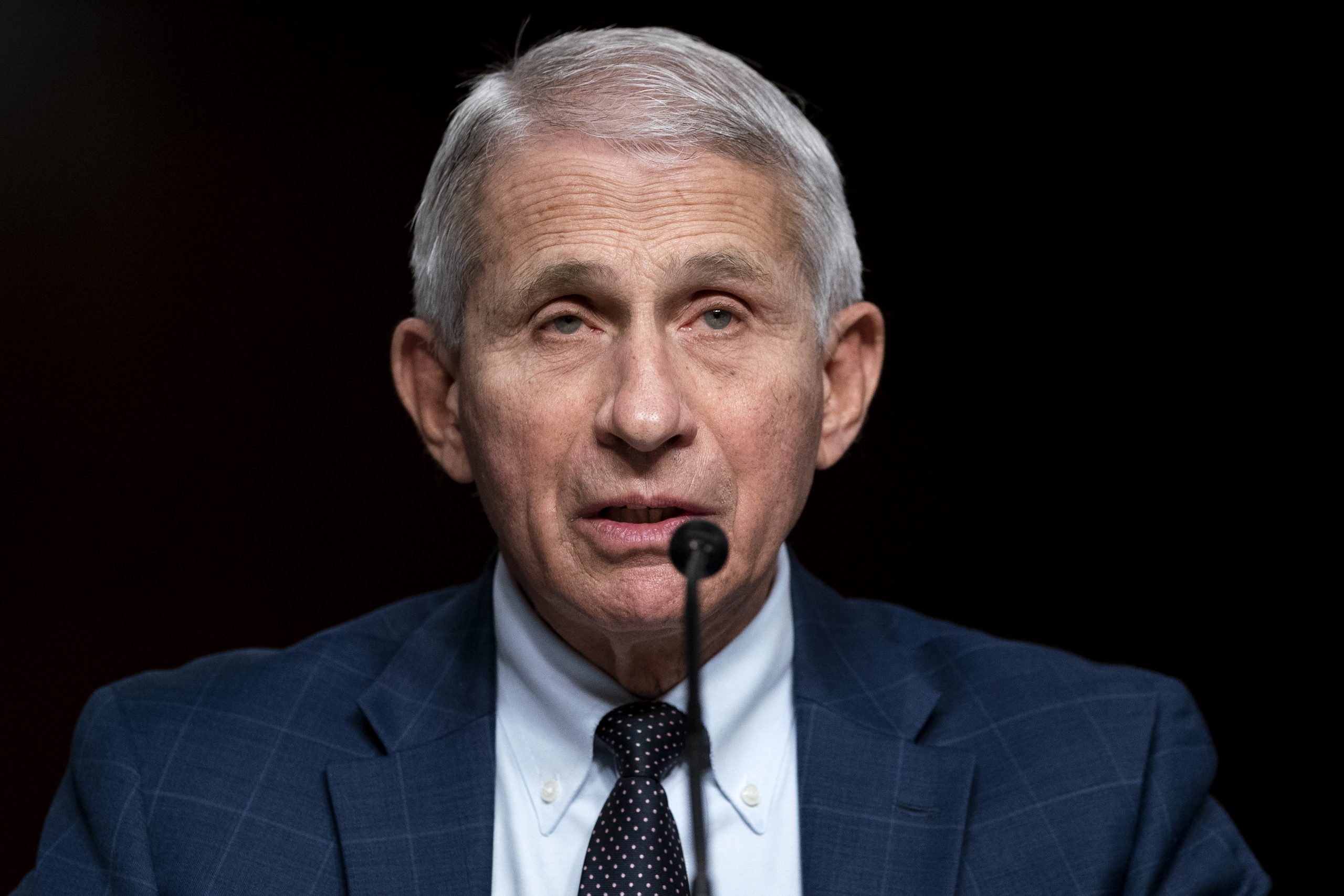
On Thursday, Republicans on the Senate Homeland Security and Governmental Affairs Committee voted to hold Dr. Anthony Fauci in contempt of Congress after he repeatedly declined to answer questions during a heated hearing last week. According to Reuters, the resolution passed along party lines, with Republicans supporting the measure and Democrats opposing it.
The vote does not mean Fauci has been charged with a crime. It does, however, give committee Chairman Sen. Rand Paul another way to push the former federal health official toward the Justice Department.
“We are voting on whether a witness who has received the benefit of a sweeping federal pardon can be ordered by this committee to answer questions and then defy that order without consequence,” Paul said in his opening statement.
That statement gets to the center of the dispute.
Fauci appeared before the committee on July 29 under subpoena. According to the committee’s official hearing record, he was the only witness scheduled to testify. During the hearing, Fauci invoked his Fifth Amendment right against self-incrimination more than 100 times.
Republicans wanted answers about the federal response to the pandemic, the origins of COVID, government funded research, and Fauci’s past testimony to Congress. Fauci’s lawyers believed answering those questions could create new legal exposure, even though former President Joe Biden pardoned him before leaving office.
That pardon is why the Fauci contempt vote is more complicated than a routine clash between lawmakers and a reluctant witness. Biden’s pardon covered conduct connected to Fauci’s federal service from January 1, 2014, through January 19, 2025. Paul argues that the pardon removed any realistic threat of federal prosecution for Fauci’s actions during that period. In his view, Fauci could no longer rely on the Fifth Amendment to avoid the committee’s questions.
Fauci’s legal team sees it differently.
The pardon covers past federal conduct, but it does not protect Fauci from every possible legal threat. The Associated Press noted that it would not block potential state charges or protect him from accusations connected to statements made after the pardon. That includes the possibility that investigators could later claim he gave false testimony during the hearing.
For Fauci, the danger was not only what happened during the pandemic. It was also what Republicans might do with anything he said under oath.
In a statement, Fauci said he believed Paul wanted “to get me to say something, anything, that could vindicate his repeated public pledges that I end up, in his words, quote, behind bars, unquote.”
His attorneys advised him not to pick and choose which questions to answer. Instead, he invoked the Fifth Amendment throughout the hearing.
Paul was not persuaded. According to the committee’s announcement about the contempt resolution, he ruled that Fauci’s pardon eliminated his Fifth Amendment claim. Paul also argued that Fauci weakened his position by giving an opening statement before refusing to answer questions.
The vote now leaves the Justice Department with a politically loaded decision. Paul plans to send the committee’s referral to the department. Federal prosecutors would then have to decide whether Fauci’s refusal to answer amounts to criminal contempt or whether his constitutional argument was legally valid.
A referral alone does not require the Justice Department to bring charges. Prosecutors could investigate, decline the matter, or determine that the committee’s case does not meet the legal standard for prosecution.
There is also a separate fight over how the referral is being handled.
Reuters reported that congressional contempt matters usually move from a committee to the full Senate before being sent to federal prosecutors. Paul has suggested he may send the resolution directly to the Justice Department because getting it through the full chamber could require 60 votes.
Democrats argue that skipping a full Senate vote could weaken the referral and raise questions about whether it carries enough legal authority.
During the committee meeting, Democrats tried to delay or change the resolution, but Reuters reported that each effort failed along party lines. Sen. Gary Peters, the committee’s ranking Democrat, warned that punishing Fauci for invoking the Fifth Amendment could set a dangerous example for future witnesses.
That concern reaches beyond Fauci.
Congress relies on subpoenas to investigate government misconduct, corporate abuse, national security failures, and political scandals. At the same time, witnesses do not lose their constitutional rights simply because lawmakers demand answers. The vote could help determine how those two powers collide when a witness has already received a broad pardon.
Fauci remains one of the most polarizing public health figures in recent American history. Fauci led the agency from 1984 until 2022 and worked on major public health crises involving HIV, Ebola, Zika, respiratory illnesses, and COVID.
His visibility during the pandemic made him a trusted figure for millions of people. It also made him a favorite target of Republican lawmakers who believe federal officials misled the public about pandemic restrictions, research funding, and the origins of the virus.
Fauci’s attorney, David Schertler, has accused Paul of continuing a personal and political campaign against his client. Schertler urged the full Senate to reject the resolution.
Paul insists the issue is accountability.
Now the Justice Department may have to decide whether this is a legitimate contempt case or another chapter in a political battle that has followed Fauci long after his government career ended.

Senator Paul’s politically charged efforts to put Dr. Anthony Fauci “behind bars” leads straight back to the reasons why former President Joe Biden won the 2020 popular vote by 7+ million: the public’s view of how Trump utterly botched his Covid response. While the current POTUS continues to lie about re-litigating the 2020 election, an 85 year old guy with an impeccable 40 year record of helping to save lives is getting unfairly grilled before the Senate and tried in the court of public opinion simply because America is dominated by ignorant people only seeking to blame somebody, anybody but themselves.