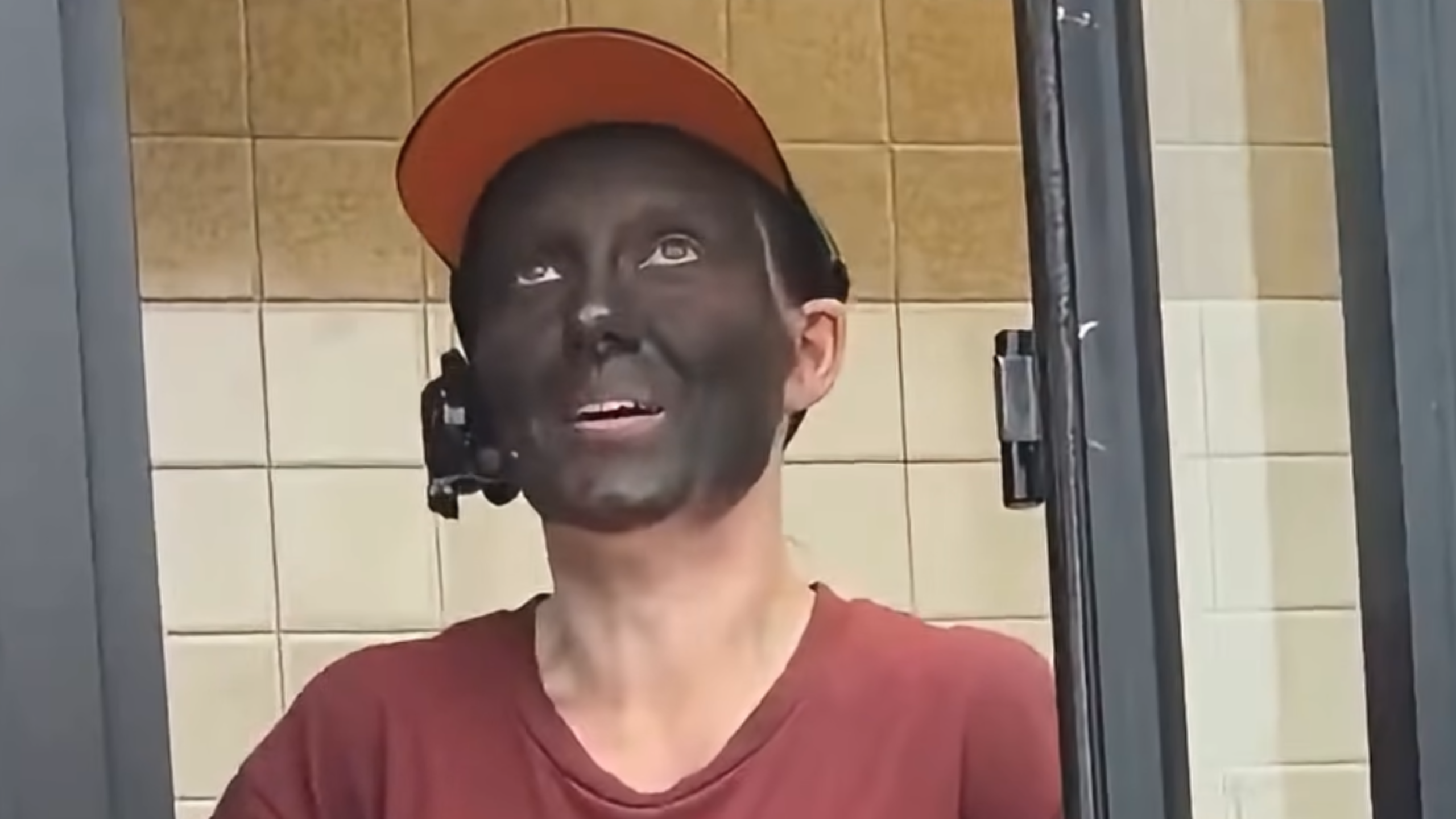
The Burger King blackface controversy has drawn an official response from the fast-food chain after a white employee was recorded working a Halloween drive-thru shift with her face painted dark. Burger King says the appearance was unacceptable and that the restaurant’s franchisee is addressing the situation with the employee, her manager, and the team.
The company responded after video of the encounter spread across social media over Halloween weekend, raising questions about how the employee was allowed to serve customers while wearing blackface and whether anyone at the restaurant had approved her appearance.
In a statement provided to TMZ, Burger King addressed the incident directly.
“We are aware of the video and take the matter very seriously.”
The company continued, “The Franchisee of this location is addressing the situation with his team, manager, and Team Member to ensure everyone involved understands why this is not acceptable and won’t happen again.”
While Burger King made its position clear, the statement did not announce whether the employee had been suspended, fired, or otherwise disciplined. It also did not explain what actions the franchise owner or management had taken beyond addressing the incident internally.
The Burger King blackface incident began attracting attention on October 31, when a customer recorded the employee at a drive-thru window. The white woman appeared in her work uniform, wearing a headset and cap, with dark makeup covering her face.


Made to order and shipped to your door.
During the exchange, the customer questioned the employee about her appearance and whether she believed wearing blackface was appropriate. Her explanation quickly became one of the most controversial parts of the video.
The worker defended the appearance by saying it was acceptable “as long as you have a good heart.”
She also explained that she wanted to be Black for the day, telling the customer, “Well, no, I just want to be black.”
The customer challenged that explanation, asking whether the employee understood the struggles Black people experience. The worker initially appeared unsure how to respond before ultimately acknowledging that she did not understand those experiences.
The exchange unfolded while the employee was on duty and interacting with a customer, rather than attending a private Halloween gathering. That circumstance placed additional attention on the restaurant’s management and the workplace decisions that preceded the recording.
Burger King’s response specifically identifies the franchisee, manager, and employee as people involved in addressing the incident. However, the company has not publicly explained whether management knew about the makeup before the worker began serving customers or whether any supervisor had previously intervened.
The company also has not detailed whether the restaurant will introduce additional training, review its Halloween costume guidelines, or implement other preventive measures. Its statement focuses on ensuring those involved understand why the behavior was unacceptable and preventing a similar incident from happening again.
Reports circulating alongside the Burger King blackface video have identified the restaurant as a location in Faribault, Minnesota. The customer who shared the footage also reportedly identified that location online. However, Burger King’s statement to TMZ did not independently confirm the restaurant’s address.
Blackface has a long history in the United States, dating back to minstrel performances in which white entertainers darkened their skin to portray Black people through racist stereotypes and degrading caricatures. The practice helped popularize distorted depictions of Black Americans and has remained a source of controversy in entertainment, schools, and workplaces.
The employee’s suggestion that having a good heart made the appearance acceptable became a central point of the backlash because blackface’s history does not disappear based on someone’s stated intentions.
Burger King’s public statement rejects the appearance itself rather than offering a defense of the employee’s explanation. Still, the company has not disclosed whether the worker will remain employed at the restaurant, leaving the outcome of the franchisee’s response unresolved.
The situation also raises questions about workplace oversight. The employee was filmed at an active drive-thru window, but the available footage does not show how her shift began, who was supervising her, or whether management had an opportunity to address the appearance before customers encountered it.
As of November 2, there has been no verified public confirmation of the employee’s termination.