

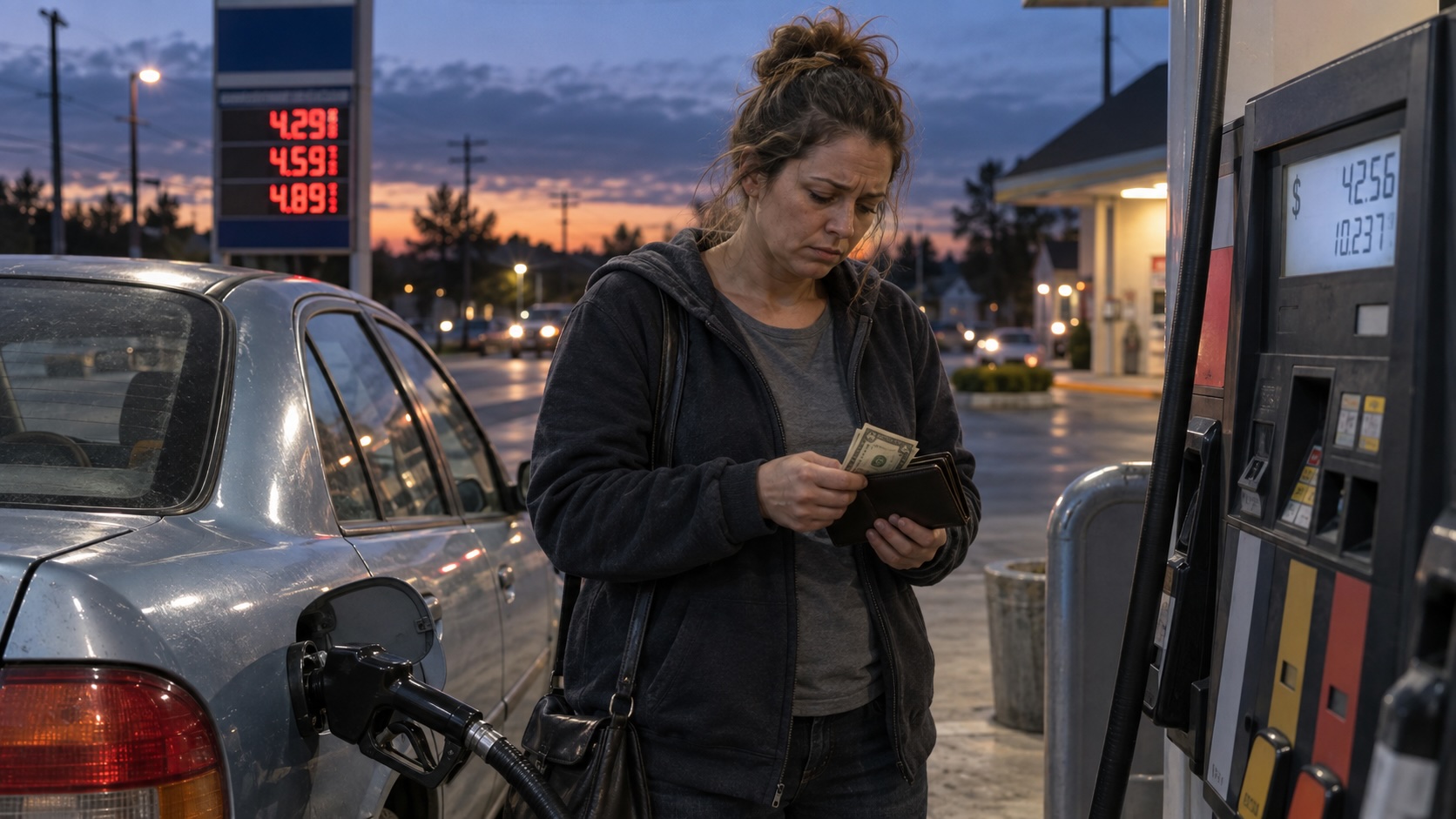
Gas prices jumped 7.31 cents overnight to a national average of $4.2245 a gallon, according to AAA, one of the sharpest single day moves of the year. A week ago the average sat at $4.12. A month ago it was $4.01. A year ago it was $3.19. That is a dollar and three cents more per gallon than drivers were paying last September, a 32 percent increase in twelve months.
The reason showed up on the oil markets Wednesday morning. Brent crude, the price benchmark most of the world uses to buy and sell oil, briefly traded at $100 a barrel for the first time since July. American crude rose to $94. The move followed a day of escalation in the Middle East that included US strikes on Iranian oil tankers and Houthi attacks on Saudi energy facilities. When the cost of crude rises, refineries pay more for the raw material, and that increase reaches the pump within days. Both Brent and US crude are up more than 60 percent this year.
What makes the current run different from past spikes is where the pain lands. Bonnie Herzog, co head of US consumer research at Goldman Sachs, put it plainly: higher gasoline prices fall hardest on the bottom income quintile, who spend roughly four times as much on gas as a share of their after tax income as the top quintile does. A quintile is just a fifth of the population sorted by income, so the bottom quintile is the lowest earning twenty percent of American households. Someone earning $200,000 a year and someone earning $35,000 a year buy gas at the same price. Only one of them feels a dollar increase as a change to the grocery budget.
A fifteen gallon fill up now costs about $63.37 at the national average. The same fill up a year ago ran $47.90. For a household filling two tanks a week, that is more than $120 a month that used to go somewhere else, and it moves before rent, before the car note, before anything a family actually chose to spend money on. Gas prices function like a tax nobody voted for, and the bill is not adjusted for what you make.
Fuel costs are also not staying at the pump. Diesel hit a record $5.90 a gallon on Tuesday. Diesel moves the trucks that move everything, which means the price shows up again on grocery shelves, in delivery fees, and in the cost of anything shipped across the country. Jet fuel has surged along with it, airlines have raised airfares, and the pressure contributed to Spirit Airlines shutting down. So the same household absorbing an extra $120 a month at the pump is also paying more for food and paying more to fly home for the holidays.
A Brown University analysis found that the increase in gas prices since the start of the war has cost Americans more than $50 billion.
Where you live changes the number considerably. California, Hawaii and Washington are all averaging above $5 a gallon. Indiana, Mississippi and Texas are paying the least. Florida drivers got one of the roughest mornings in the country, with the state average jumping 18 cents overnight from $3.89 to $4.07, and Jacksonville climbing more than 21 cents in a day. Local taxes, refinery access and pipeline routes account for most of that spread, which is why two drivers in different states can see a two dollar difference on the same day.
The timing matters for more than drivers. The Bureau of Labor Statistics releases the Producer Price Index Thursday morning and the Consumer Price Index Friday morning. The Producer Price Index tracks what businesses pay for goods before they reach shelves. The Consumer Price Index tracks what households actually pay, and it is the number most people mean when they say inflation. Both reports cover August, which means neither one will capture what happened at the pump this week. Whatever those reports say Thursday and Friday, they are describing a month that ended before this jump started.
Then the Federal Reserve meets September 15 and 16 to decide whether to move interest rates. The Fed is the central bank that sets the cost of borrowing money, and rate decisions ripple into car loans, credit cards and mortgages. Expensive fuel puts the Fed in a bind. Rising gas prices push overall inflation up, which normally argues for keeping rates high. But gas prices also drain money out of household spending the same way a tax would, which slows the economy and normally argues for cutting rates. Fuel pulls the two halves of the Fed’s job in opposite directions at the same time.
There is no policy fix on the table right now. Trump met with fuel refiners last week to press for lower prices at the pump. No measures came out of that meeting, and gas prices have risen since. US refineries are already running near full capacity, with some Midwest facilities operating above 103 percent and others delaying scheduled maintenance to keep output high. Gasoline inventories fell by 1.173 million barrels in the week ending August 28, according to Energy Information Administration data. Refiners do not have much room left to produce their way out of this, which means relief depends on crude prices coming down, and crude prices depend on the Strait of Hormuz and the pace of the war.
For now the number to watch is not the barrel. It is the receipt.
