

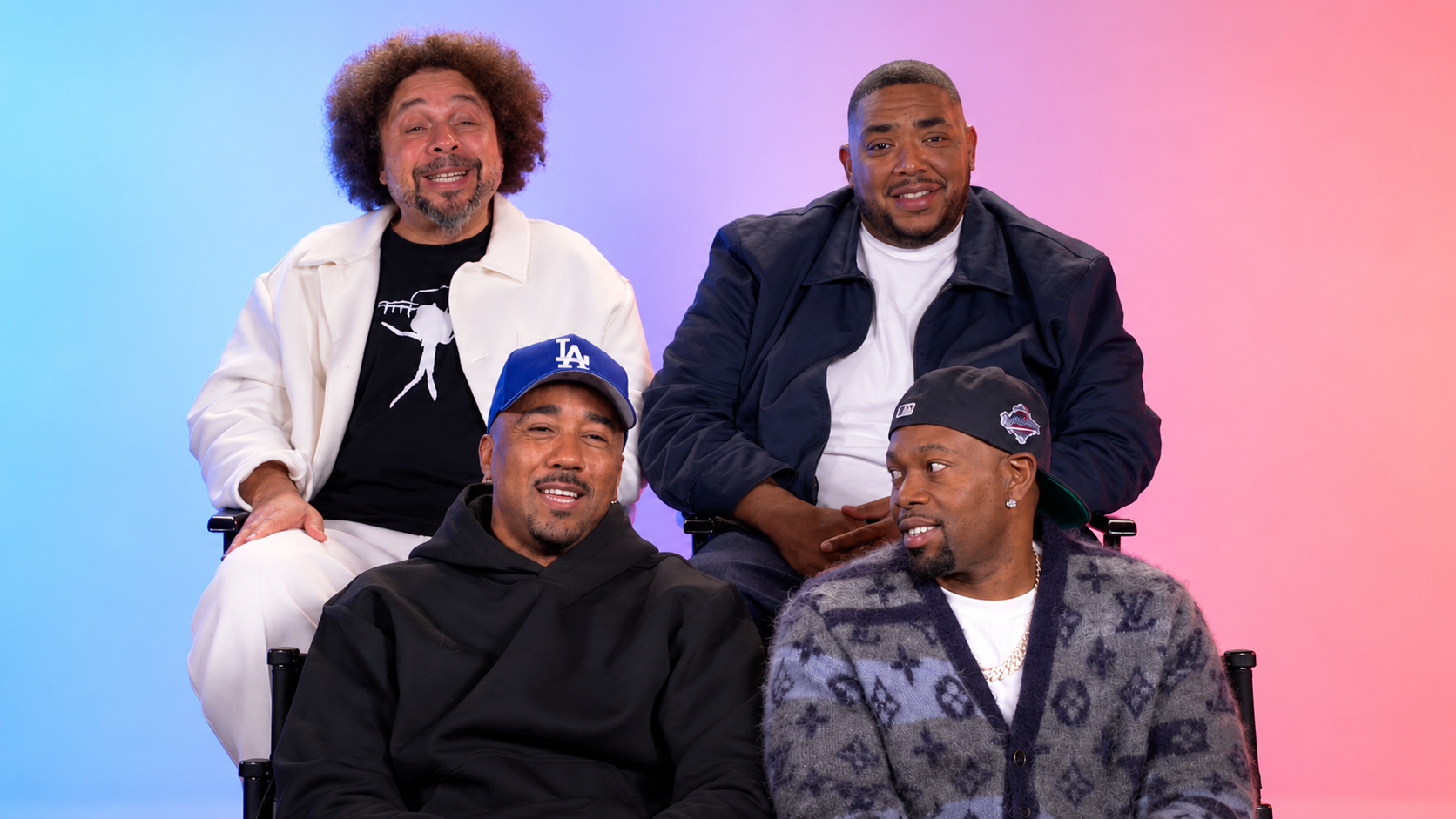
The team behind the “Snowfall” spinoff “The Drop: A Snowfall Saga” says the world still hasn’t seen a real Los Angeles gang film. They built the series to show the parts of LA life the classics never got to.
Video
Baller Alert sat down with creator and executive producer Malcolm Spellman, executive music producer Larrance “Rance 1500” Dopson, and creative consultants Glasses Malone and Jason “Problem” Martin. We asked how the new series separates itself from the LA stories fans grew up on, including “Boyz n the Hood.”
Spellman answered by placing the show inside the Snowfall universe.
“In the universe of these kinds of shows, this is the flip side to Menace II Society,” he said. “Snowfall one was ‘Menace II Society.’ This ‘Snowfall’ is ‘Boyz n the Hood’ because of that tone and that energy.”
The comparison comes full circle. John Singleton, the director of “Boyz n the Hood,” co-created the original “Snowfall” before his death in 2019.
The Drop” premiered September 8 on FX and streams on Hulu. The “Snowfall” spinoff follows Wanda, played by Gail Bean, and Leon, played by Isaiah John, as they push into the West Coast rap game. Rance 1500 oversees the music, and Problem wrote the original lyrics and produced the vocals.
Glasses Malone went further than Spellman. He said none of the LA classics was really a gang film.
“Oddly, I don’t think the world really has seen the LA gang film yet,” he said. “Not a real one.”
Then he went through the titles. “Colors is a police film that just happened to have gangs around it,” he said. In his view, “Boyz n the Hood” is a film about fathers and the boys growing up without them. ‘Menace II Society’ is about kind of hustlers surviving their environment. South Central is about a man trying to get his child back and getting his life together.”
What LA has never had, he said, is its own mob epic.
“I know about 40 mafia films,” Glasses said. “We don’t really have the Godfather of Los Angeles street urban culture, or West Coast street urban culture, so I feel like there’s so much room to examine it.”
He thinks that gap gave Spellman room to work when he wrote the “Snowfall” spinoff. Most people only see the surface of LA street life.
“I’m sure Malcolm had his challenges in building a pilot, but it was probably simple for him to tell stories that most people don’t know about,” he said. “You only have these highlight glimpses. You watch the ESPN of how we live. You don’t actually see the 48-minute game.”
Problem says the show is filling in that full game, one detail at a time.
“[Expletive] like the backroom fade, things like that, nobody thought that was a real thing,” he said. “Those things have never been shown.”
He pointed to a scene where a grandfather lets his son walk out with a gun, knowing he’s going to get his other grandson. Afterward, the grandfather tells him he did what he was supposed to do.
“These nuances of LA culture are never seen, like never seen, and there’ll be so many more as you keep watching,” Problem said.
For him, those small moments set the series apart.
“I think those are the subtleties that we never get to put in this stuff, so that’s what’s gonna separate it,” he said. “The humanity and the realism in these characters that may look dangerous on the outs, but everything is moving to try to do what’s best for the whole.”
He couldn’t name a film among the ones the group discussed that did the same. That, he said, is what Spellman set out to do with the Snowfall spinoff.
“I feel like that’s his point,” Problem said. “To try to show you the other stuff that was happening outside of the drive-bys.”
