
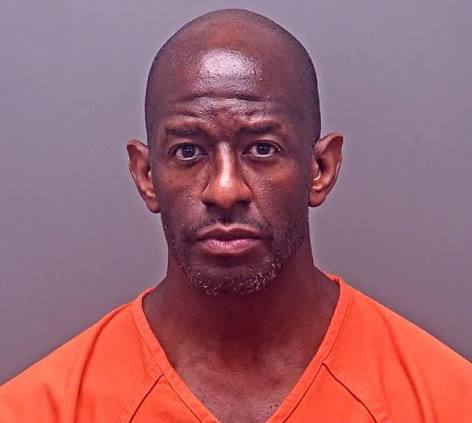
Andrew Gillum is back in jail after a prosecutor said he missed a court-ordered drug test and then tested positive for methamphetamine at his court appearance on Thursday.
Baldwin County Assistant District Attorney John Oxford told TMZ that Gillum had been enrolled in what is known as color code drug testing. The program works like this: a defendant awaiting trial is assigned a color by the court, and every single day they are required to call a hotline. If their color is read out that day, they have to report for a test within hours. It is designed to be random so nobody can plan around it, and missing a call is treated the same as failing. Oxford said Gillum did not show up on a day his color was called. When he appeared in court Thursday, he was tested there, and the result came back positive. He was taken back into custody.
The testing requirement stems from an arrest last month. On the night of July 2, officers with the Daphne Police Department in Alabama stopped a vehicle on U.S. Highway 98 that they said was being driven erratically. The driver was Gillum. Police said an officer spotted a glass pipe sitting on the center console, which gave them cause to search the car. Inside, according to the department, they recovered several rolled marijuana cigarettes and three packages of a substance that tested positive for methamphetamine. TMZ reported the haul included roughly three grams of meth, eight pre-rolled joints, four cut straws, three pipes, and a bong.
Gillum was booked into the Daphne City Jail and later transferred to the Baldwin County Correctional Facility on charges of possession of dangerous drugs, drug paraphernalia, and possession of marijuana. His bond was set at $6,500 combined and he was released in under 12 hours.
The exposure is real. Alabama treats the dangerous drugs count as a felony carrying up to five years in prison and a fine of up to $7,500. The two misdemeanor counts each carry up to a year and fines of up to $6,000. Whether prosecutors pursue the maximum is another matter, but Alabama’s narcotics laws are among the strictest in the country and a failed test while awaiting trial does not help.
For anyone who only knows the last few years of headlines, it is worth remembering how close Gillum came. In 2018 he was the mayor of Tallahassee who upset a crowded Democratic primary field, including former congresswoman Gwen Graham, who most people expected to win. He then went into the general election against Ron DeSantis in a race the entire country watched, running to become the first Black governor in Florida history. He lost by fewer than 34,000 votes out of more than eight million cast, a margin narrow enough to trigger an automatic recount. He was 39 years old and widely considered the future of the party.
What followed has been a long unraveling. In March 2020, Miami Beach police responded to the Mondrian South Beach hotel after a report that a man had overdosed. Officers found Gillum in the room, too impaired to explain what happened, and recovered three small bags of suspected methamphetamine. No charges were ever filed against him because investigators could not tie the drugs to any specific person. Gillum stepped away from public life afterward and entered treatment.
In 2022, federal prosecutors indicted him on wire fraud, conspiracy, and lying to the FBI, accusing him of diverting campaign money for personal use. That case ended without a conviction. A jury acquitted him of lying to the FBI and deadlocked on the remaining counts. His co-defendant Sharon Lettman-Hicks was not convicted either. Separately, the Florida Commission on Ethics found probable cause that he improperly accepted gifts, including trips and a ticket to Hamilton, from undercover FBI agents posing as developers. He settled that in 2019 by paying a $5,000 civil fine.
Since then he has rebuilt some professional footing, including co-hosting the Native Land podcast alongside Angela Rye and Bakari Sellers. That show has a real audience in our community, which is part of why this lands differently than a typical political fall from grace. A lot of people have been listening to him work through the aftermath of all this in his own voice, week after week.
None of the current charges have been proven in court, and Gillum has not been convicted of anything in any of the cases that have followed him since 2020. What is documented is a pattern of arrests connected to the same substance across six years, and a man who is now sitting in a county jail cell in Alabama instead of preparing for a trial. Whatever the legal outcome, the through line here reads less like a criminal case and more like an illness that has not been beaten yet, playing out with a lot of people watching.
