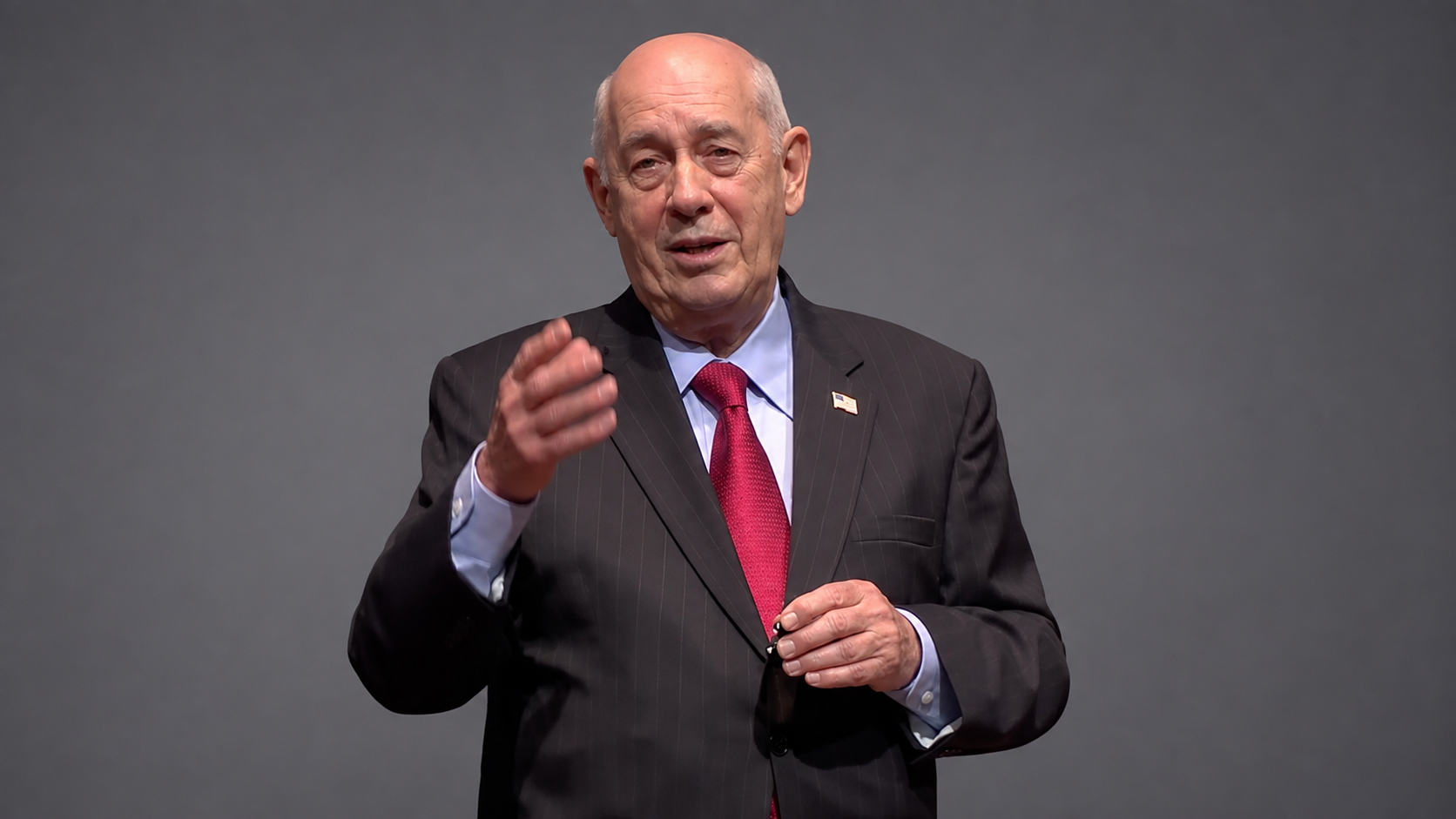
Bill Rasmussen, whose idea for ESPN reshaped how generations of fans watch sports, has died at 93.
According to ESPN, Rasmussen died Tuesday, August 18, from the effects of Parkinson’s disease. The Associated Press reported that he died at his home in Florida. Rasmussen publicly revealed in 2019 that he had Parkinson’s, although he said he had initially been diagnosed in 2014.
His death closes the chapter on one of the most consequential careers in sports television. Long before fans could pull up scores on a phone, stream multiple games or watch sports analysis at virtually any hour, Bill Rasmussen was betting that people wanted something television had never given them before: a national network devoted entirely to sports.
ESPN chairman Jimmy Pitaro remembered Rasmussen as a “remarkable man” and a “visionary and an innovator.” In a statement released by ESPN, Pitaro added, “Quite simply, none of us would be here today if it wasn’t for Bill’s passion and all the hard work and entrepreneurial spirit he put into building ESPN in the late 1970s — key aspects of our company culture that still carry on to this day.
The story of ESPN began after Rasmussen’s career took an unexpected turn. According to the Associated Press, Rasmussen was fired from his communications job with the World Hockey Association’s New England Whalers in 1978. He and his son Scott Rasmussen then began exploring what could be done with the developing world of cable television and satellite distribution.
ESPN’s account of its founding says Bill Rasmussen and Scott were stuck in traffic on Interstate 84 in Connecticut in August 1978 when their conversation turned toward possible programming for satellite television. What initially developed as an idea for a service focused on Connecticut sports expanded into something far more ambitious: a national sports network operating around the clock.
Getting anyone else to believe in that vision was another challenge. According to the Associated Press, the Rasmussens faced skepticism from cable operators and financial pressure as they worked to get the concept off the ground. Rasmussen even used a $9,000 credit card advance during ESPN’s earliest stages.
The breakthroughs eventually came. ESPN says Getty Oil provided crucial financial backing, while the company secured a programming agreement with the NCAA and an advertising agreement with Anheuser-Busch that became the largest sponsorship deal in cable television at that time. Those relationships helped transform Bill Rasmussen’s concept from a risky startup into a network capable of reaching a national audience.
ESPN officially launched at 7 p.m. on September 7, 1979, reaching approximately 1.4 million homes, according to the network. Its opening program was SportsCenter, hosted by Lee Leonard and George Grande. The first live sporting event shown by the network was a slow pitch softball game between the Kentucky Bourbons and Milwaukee Schlitz.
What followed helped establish a model that now feels inseparable from modern sports culture. Rasmussen served as the company’s founder and first president before becoming chairman in July 1979. During that formative period, ESPN developed SportsCenter as its signature sports news program and brought extensive coverage to events including the early rounds of the NCAA men’s basketball tournament in 1980. The network says that tournament coverage generated national attention at a critical moment in its young history.
Rasmussen’s tenure inside the company was surprisingly brief considering the size of his legacy. The Associated Press reports that Bill and Scott Rasmussen were forced out after Getty Oil became ESPN’s majority owner, with Bill leaving the network in 1980. Rasmussen and ESPN remained estranged for years before company executives invited him back for the network’s 20th anniversary celebration in 1999. He would later become a regular presence at ESPN milestone events, including its 40th anniversary celebration in 2019.
By then, the idea that skeptics once questioned had become one of the defining institutions in sports media. ESPN credits Rasmussen’s early leadership with establishing the company’s emphasis on sports programming, technological innovation and ambitious event coverage. The network ultimately expanded far beyond its original television channel into multiple U.S. networks, ABC sports programming, audio, digital platforms, social media and direct-to-consumer sports services.
Recognition of Bill Rasmussen’s influence followed him for decades. Sports Illustrated included him in its 1994 “Forty for the Ages,” honoring figures who significantly changed sports during the second half of the 20th century. ESPN also notes that USA Today called him “The Father of Sports Television” that same year.
His legacy received another major honor in 2025 when he was inducted into the Sports Broadcasting Hall of Fame. Rasmussen had previously been recognized by Rutgers University, where he earned his MBA, and DePauw University, where he earned his undergraduate degree in economics. Rutgers has credited him with helping change both sports broadcasting and the larger relationship between television and sports.
His influence also reached beyond the network itself. After disclosing his Parkinson’s diagnosis, ESPN says Rasmussen became an ambassador for people living with the disease through the American Parkinson Disease Association and The Michael J. Fox Foundation for Parkinson’s Research. He also continued speaking publicly about entrepreneurship and ESPN’s beginnings and authored books recounting the network’s creation and his career.
His founding story received renewed attention this year through “Sports Heaven: The Birth of ESPN,” a documentary about Bill and Scott Rasmussen’s journey from an uncertain startup concept to the launch of the network. According to the Associated Press, the documentary explored the financial struggles, skepticism, satellite technology, and major deals that made ESPN possible.
Chris Berman, who joined ESPN only weeks after its 1979 launch, described Rasmussen in the network’s tribute as “our George Washington.”
“He was such a grateful person, and every sports fan can be grateful for Bill. He wasn’t a glass half-full guy; his glass was always overflowing with optimism. He greeted everyone with a smile, and we can all smile knowing Bill’s legacy.”
That legacy lives in something much larger than a television network. Every era of constant highlights, wall-to-wall game coverage, dedicated sports channels, and sports media built around the idea that fans never stop wanting the next score, story, or debate can trace part of its foundation back to the gamble Bill Rasmussen made in 1978.