

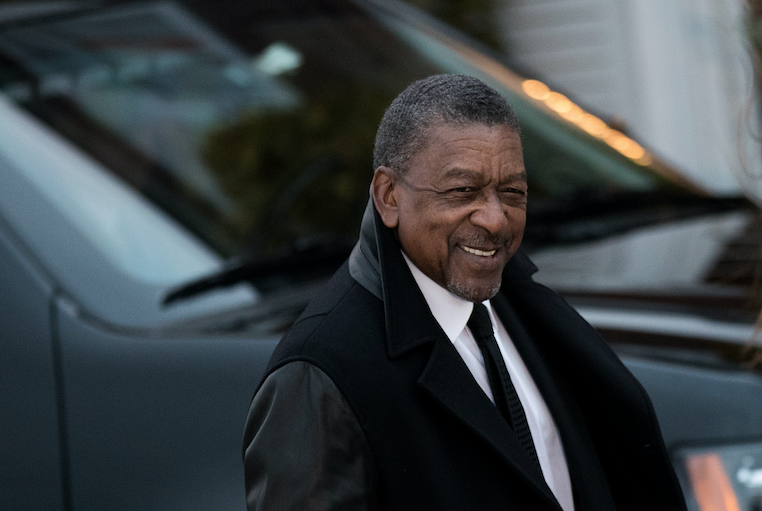
Bob Johnson returns to BET, and for anyone who watched a Black man build a cable channel out of nothing in 1980 and turn it into the most recognizable Black media brand in the country, that sentence carries real weight. Forty five years after he first put it on the air, the network announced its first ever Board of Advisers, and the founder is on it, sitting alongside Queen Latifah, LL Cool J, NFL operations boss Troy Vincent, Lazard president Raymond McGuire, and Paramount television chief George Cheeks. Louis Carr, the veteran executive now running BET, framed it as a homecoming and a brain trust meant to guide the brand into its next era.
It is a beautiful photo op. It is also worth being clear about what it is not.
An advisory board advises. It does not own, it does not vote, and it does not sign checks. Bob Johnson is not getting his company back. He sold BET to Viacom in 2001 for roughly three billion dollars and became the first Black billionaire in America off that deal. There is no shame in that. But walking back through the door in 2026 as an adviser is a long way from holding equity, and the timing tells you exactly why the seat exists right now.
Here is the part the announcement glides past. BET is owned by the Ellison family.
When Skydance closed its acquisition of Paramount Global in August 2025, control of BET passed to David Ellison, son of Oracle founder Larry Ellison, whose six billion dollars helped finance the takeover. RedBird Capital put in the rest. Between them, the Ellison family and RedBird hold around seventy percent of the economic interest in Paramount Skydance, and the Ellison family alone controls better than seventy seven percent of the voting power. That is the whole company. BET, the cornerstone of Black television, is now a vertical inside a media giant run by one of the wealthiest white families in tech.
And it did not have to be that way. Before the Skydance deal, BET was openly for sale, and the line of interested buyers included people who said plainly that the network belonged in Black hands. Byron Allen bid three and a half billion dollars for BET and VH1 and argued the brand should be Black owned. Tyler Perry, already an investor through BET+, wanted a larger stake. Scott Mills, BET’s own CEO at the time, partnered with a private equity firm to try to take it over himself. Every one of those paths pointed toward Black ownership or Black control. None of them closed.
Instead, David Ellison stood in front of reporters in August 2025 and said BET was no longer for sale. Off the table. The window where the most important Black network in America might have returned to Black ownership shut quietly, while everyone was busy watching the larger Paramount drama play out.
Then came the cleanup. This past March, Paramount Skydance shut down BET+, the streaming home built specifically around Black storytelling, and folded its catalog into Paramount+. As part of that, they bought out Tyler Perry’s twenty five percent stake in BET+, removing the last meaningful piece of Black equity from the operation. The official language called it expanding reach. What actually happened is that Black ownership got cashed out and Black content got absorbed into a general library where it now lives as a hub inside somebody else’s streaming service.
So look at the sequence one more time. Black buyers who wanted the network get turned away. The white ownership group takes full control. The streaming service built for the culture gets dissolved. The last Black equity holder gets bought out. And then, weeks before the 2026 BET Awards, the company rolls out a board of beloved Black faces to advise on the future.
That is the move. When you cannot offer ownership, you offer optics. When you cannot share power, you share a title that comes with no power attached. Bob Johnson, Queen Latifah, and LL Cool J are not props, and none of this is their doing. They earned every inch of their standing in this culture. But seating them on an advisory board is exactly the kind of gesture that lets a company say it values Black leadership without ever handing a Black person a vote.
The question Baller Alert keeps landing on is the one nobody at Paramount wants asked out loud. Who actually decides what BET becomes? Not the advisers. The Ellison family decides. They decide the budget, the programming priorities, whether the linear channel survives the next round of two billion dollars in promised cuts, and how much of BET’s identity gets preserved versus quietly merged away. An advisory board can recommend. It cannot overrule a seventy seven percent voting majority.
Bob Johnson built something that mattered to all of us. Watching him return to the network he once owned, this time as a guest, is its own kind of statement about where Black media power actually sits in 2026. The brand still carries our name. The control sits somewhere else entirely.
