

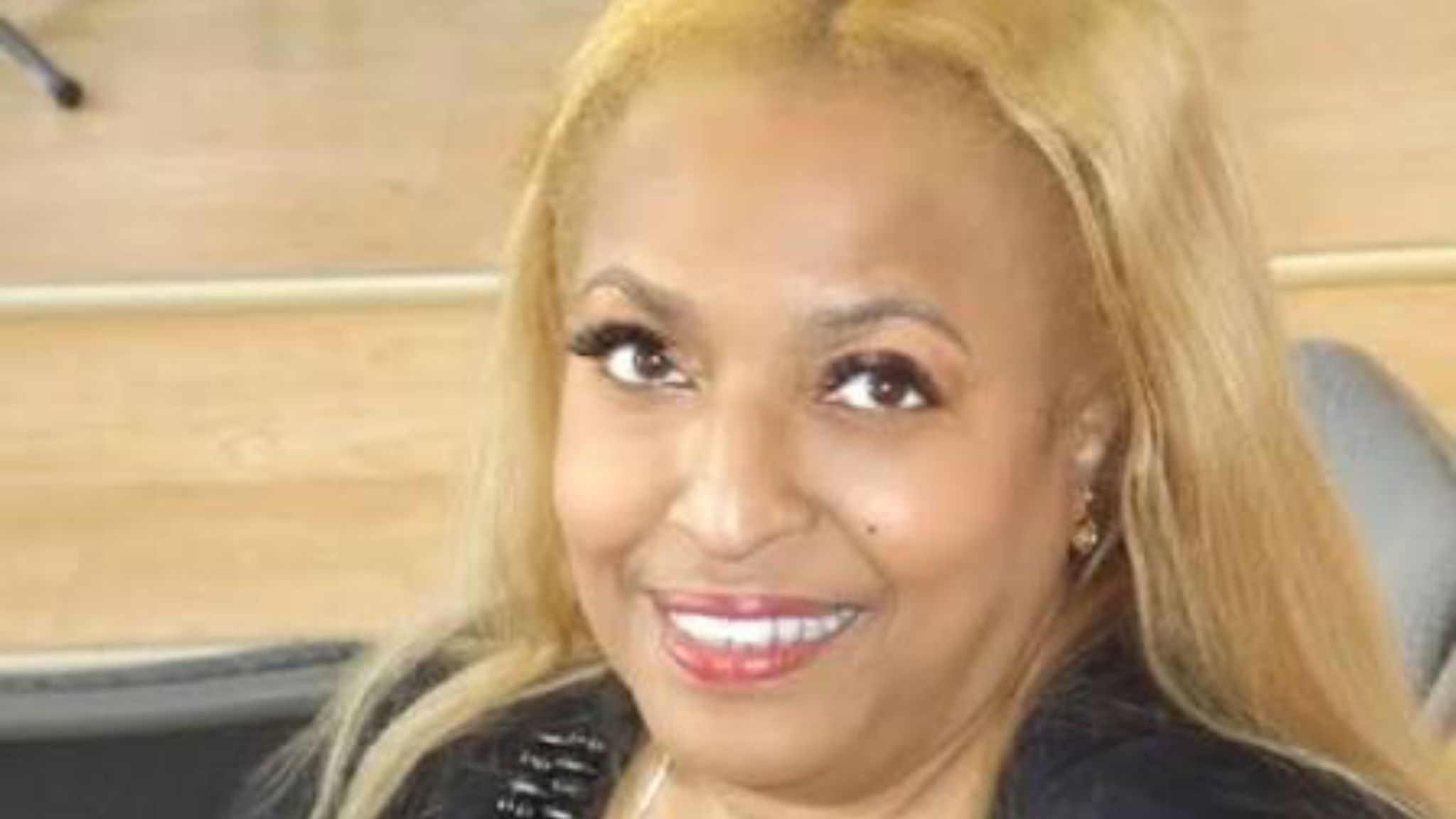
Flo Anthony died Thursday, August 6, at the age of 74, seven months after marrying former heavyweight champion Michael Spinks in a New York City courthouse ceremony on January 6. Spinks confirmed her death to his biographer, veteran sportswriter Jack Hirsch, who shared the news with the New York Amsterdam News, where she wrote the “Go With the Flo” column for decades. The couple had been together since 1987.
Thirty nine years of a life built together before either of them signed a marriage license, and then a wedding this past winter at a courthouse in the city where she lived in East Harlem. A cause of death has not been released. Hirsch told AmNews that Flo Anthony disclosed to him back in March that she was battling cancer.
The marriage was not the only thing the two of them put on paper this year. She co-authored “Michael Jinx Spinks: An Authorized Biography” with Hirsch, telling the story of the man she had been standing beside since the eighties. She had also handled publicity and personal appearances for Spinks throughout his post ring career, which is how their professional and personal lives had been braided together for most of four decades.
Boxing was where the whole career started, actually. Before she was a household name in entertainment media, she was doing publicity for Muhammad Ali, Butch Lewis, Larry Holmes, Mike McCallum, Matthew Saad Muhammad and Spinks. A Howard University graduate, she came to New York wanting to act, worked as a teacher, then got into the business through talent manager Tobe Gibson. Her first job at the New York Post was as an agate clerk in the sports department, the person handling the small type of box scores and standings, and by her own account she was the first woman to work in that department.
From there she made the move that defined her. In the mid 1980s Flo Anthony crossed into entertainment journalism and became, by her own account, the first African American to work in the New York Post’s entertainment and Page Six departments, and the first Black writer with a column in The National Examiner. Those were rooms that had been closed to Black women entirely, and she walked into them and started breaking news out of them.
And she did break news. Over her career she reported hundreds of exclusives, including the marriages of Mike Tyson and Robin Givens, Alec Baldwin and Kim Basinger, and John McEnroe and Tatum O’Neal, plus the story that Tom Cruise and Nicole Kidman were adopting. She was insistent about the distinction between what she did and what people assumed she did. To her, a gossip columnist was a reporter who broke stories, and getting them right was the job.
Television made her face familiar to people who never read a newspaper column. She spent six seasons as a contributor and then co-host of E! Entertainment’s The Gossip Show, the roundtable that put working columnists on camera, and she turned up across E! True Hollywood Story episodes on La Toya Jackson, Robin Givens, Janet Jackson, Whitney Houston and Bobby Brown. She was also a regular on Inside Edition, The Insider and Entertainment Tonight.
Radio came next, and it was hers outright. Through her own company, Dottie Media Group LLC, she hosted two nationally syndicated shows, Gossip To Go With Flo and Flo Anthony’s Big Apple Buzz, distributed in partnership with Superadio. Between them the programs reached more than three million listeners a day across upward of 20 markets. She wrote four novels too, including “Deadly Stuff Players” in 2013 through Zane’s Strebor Books imprint and its 2016 sequel “One Last Deadly Pay.”
Alongside all of it she served as a publicist for the Jackson family, and was especially close to La Toya Jackson. That relationship stretched across decades, through the family’s highest and hardest public moments, and it is part of why so much of what the public knows about that family passed through her first.
CNN entertainment journalist Lisa Respers France wrote after learning of her death that as a Black woman covering pop culture she is deeply indebted to Flo Anthony, calling her a syndicated columnist and author who did more than cover gossip and saying she was important to the culture. Media figure Alvina Alston posted that she had been at the hospital and left only moments before Flo passed.
For younger writers in this space, the debt is structural rather than sentimental. Every Black woman who currently covers entertainment for a living is working in rooms that Flo Anthony had to argue her way into first, on a beat she spent forty years insisting was real journalism. She is survived by Spinks.
