

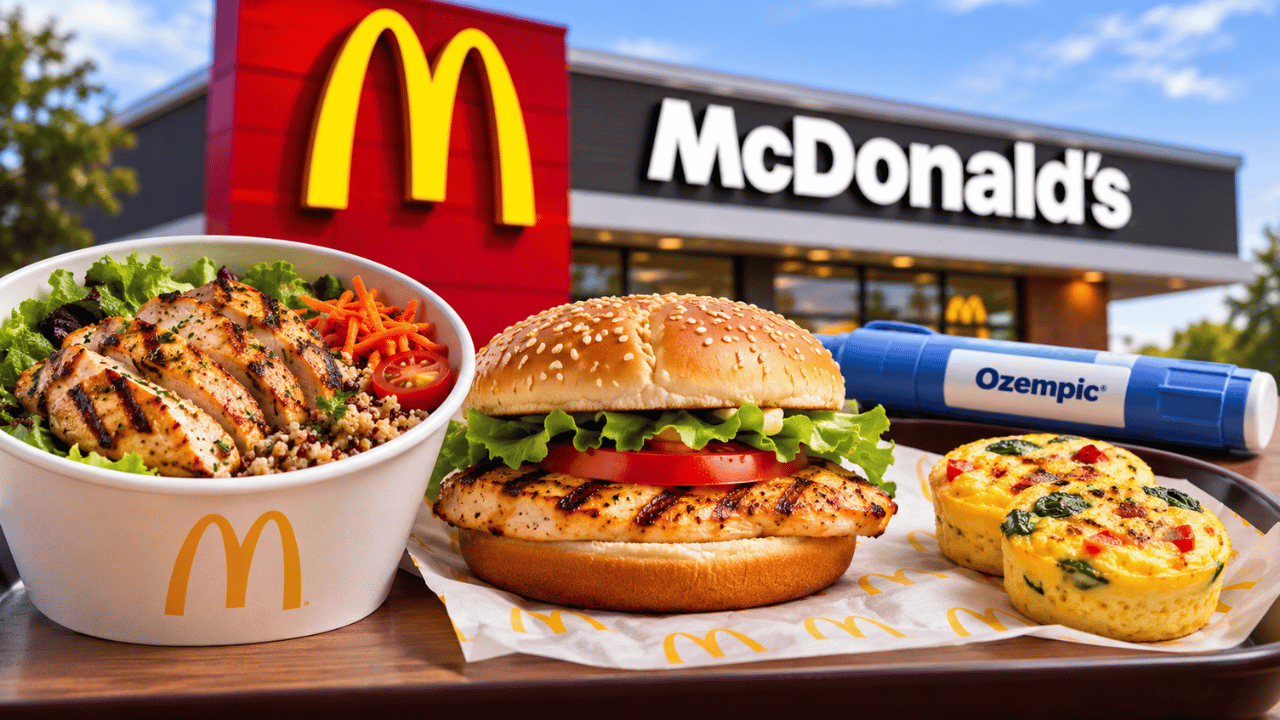
McDonald’s is testing GLP-1 menu ideas as the fast-food giant considers adding more protein-focused meals for customers taking weight-loss medications such as Ozempic, Wegovy, and Zepbound. The potential changes could bring grilled chicken, protein bowls, and other alternatives to a chain best known for burgers, fries, and Chicken McNuggets.
Wayne Kuhl, McDonald’s director of culinary for its U.S. menu and marketing team, discussed the company’s evolving food strategy during an October 29 interview with PEOPLE at the Inside the Golden Arches event in New York City.
“Certainly, things that are top of mind for us is the GLP-1 consumer, and what that means to them, and what menu innovation looks like around that,” Kuhl said.
He added, “Protein is top of mind for a lot of people.”
McDonald’s is already experimenting with different food concepts, although the company has not announced a dedicated GLP-1 menu or confirmed when any of the proposed items might become available nationwide.
“There’s certainly no lack of things that we’re exploring out there that are in pilot or in tests that we’re certainly going to learn around in relation to hand-breaded chicken and grilled chicken and things like that,” Kuhl explained. “There’s definitely things that are early stages that we’re still learning about, but it’s important for us that throughout that entire process that we stay grounded with our customer.”
The latest comments follow McDonald’s September 23 investor presentation, where U.S. President Skye Anderson identified people using GLP-1 medications as an important customer group.


Made to order and shipped to your door.
During that presentation, Anderson outlined potential additions including protein bowls, grilled chicken, and egg bites. These products could offer customers more flexibility across breakfast, lunch, and dinner.
According to research McDonald’s presented to investors, 84% of households with GLP-1 users still visit the restaurant chain. The company also identified Chicken McNuggets, Filet-O-Fish sandwiches, and Happy Meals as existing choices that appeal to some customers taking the medications.
The proposed GLP-1 menu changes are aimed at keeping those customers coming back as their eating habits evolve. However, the figures are based on McDonald’s own research, and the company has not released a finalized menu specifically for medication users.
McDonald’s would be entering a market where several competitors have already begun adjusting their offerings.
Chipotle introduced its High Protein Menu in December 2025, offering meals designed for customers interested in protein intake and flexible portion sizes. One standout addition is its High Protein Cup, a four-ounce serving of adobo chicken containing 32 grams of protein and 180 calories.
The chain also introduced a High Protein-High Fiber Bowl with 46 grams of protein and 14 grams of fiber, along with a salad featuring 36 grams of protein. Chipotle explicitly described both selections as GLP-1-friendly when announcing the menu.
Shake Shack has made similar changes. In December 2025, the burger chain introduced its Good Fit Menu, featuring high-protein and customizable selections, including lettuce-wrapped burgers for customers seeking different nutritional options.
Among those selections are a Single ShackBurger Lettuce Wrap containing 23 grams of protein and a Double SmokeShack Lettuce Wrap containing 52 grams of protein. Shake Shack specifically markets the collection as accommodating GLP-1 users alongside customers with other dietary preferences.
Smoothie King took an even more direct approach by introducing a dedicated GLP-1 Support Menu in October 2024. Its offerings include protein-rich smoothies made without added sugar, with some Gladiator varieties providing 45 grams of protein in a 220-calorie serving.
The smoothie chain has continued expanding its GLP-1 menu, including a seasonal pumpkin smoothie introduced in 2026, showing how medication-related eating habits are influencing products beyond traditional meals.
Olive Garden is also offering smaller meals through its Lighter Portions menu. Customers can order reduced-size versions of familiar entrées, including Chicken Parmigiana and Lasagna Classico, at lower prices than many full-size dishes.
Unlike Smoothie King and Shake Shack, Olive Garden does not specifically label those dishes as GLP-1 meals. Its smaller portions nevertheless address a preference that has become increasingly important among people using appetite-reducing medications.
The growing demand has a medical explanation.
GLP-1 medications can reduce hunger and slow the movement of food through the stomach, causing people to feel full after eating less. Some patients also experience nausea, reflux, and other digestive side effects, making large or high-fat meals harder to tolerate.
Cleveland Clinic recommends that people taking these medications prioritize adequate nutrition, including protein and fiber. Smaller meals can help some patients manage digestive discomfort, although individual dietary needs vary.
These changes help explain why the GLP-1 menu has become a focus for restaurant chains trying to reach consumers whose appetites and food preferences may no longer resemble their previous dining habits.
The potential customer base is substantial. A Gallup survey updated in September 2026 found that 11% of U.S. adults were currently taking GLP-1 medications for weight loss, compared with 3% in 2024. Another 15% reported having used the medications at some point.
Restaurant spending is also changing.
A June 2026 report from consulting firm PwC found that spending at quick-service restaurants declined 8.7% per GLP-1 household after six to eight months of medication use. The report also found that 35% of users surveyed wanted smaller portions at proportionally lower prices, while 32% wanted half-portions or shared plates without additional charges.
For McDonald’s, those preferences create an incentive to rethink how food is offered without abandoning the products that built the brand.
Kuhl emphasized that consumer demand remains central to the company’s development process.
“We’re always up to speed on trends,” he told PEOPLE, adding that new products must also align with McDonald’s overall brand strategy.
He also explained that “great ideas come from anywhere,” reflecting the company’s willingness to consider different approaches as consumer preferences shift.
During the same October 29 event, Kuhl and Top Chef winner Tristen Epps-Long demonstrated how McDonald’s prepares several longtime favorites, including the Egg McMuffin, Quarter Pounder with Cheese, Chicken McNuggets, and fries.
The presentation focused on the ingredients and preparation methods behind those staples, while Kuhl’s comments about future menu testing offered a look at where the chain could expand next.
A potential McDonald’s GLP-1 menu would not necessarily replace existing meals. Instead, the company’s proposals suggest additional choices that could appeal to customers seeking smaller portions, more protein, or different meal combinations.
McDonald’s has not announced prices, a rollout schedule, or a final list of GLP-1-focused products. For now, grilled chicken, egg bites, and protein bowls remain possible additions as the company evaluates which ideas could work across its restaurants.
