

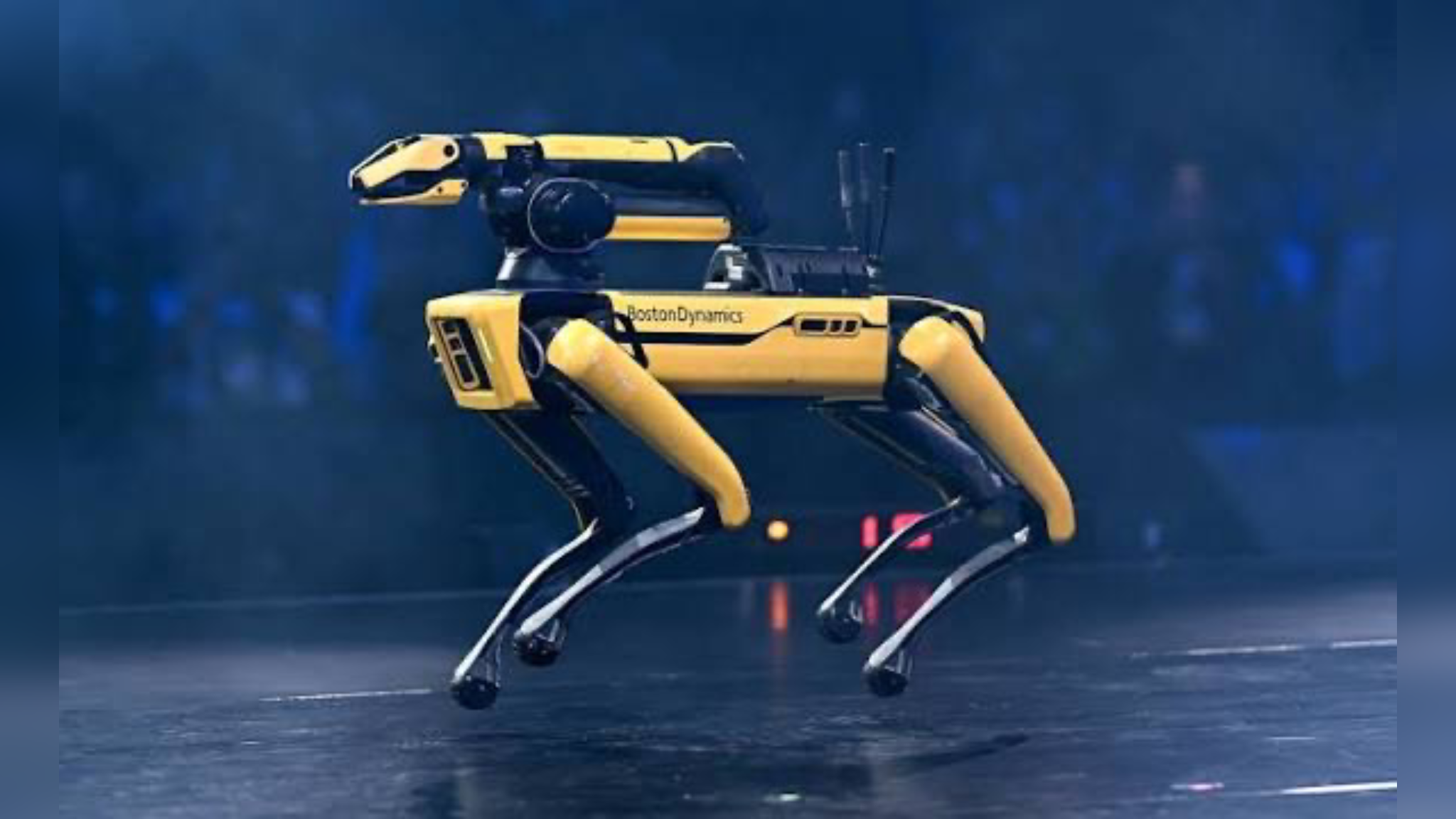
ICE robot dogs are coming, and the agency is prepared to spend up to $2 million on them. The Department of Homeland Security posted the plan to its Acquisition Planning Forecast System last Thursday, listing Boston Dynamics Spot robots and accessories at an estimated $1 million to $2 million.
Video
The posting does not say how many units ICE wants, and it does not guarantee an order will follow, but at the top of that range the agency could put dozens of them into the field. Spot is a four legged robot about the size of a large dog. It carries 360 degree cameras, it can open doors, and its sensors detect gas, radiation and vibration. It has an extendable arm. It cannot bite or attack the way a police K-9 can. It is a camera and a set of sensors that walks, and it is meant to go into a space before a person does.
The procurement notice describes that purpose in careful language, saying the robots provide remotely operated inspection, situational awareness and hazard assessment in environments that may pose risks to personnel, and that the capability improves officer safety and helps DHS respond to incidents in dangerous, confined, unstable or hard to reach areas. A senior DHS official told NBC News the robots will not be used to make arrests. An ICE spokesperson said the same, calling it an additional tool to assess potentially dangerous situations before putting personnel or the public at risk. The ICE robot dogs are not new technology and they are not exotic. Police departments in Los Angeles and New York already use them.
The Secret Service deployed them at Mar-a-Lago in 2024, where videos of the robots patrolling the grounds went viral. What is new is the agency now holding them. That is where the officer safety explanation runs into trouble, because ICE just made a very different kind of purchase. Earlier this month the agency awarded a $16.7 million contract for 6,000 pairs of gloves that deliver an electric shock through direct contact with skin. DHS has signaled it could spend as much as $20 million on them. Those gloves are not for inspecting unstable buildings. They are for putting hands on people. White House border czar Tom Homan publicly defended the purchase against criticism.
Two purchases, weeks apart, both from the same agency, both explained as protecting officers. One of them clearly is not. The context around both is an enforcement operation running at a scale the country has not seen. ICE made 50,000 arrests in July, the highest monthly total of Trump’s second term. The agency has added personnel, expanded cooperation with state and local police, and started spending heavily on enforcement technology. Civil liberties groups have raised concerns about the funding increases and about ICE’s use of force during the deportation push.
The company that builds Spot has its own rules about this. Boston Dynamics states in its published ethics policy that it will not authorize or partner with anyone who wants to use its robots as weapons or as autonomous targeting systems, and that if its products are being used for harm, it will take steps to address the misuse. A company spokesperson said Boston Dynamics sells to many government agencies and public safety organizations, and that the robots are used to keep people out of harm’s way and help first responders assess dangerous situations. The company has not said whether an immigration raid on a residence falls inside or outside that line.
Nothing in the document says these robots will chase or arrest anyone, and there is no reporting that they will. What the document does say is that a camera with legs will walk into a building first and send back what it sees. When the building is a house and the operation is a deportation raid, the people inside are being searched by a machine before an agent ever knocks. The technology is the same either way. The setting is what changed.
Short Link: https://balleralert.com/gstg
