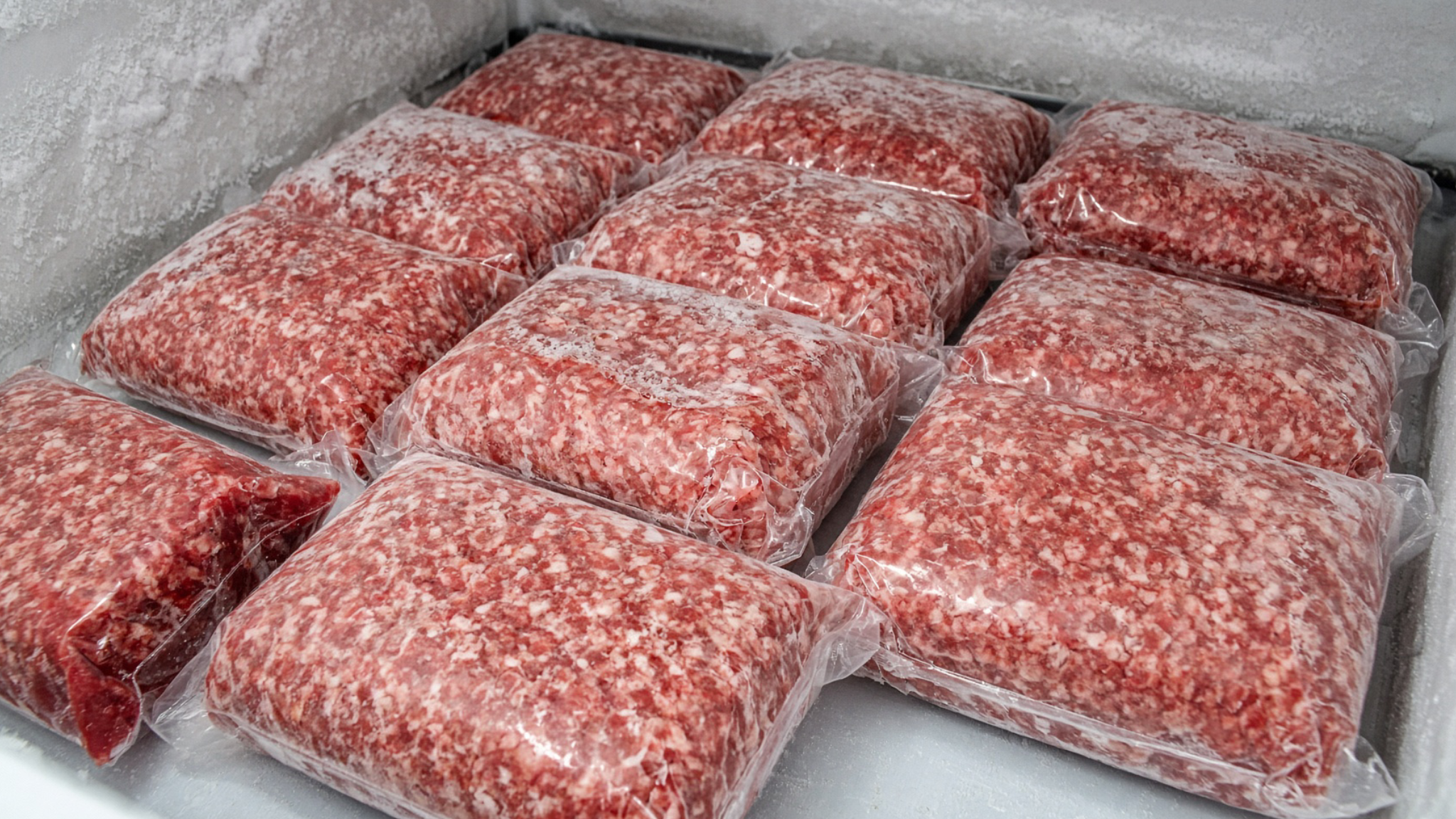
The Argentine beef recall announced by the U.S. Department of Agriculture on August 7 covers 29,628 pounds of raw beef that made it into Florida and Texas stores without a federal inspector ever laying eyes on it.
Corte Argentino USA LLC, a company based in Aventura, Florida, imported the meat from Argentina and skipped a step that is not optional. That step is called import reinspection. Any meat coming into the United States from another country has to be presented to the USDA’s Food Safety and Inspection Service, the agency that polices meat, poultry and egg products. Inspectors check the paperwork, the labeling, the packaging and the physical condition of the product, and when something looks off they pull samples and test them for contamination. Customs clearance alone does not cover it. The meat can get through the border and still be required to sit for that second look before it goes anywhere near a store shelf. In this case it never did, and the Argentine beef recall exists because the government has no idea what condition that meat was in when it arrived.
FSIS caught the lapse during routine activity, not because anyone got sick. There are no confirmed reports of illness or injury tied to the meat. That has not stopped the agency from putting the most serious label it has on the situation. This is a Class I recall, which the USDA defines as a health hazard where there is a reasonable probability that eating the product will cause serious health consequences or death. That classification is not about what has already happened. It is about what could happen when nobody verified the product in the first place.
The recalled meat was produced between May 15 and May 20 of this year and carries use or freeze by dates between September 15 and September 20, which is the part that should have people opening their freezers. Regulators specifically said they are worried the beef is already sitting in refrigerators and freezers in homes across both states. It was sold under the brand FrigorIfico Gorina SAIC and shipped in cardboard boxes of varying weights. The cuts include boneless top sirloin butt, labeled cuadril sin tapa, eye round, labeled peceto, topside cap off, labeled nalga AD s/tapa, flat, labeled carnaza cuadrada, and knuckle, labeled bola de lomo. Every box in the Argentine beef recall carries the Argentinian establishment number EST. N° OF. 2025 and the shipping mark 26644-AA.
The USDA has not released a list of stores. The notice says only that the products went to distributors and retailers in Florida and Texas, and a representative for Corte Argentino was not available to say whether those distributors pushed the meat further into other states. The company’s own website says it serves customers in Miami and across the country, which leaves the actual footprint of this recall an open question. Anyone with the product should throw it away or return it to the store rather than cook it. Corte Argentino is taking consumer questions at 786-350-5805 and at [email protected].
There is a bigger story sitting underneath this one. The recall lands roughly a year after Donald Trump announced a plan to bring in more Argentine beef under a deal with Argentine president Javier Milei, pitched as a way to bring down record grocery prices on beef. That plan got hammered from a direction Trump does not usually get hammered from. The National Cattlemen’s Beef Association and the Ranchers Cattlemen Action Legal Fund United Stockgrowers of America, groups that are typically in his corner, both came out against it over what more imports would do to American ranchers and feedlot operators.
Agricultural economists were skeptical for a different reason. Argentine beef accounts for roughly 2 percent of American beef imports, so even doubling it barely moves the needle on what anybody pays at the register. The actual reason beef costs what it costs is that demand has stayed strong while the American cattle herd shrank to its smallest size since 1961, the result of years of drought and low cattle prices. Glynn Tonsor, an agricultural economist at Kansas State University, has pointed out that Argentina simply cannot produce enough beef to offset those losses.
So the policy was never going to fix prices, and now the first thing many shoppers are hearing about Argentine beef is that thirty thousand pounds of it bypassed the inspection system entirely. This is also not an isolated failure. Earlier this summer FSIS issued another Class I recall over the same kind of import paperwork lapse, that one covering more than 12,000 pounds of smoked bacon from Canada brought in by Maple Leaf Foods.