

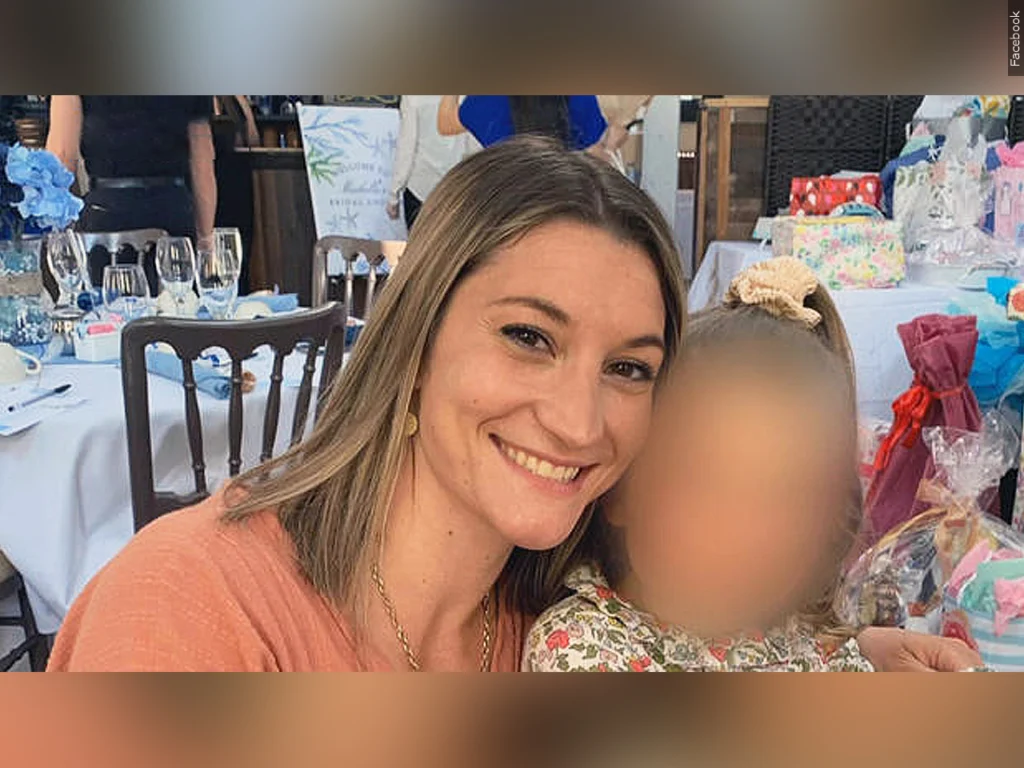
A Massachusetts judge announced a mistrial Friday in Lindsay Clancy’s triple murder case after jurors again reported they could not reach a unanimous verdict over whether she was criminally responsible for killing her three young children in 2023.
According to Reuters, Plymouth Superior Court Judge William Sullivan said the continuing deadlock left him with no choice but to declare a mistrial. Sullivan then delayed formally putting the ruling into effect for one hour so defense attorney Kevin Reddington could seek an emergency appeal aimed at keeping the jury together and allowing deliberations to continue.
The Lindsay Clancy mistrial came on the jury’s seventh day of deliberations after a nearly six-week trial that centered less on who killed the children than on Clancy’s state of mind when she did it. Prosecutors and the defense agreed that Clancy killed 5-year-old Cora, 3-year-old Dawson, and 8-month-old Callan Clancy inside the family’s Duxbury, Massachusetts, home on January 24, 2023. The dispute was whether she was legally responsible for those acts.
The defense sought a verdict of not guilty by reason of lack of criminal responsibility, Massachusetts’ version of an insanity defense. According to the Associated Press, Reddington argued that Clancy was suffering from postpartum psychosis and had been failed by a mental health system that did not adequately diagnose or treat her deteriorating condition. Prosecutors maintained that Clancy had mental health problems but understood that killing her children was wrong and deliberately carried out the killings.
The Lindsay Clancy mistrial followed an extraordinary dispute inside the jury room that spilled into open court during the final days of deliberations. According to NBC’s coverage of the proceedings, the jury foreperson raised concerns involving one juror and the application of the reasonable doubt standard. Reddington argued Friday that the juror had acknowledged doubt while refusing to apply the law as instructed, telling the court, “There is one person who is refusing to apply the law to the facts determined.”
Sullivan declined the defense request to remove or further investigate that juror. NBC reported that Sullivan said the note did not establish that the juror had refused to follow the law, and he sent the panel back to deliberate. The judge had also questioned jurors individually the previous day and repeated his instructions concerning reasonable doubt.
The escalating juror dispute came after the panel had already reported being unable to reach a unanimous decision more than once. According to the Associated Press, Sullivan previously delivered a Tuey Rodriguez instruction, sometimes referred to as a dynamite charge, which asks deadlocked jurors to reconsider their positions and continue discussing the evidence without abandoning sincerely held beliefs simply to reach a verdict.
At the heart of the trial was a detailed record of Clancy’s mental health treatment in the months after the birth of Callan in May 2022. The Associated Press reported that Clancy’s mother, mother-in-law, sister, friends and coworkers described significant changes in her mental health. Her former mother-in-law, Susan Clancy, testified that Clancy became anxious, paranoid, and suicidal while repeatedly seeking help. Her mother, Paula Musgrove, testified that Clancy became afraid to sleep alone and believed her medications were damaging her mind.
The defense argued that Clancy was misdiagnosed and overmedicated as she moved through psychiatric treatment. AP reported that she eventually admitted herself to a psychiatric hospital before being discharged less than two weeks before the killings. Reuters reported that her former husband, Patrick Clancy, testified that she did not appear to be planning to hurt herself or the children in the days after her discharge.
Prosecutors presented a sharply different interpretation of those events. According to Reuters, they argued that Clancy intentionally created an opportunity to be alone with the children by sending Patrick out to pick up food and medication. Prosecutors also pointed to evidence that Clancy had used her phone to determine how long the trip would take, arguing that the timing supported their theory of planning rather than an uncontrolled psychotic act.
Patrick returned home and discovered Clancy injured outside after she had cut herself and jumped from a second-story window, according to Reuters and the Associated Press. The fall left her paralyzed from the waist down. After Patrick asked where the children were, he went to the basement and found them with exercise bands around their necks.
The Lindsay Clancy mistrial also leaves unresolved one of the trial’s most disputed pieces of psychiatric evidence. AP reported that clinical and forensic psychologist Paul Zeizel testified that he heard Clancy describe a male voice telling her that she had no choice but to kill the children and herself. Zeizel concluded that she was not criminally responsible because of her mental illness. Prosecutors countered with forensic psychologist Kirk Heilbrun, who questioned whether Clancy had actually experienced the hallucinated voice described by the defense.
The disagreement between experts became central to the prosecution’s argument that depression and suicidal thinking did not automatically mean Clancy was psychotic or incapable of understanding right from wrong. Reuters reported that one prosecution psychologist concluded Clancy planned to die and believed her children would suffer without her. The defense maintained that those same beliefs, combined with the alleged command hallucination and her rapid mental decline, demonstrated how detached she had become from reality.
Now, the Lindsay Clancy mistrial sends the criminal case into another uncertain phase. According to the Associated Press, a hung jury does not amount to either a conviction or an acquittal. The prosecution can seek another trial with a new jury, negotiate a potential plea agreement or ultimately decide against retrying the case. Clancy would remain charged while the criminal case is unresolved.
Plymouth County prosecutors had not announced a final retrial decision in the immediate aftermath of the mistrial. AP reported before Friday’s ruling that another trial would require a new jury selection process and another presentation of the extensive medical, psychiatric and physical evidence that defined the first trial.
The case has drawn national attention because it places an unusually difficult legal question beside a broader debate about postpartum mental health care. Reuters noted that the proceedings have drawn comparisons to the Andrea Yates case in Texas, where Yates was ultimately found not guilty by reason of insanity in 2006 after drowning her five children in 2001. Her attorneys had also argued that she suffered from severe postpartum psychosis.
For now, the Lindsay Clancy mistrial means more legal uncertainty for a case that has already stretched more than three years from the deaths of Cora, Dawson and Callan to a trial in which jurors heard weeks of testimony but could not unanimously answer the question that mattered most: whether their mother was criminally responsible when she killed them.
