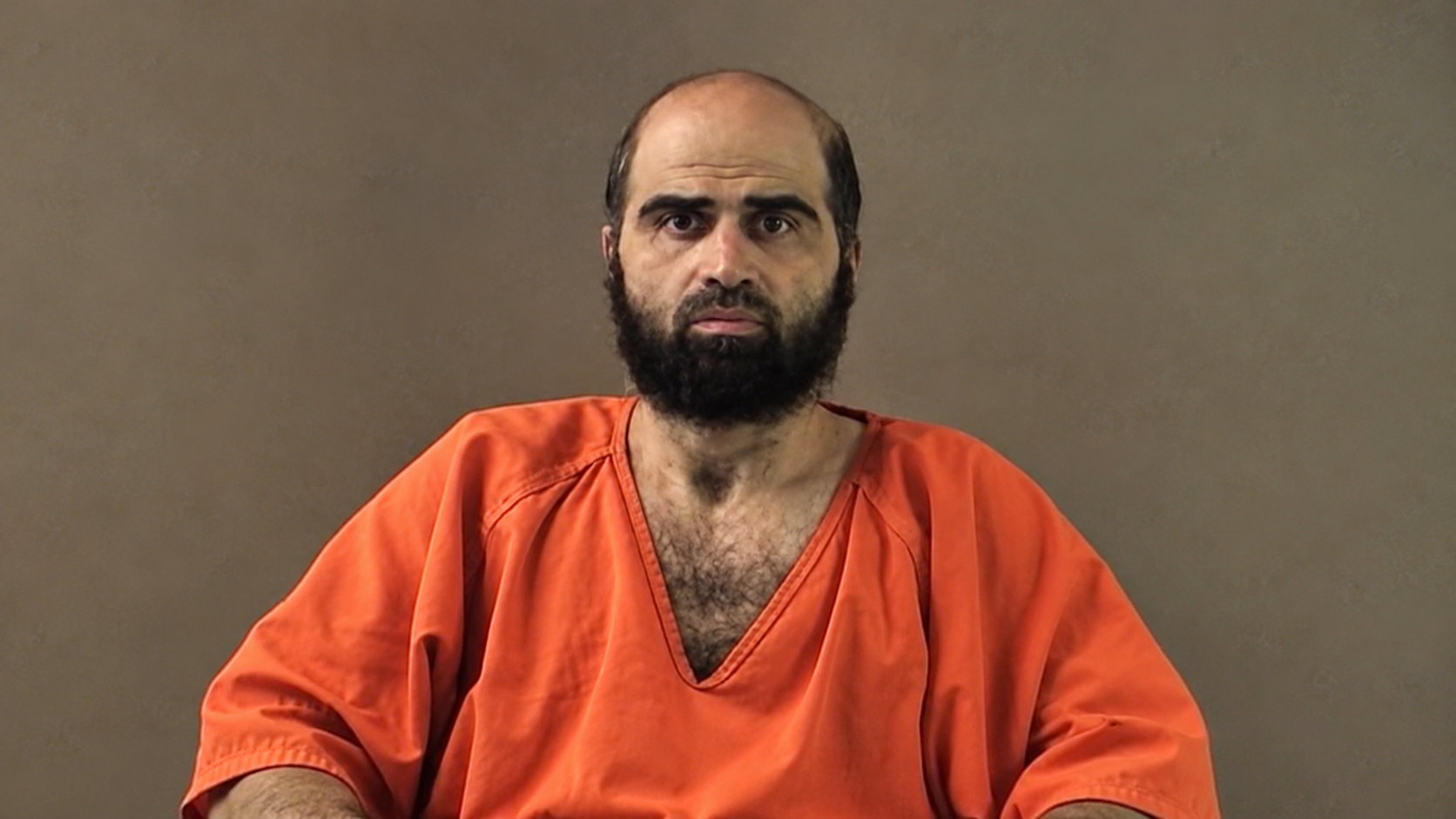
An Army psychiatrist who spent years caring for American soldiers became responsible for one of the deadliest shootings in U.S. military history when he opened fire at Fort Hood, Texas, on November 5, 2009. Maj. Nidal Malik Hasan killed 13 people and wounded 31 others with gunfire inside a military processing facility where soldiers were preparing for deployments or returning from overseas assignments. The Fort Hood shooting shocked the country, particularly because the gunman was a commissioned Army officer who had spent years working within the military medical system.
According to a 2023 ruling by the U.S. Court of Appeals for the Armed Forces, Hasan carefully planned the attack for months before carrying it out. Investigators discovered that he purchased a handgun, practiced shooting, and repeatedly visited the building where the killings eventually took place.
Hasan was born in Virginia in 1970 to Palestinian immigrant parents. He pursued a military career after high school and eventually became a psychiatrist through the Army’s medical education system.
For approximately six years, Hasan worked at Walter Reed Army Medical Center in Washington, D.C., where he trained as a psychiatrist and treated service members experiencing psychological difficulties associated with military service.
According to Associated Press reporting published by MPR News, Hasan transferred to Fort Hood in July 2009 after completing advanced training in disaster and preventive psychiatry. He had been promoted to major earlier that year and was assigned to Carl R. Darnall Army Medical Center.
Despite years in uniform, Hasan had never served in a combat zone. That was about to change.
In October 2009, Hasan learned that he was scheduled to deploy to Afghanistan the following month. Military court records show he strongly opposed the assignment and had expressed hostility toward American military operations in Muslim countries.
Investigators later established that Hasan’s actions went far beyond frustration with an upcoming deployment.
The military appeals court found that Hasan began preparing for the Fort Hood shooting in July 2009, when he visited a gun shop near the installation and purchased an FN Five seven semiautomatic handgun. He also bought magazine extensions, ammunition, and laser sights.
During October, Hasan practiced firing the weapon at a local shooting range. He also visited the Soldier Readiness Processing Center between seven and nine times during the two weeks preceding the massacre.
Witnesses later testified that several visits appeared to have no legitimate purpose.
On November 5, Hasan arrived at the processing center carrying his concealed handgun and nearly 400 rounds of ammunition.
The building was crowded with soldiers undergoing medical screenings, vaccinations, and other deployment-related requirements. Some were preparing to leave the country, while others had recently returned from overseas.
According to testimony documented in the military appeals court ruling, Hasan approached a civilian employee and directed her away from the area. After she left, he drew his weapon, shouted “Allahu Akbar,” an Arabic phrase meaning “God is great,” and began shooting.
Soldiers scrambled for cover as gunfire erupted throughout the building. Some attempted to escape through the exits, while others hid behind cubicles and medical equipment.
Witnesses described Hasan firing at people fleeing the building and shooting several soldiers in the back as they tried to escape.
The shooting continued outside, where responding law enforcement officers confronted him.
Civilian Army police officer Kimberly Munley was seriously wounded during the confrontation. Hasan was eventually shot by another responding officer and taken into custody.
He survived but suffered injuries that left him paralyzed from the waist down and dependent on a wheelchair.
The Fort Hood shooting claimed the lives of 12 military service members and one civilian contractor. Among those killed was 21-year-old Army Pfc. Francheska Velez, who was pregnant. Civilian contractor Michael Cahill, a retired Army chief warrant officer, was also killed.
According to the U.S. Army’s reporting on the victims and their families, survivors and relatives later received military honors recognizing the devastating impact of the massacre.
Although some reports describe 32 people as wounded, military court records specify that 31 people sustained gunshot injuries. Hasan was convicted of 32 attempted murders because an additional charge involved a police officer at whom he fired but did not strike.
Questions about Hasan’s motive became central to the investigation and his eventual trial.
Hasan claimed he carried out the attack because he believed American military operations in Afghanistan and Iraq constituted a war against Islam. His stated justification reflected his own extremist interpretation of the conflict, not the beliefs of Muslims generally.
During legal proceedings, Hasan attempted to argue that he was protecting Taliban fighters from American soldiers who might eventually deploy to Afghanistan.
The military judge rejected that proposed defense, finding that the people Hasan attacked in Texas posed no immediate threat to anyone overseas.
Investigators also examined Hasan’s communications with Anwar al-Awlaki, an American-born extremist cleric who became associated with Al Qaeda in the Arabian Peninsula.
The two exchanged messages before the shooting, with Hasan seeking religious guidance about violence, military service, and suicide attacks.
Those communications provided evidence of Hasan’s ideological radicalization. However, investigators did not establish that al-Awlaki personally ordered or directed the Fort Hood massacre.
The FBI had detected communications involving Hasan before the shooting but did not intervene to prevent the violence.
Federal investigators initially viewed his correspondence with al-Awlaki as potentially consistent with his professional research involving Muslim soldiers and American military operations.
The bureau’s handling of the intelligence became the subject of intense scrutiny after the massacre.
According to the FBI’s findings from the independent Webster Commission investigation, investigators identified shortcomings involving information sharing, technology, investigative procedures, and training.
The commission found that FBI personnel made mistakes while reviewing intelligence about Hasan. However, it did not conclude that those errors resulted from intentional misconduct or deliberate disregard of official responsibilities.
The findings raised broader concerns about how authorities evaluate possible threats within military institutions and whether more aggressive investigative efforts could have identified Hasan’s intentions before the attack.
Meanwhile, survivors and families continued seeking recognition for the lives lost.
In April 2015, the military presented Purple Hearts to eligible service members and Defense of Freedom Medals to eligible civilian victims following changes to federal eligibility requirements.
Hasan’s criminal case had already reached a verdict by then.
During his August 2013 court-martial, Hasan chose to represent himself, although standby defense attorneys remained available.
He made little effort to dispute the prosecution’s evidence and did not present witnesses in his defense.
“The evidence will clearly show I am the shooter,” Hasan told the military panel during his opening statement, as documented in the military appeals court record.
On August 23, 2013, Hasan was convicted of 13 counts of premeditated murder and 32 counts of attempted premeditated murder.
Five days later, the military panel sentenced him to death. He was also ordered dismissed from the Army and stripped of his military pay and allowances.
The legal proceedings continued for more than a decade as Hasan pursued appeals.
In September 2023, the U.S. Court of Appeals for the Armed Forces upheld his convictions and death sentence. The U.S. Supreme Court declined to review the case in March 2025.
The case returned to national attention in October 2026 when the Army announced plans to execute Hasan by firing squad at Fort Hood on December 3.
The decision followed a recommendation from Defense Secretary Pete Hegseth and formal approval from Donald Trump.
According to the U.S. Army’s October 7, 2026, announcement, Trump approved Hasan’s death sentence on October 2, clearing the way for military officials to schedule the execution.
That approval also triggered a specific deadline under military regulations.
Army Regulation 190-55 requires the secretary of the Army to schedule an execution no sooner than 60 days and no later than 150 days after presidential approval. Acting Army Secretary Adam Telle ordered Hasan’s execution by firing squad on October 6, selecting December 3, 2026, as the date.
The execution is scheduled for 1 p.m. Central Time at Fort Hood, the same military installation where Hasan carried out the killings 17 years earlier.
According to the Associated Press, the announcement raised questions among military law experts about the procedures involved and whether officials had properly followed notification requirements.
Hasan could still pursue additional legal challenges in civilian federal court, potentially delaying the execution. His former attorney also raised concerns about whether Hasan had adequate access to legal counsel when informed of the decision.
The execution plans attracted further attention when the Pentagon confirmed that the firing squad procedure would be livestreamed.
According to Associated Press reporting published October 9, 2026, Pentagon officials confirmed the livestream plans after Hegseth publicly indicated that people would be able to watch the execution.
If carried out as scheduled, Hasan’s execution would be the first conducted by the U.S. military since 1961 and the first military execution by firing squad since World War II.
The decision to broadcast the execution has sparked debate over government transparency, capital punishment and whether a public execution risks turning an act of punishment into a spectacle.
More than a decade after the Fort Hood shooting, the massacre remains a significant case involving violent extremism, military security and intelligence failures.
For the families of the 13 people killed and the soldiers and civilians who survived, the case represents far more than a military prosecution or a debate over capital punishment. It remains a tragedy that permanently changed their lives and exposed how a trusted Army physician turned his weapon against the military community he had sworn to serve.