

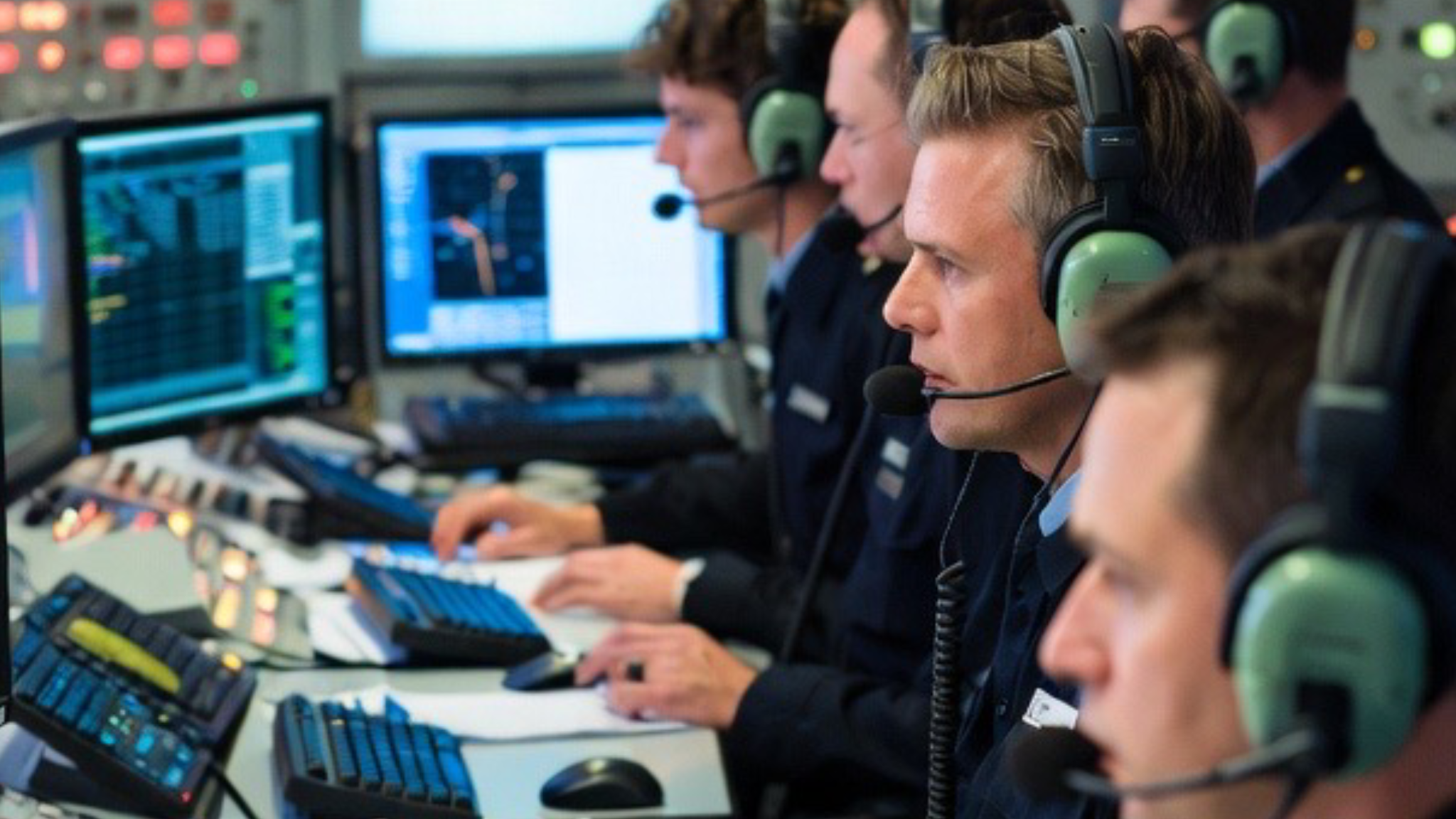
On the evening of Friday, March 27, 2026, every major airport in the Washington D.C. area ground to a halt. Reagan National. Dulles. BWI. Charlottesville. Richmond. All of them. Planes sat on runways going nowhere. Passengers were stranded at gates watching departure boards flip to delayed in real time. And if you were not glued to aviation Twitter, you probably had no idea why because somehow, this barely made national news.
The story broke not from a major newsroom’s breaking news alert, but from a single tweet that racked up 2.9 million views. The man who sent it Pete Muntean, CNN’s aviation and transportation correspondent. And if anyone was going to catch this, it was going to be him.
🚨 BREAKING: Potomac TRACON, the key radar facility handling D.C. airspace, has been evacuated to “ATC ZERO” according to FAA alerts. The FAA is now implementing ground stops for flights to Reagan National, Dulles, BWI, Charlottesville and Richmond airports.
— Pete Muntean (@petemuntean) March 27, 2026
Who Is Pete Muntean?
Pete Muntean is CNN’s aviation and transportation correspondent based in Washington D.C. He is also a licensed pilot, which gives him a deeper understanding of the aviation system he reports on. That combination of reporting experience and real flight knowledge is why his updates are closely watched by industry insiders and travelers alike.
Despite all of that or maybe because of it Pete Muntean has dedicated his career to understanding and covering the skies. He came to CNN in 2020 after a decade in local news, and has since become one of the sharpest eyes on aviation safety in the country. So when Muntean tweets something is wrong at 7:07 PM on a Friday night with 2.9 million views and no major network is leading with it That is when you should pay attention.
UPDATE. Potomac TRACON was evacuated due to a “strong smell,” per FAA statement. The second time the key D.C. area air traffic control facility has been evacuated in as many weeks. pic.twitter.com/SlmGM37PDp
— Pete Muntean (@petemuntean) March 28, 2026
What Is Potomac TRACON and Why Should You Care
Before we get into what happened, you need to understand what Potomac TRACON actually is because this is not just some random government building.
TRACON stands for Terminal Radar Approach Control. These facilities are essentially the nerve centers of the sky. They control the lower airspace within a radius of the facility and manage the traffic flow in and around every airport in their zone. Think of it like the air traffic version of a city’s central power grid if it goes down, everything goes dark.
Potomac TRACON formally known as the Potomac Consolidated Terminal Radar Approach Control or PCT is located in Warrenton, Virginia, and it is one of the most critical air traffic facilities in the entire country. It manages roughly 20,000 square miles of airspace, covering Reagan National DCA, Dulles International IAD, Baltimore Washington International BWI, Richmond International RIC, Charlottesville Albemarle CHO, Andrews Air Force Base, and several other regional airports. This is the airspace over the capital of the United States. It does not get more high stakes than that.
When Potomac TRACON goes offline, the FAA declares what is called ATC ZERO.
What Is ATC Zero
ATC Zero is not a drill. It is not a minor inconvenience. ATC Zero means a facility has completely ceased operations zero controllers working, zero radar coverage being managed from that location. It is the aviation equivalent of a city’s entire 911 dispatch center going dark.
When ATC Zero is declared, the FAA has to implement immediate ground stops at every airport under that facility’s control. That means no planes take off. No planes land. Nothing moves until the facility is back online or controllers can be repositioned to a backup location. Even after the facility reopens, the backlog that builds up during the ground stop can ripple through the entire national air travel system for hours.
On March 27, Potomac TRACON went to ATC Zero. And here is the part that should make your jaw drop it was the second time in two weeks.
The First Time March 13, 2026
Let’s go back two weeks. On March 13, 2026, the exact same thing happened. A strong chemical smell was detected inside Potomac TRACON, and the facility had to be evacuated. More than 30 employees were evaluated by emergency responders and a HAZMAT team. Ground stops were immediately implemented at Reagan National, Dulles, BWI, and Richmond International.
The ground stop on March 13 lasted over an hour but its effects were felt for far longer. Reports indicated it took an additional three hours after the facility reopened to clear the backlog of flights that had built up. Between 25 percent and one third of all departures from the affected airports were delayed. Passengers were stranded. Airlines scrambled. TSA workers many of whom were working without pay due to the ongoing government funding standoff were dealing with overcrowded terminals.
Transportation Secretary Sean Duffy addressed it directly, posting on X that the FAA was working to identify the source of the odor. Later, he confirmed a circuit board inside an IT cabinet had overheated, releasing the chemical smell that forced the evacuation. The board was replaced. Firefighters from Fauquier County confirmed there was no danger. Controllers returned. Problem solved, right
Wrong.
The Second Time March 27, 2026
Fourteen days later, it happened again. At approximately 6:30 PM on Friday, March 27 one of the busiest travel periods of the entire week another strong smell was detected at Potomac TRACON in Warrenton, Virginia. The facility was evacuated again. ATC Zero was declared again. And this time, ground stops went out to five airports Reagan National, Dulles, BWI, Charlottesville, and Richmond.
This time, Fauquier County crews were called to the facility at around 6:50 PM. The FAA issued a statement confirming the ground stop was due to a strong smell at the Potomac TRACON. A Dulles tower air traffic controller could be heard over the radio telling planes waiting on the tarmac Potomac TRACON has had to evacuate due to some type of odor. So it is going to be a while. They stopped us down on all departures.
By 8 PM, most of the ground stops had been lifted except at Reagan National, which remained under a ground stop until 8:30 PM EDT. In total, across the affected airports, there were 56 cancellations and 691 delays recorded in a 24 hour period.
The cause this second time Again, an overheated battery this time inside an IT cabinet at the facility. Fauquier County officials confirmed the disruption was caused by a strong smell from the overheated battery. Sean Duffy posted on X again, confirming the circuit board had been replaced and controllers had been cleared to return.
Same facility. Same type of problem. Two weeks apart.
So What Is The Strong Smell
Both incidents were traced to overheating electrical components first a circuit board, then a battery inside an IT cabinet. When electrical equipment overheats, it can release a sharp, chemical like odor that is sometimes compared to burning plastic or a soldering smell. In enclosed facilities like TRACON buildings, that smell spreads quickly through the ventilation system, and the protocol is clear if controllers cannot work safely, you evacuate. You do not gamble with the people managing thousands of flights.
What makes this alarming is not just that it happened it is that it happened twice in the same facility in 14 days. That points to something deeper than a one off equipment failure. It raises serious questions about the age and condition of the infrastructure inside one of the nation’s most critical air traffic control facilities.
And those questions lead to an even bigger conversation.
The Bigger Picture A System Under Strain
Here is what the headlines buried Potomac TRACON did not fail in a vacuum. The U.S. air traffic control system has been operating under serious strain for years, and 2026 has been a particularly rough stretch.
The FAA is currently short approximately 3,500 air traffic controllers nationwide. As of 2024, over 40 percent of the FAA’s 290 terminal facilities were understaffed. The Potomac TRACON itself manages some of the most complex airspace in the country, and it does so with equipment that, in many cases, is decades old. The president of the air traffic controllers’ union testified before Congress earlier this month that controllers are working short staffed, often six days a week, ten hours a day, using outdated equipment and in run down facilities that are in many cases more than 60 years old.
On top of that, DOGE related cuts have already hit the FAA’s support workforce. Around 400 FAA employees were laid off earlier this year not air traffic controllers themselves, but the support staff that keeps the system running aviation safety assistants, maintenance mechanics, aeronautical information specialists. These are the people who update charts and maps after disruptions, who support inspectors, who keep the technical side of the system functional. About 12 percent of aeronautical information specialists either left the agency or were poised to leave following the cuts.
Now you have got overheating batteries inside IT cabinets at the facility managing D.C.’s airspace. Twice in two weeks.
Why Was Not This National News
That is the question. Five major airports. Hundreds of delays. Fifty six cancellations. The nation’s capital airspace going to ATC Zero not once, but twice in fourteen days. And yet the story largely lived on aviation Twitter, pushed forward almost entirely by Pete Muntean’s reporting, while the broader media cycle moved on.
Part of it is fatigue. Aviation safety stories have been hitting in waves since the January 2026 midair collision of a passenger jet and an Army Black Hawk helicopter over the Potomac River that killed 67 people. Part of it is complexity TRACON, ATC Zero, ground stops, PCT these terms do not translate easily to a quick scroll. And part of it, frankly, is that when it is a circuit board smell in a government building in Warrenton, Virginia, it does not feel like breaking news until you sit with the full picture.
But it is. Because the full picture shows a critical piece of American infrastructure failing twice due to aging equipment, in a system that is already understaffed, underfunded, and under pressure. And the only reason most people know about it at all is because a pilot turned journalist with 23,700 Twitter followers and a deeply personal connection to aviation refused to let it slide by quietly on a Friday night.
The Bottom Line
Two evacuations. Five airports each time. Hundreds of flights disrupted. A facility managing 20,000 square miles of the most sensitive airspace in the United States, going dark because of overheated equipment not once, but twice in fourteen days.
This is not just a travel story. It is a warning sign about the state of America’s air traffic infrastructure, at a moment when that infrastructure is already being stretched thinner than it has been in decades. Sean Duffy addressed it on X both times. The FAA released statements. The circuit boards got replaced.
But the question that still does not have an answer is the most important one why does Potomac TRACON keep overheating in the first place and what happens the next time it does except nobody is there to fix it because they already took the buyout.
Pete Muntean will probably be the one to tell you when it does.
