

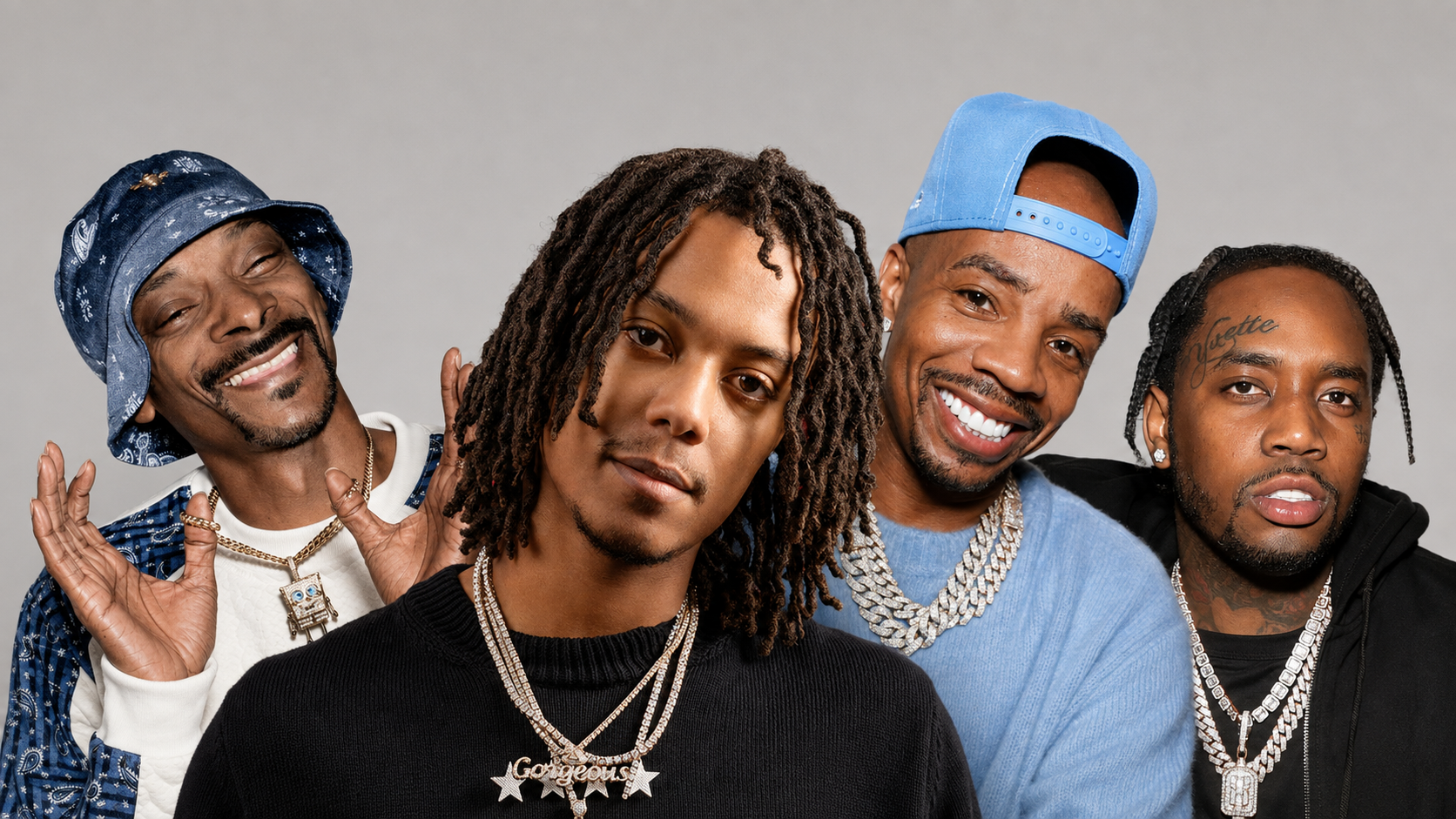
Hip-hop has never been shy about much of anything: money, women, violence, beef. But for a long time, faith was the one thing rappers tended to keep in the background, maybe a “Lord forgive me” ad-lib buried in a verse or a cross chain worn without much said about it. That’s changing fast. More and more rappers, across generations, coasts, and subgenres, are getting openly, unapologetically vocal about their religion and spirituality, whether that means walking away from the sound that made them famous, dropping full gospel projects, converting entirely to a new faith, or literally stopping an interview mid-sentence to pray. It’s not a fringe story anymore. It’s a pattern, and it keeps growing.
Skilla Baby just gave the clearest, most viral example of it. Sitting in “The Breakfast Club” promoting his new album “The Price of Fame,” his phone alarm went off; not a text, not a label call, but a prayer reminder. Instead of silencing it and moving on, he asked Charlamagne tha God and co-host Loren LoRosa to stop the interview and pray with him. They did. The whole studio linked hands in a circle while LoRosa prayed out loud for protection over him, for “no spirit of confusion, no spirit of fear.”Charlamagne’s response afterward said it all: “Beautiful prayer, Loren. Skilla Baby, keep growing, my brother.” No deflecting, no cutting away, no punchline; just a rapper who survived a drive-by shooting with three gunshot wounds in 2025 telling two of the biggest voices in hip-hop media that his relationship with God comes before the segment. The clip went viral for exactly that reason.
Video
Fivio Foreign is maybe the boldest example of the shift. The Brooklyn drill pioneer who helped define the genre’s sound is walking away from it on purpose, not because the music stopped working, but because he says he feels “closer to God right now than he has ever been in his life.” He’s gotten baptized, checked into rehab, and posted proudly about hitting six months sober, “keeping God first,” and released the gospel single “Chasin'” with The Fire Choir as a tribute to the mother who raised him in church. He’s been direct about the shift: “I’m just Fivi, and I’m just trying to praise God through my music and not worship the devil through my music.” He knows longtime fans might not follow him there, and by his own account, he’s made peace with that.
Video
Plies has been doing something similar in his own lane, using his platform to tell followers directly that he’s shifting his focus toward his spirituality, a notable pivot for an artist who built a fan base on raunchy, unfiltered records, now using that same directness to talk about faith instead.
Video
Then there’s Kanye West, now known as Ye, whose “Jesus Is King” era and Sunday Service gatherings turned his personal religious journey into a public, sometimes controversial, spectacle, but undeniably opened the door for other mainstream rappers to talk about God without worrying it would tank their credibility.
Video
And this didn’t start this decade. Rap has quietly been producing born-again believers for years, some of them mid-catalog, some of them all the way to the pulpit:
Snoop Dogg put out an entire gospel and praise album, “Bible of Love,” featuring Kirk Franklin and Rance Allen, a hard left turn from the West Coast catalog that made him famous.
Video
Ma$e didn’t just talk about faith; he left music to become an ordained pastor, most notably leading Atlanta’s Gathering Oasis Church, stepping in and out of ministry and rap for over a decade.Cassidy has said that after a manslaughter conviction and a car accident that fractured his skull, “the only thing that got me through was the Lord,” and backed it up with a full faith-based project, “God Works in Mysterious Ways.”
Video
DMX, despite one of the rawest catalogs in rap history, put prayers on nearly every album he ever released, dropped a full spoken-prayer project in “Let Us Pray: Chapter X,” and delivered what’s been described as his first-ever sermon.
Video
Loon left Bad Boy Records behind entirely, converted to Islam, and now goes by Amir Junaid Muhaimin, spending his time giving talks about his conversion instead of making records.Shyne took it even further, converting to Orthodox Judaism after prison, changing his name to Moses “Moshe” Levi, and relocating to Jerusalem.
Video
Chance the Rapper never hid it to begin with, weaving gospel choirs and full church testimony into “Coloring Book” years before “faith era” was a trend anyone was naming.
Video
Put next to each other, these aren’t isolated stories about individual rappers going through something privately. It’s a shift in what hip-hop considers acceptable to say out loud. Whether it’s a full gospel album, a baptism, a prayer alarm going off in the middle of “The Breakfast Club,” or a rapper trading his rap name for a religious one entirely, the message from this generation of artists is the same: they’re not performing faith for content. They’re done being quiet about it.

GRACE. EULOGY IS READ USUALLY IN THE SYNOGOGUES.