

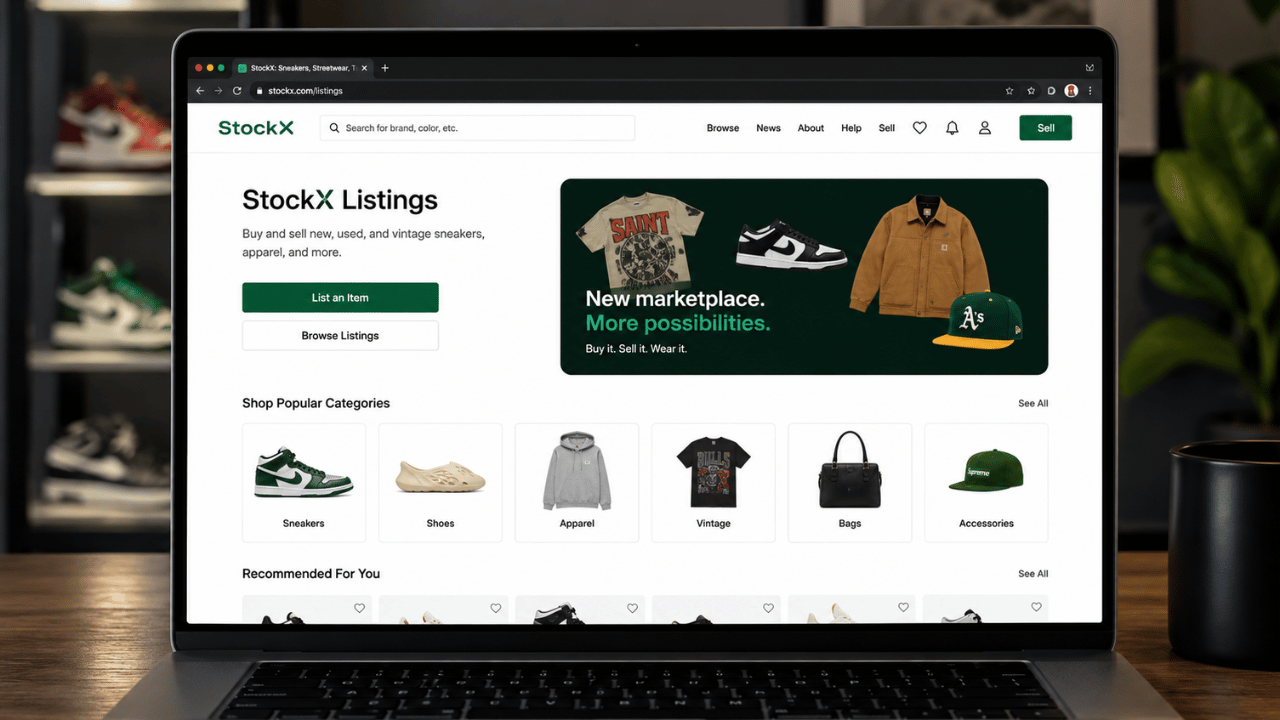
StockX is stepping into a new resale era, and this time, artificial intelligence is helping run the playbook.
The sneaker resale giant recently launched StockX Listings, a new marketplace model that allows sellers to list used sneakers, vintage apparel, missing-box items, and other unique finds. But the real conversation is not just about StockX finally moving beyond its deadstock-only reputation. It is about how much work the platform is now handing over to AI.
According to StockX, the new system uses AI-powered photo analysis and auto-matching technology backed by 10 years of proprietary marketplace data. In plain terms, sellers can upload photos of an item, and the AI helps identify the product, match it to catalog information, organize the listing, and offer pricing guidance. That means used sneakers could hit the platform faster, cleaner, and with less hassle for sellers trying to move inventory.
StockX CEO Greg Schwartz said the company was built around “trust, data, and transparency,” adding that the platform is now expanding to give customers more options.
“We’re using AI-powered photo analysis to streamline the listing process so customers can sell used sneakers, vintage apparel and other unique products with ease,” he said.
That sounds like a win for resellers, but buyers may want to keep both eyes open. AI can help make a listing look more polished, but used sneakers are not one-size-fits-all. Creasing, sole wear, odor, discoloration, missing boxes, swapped laces, and hidden flaws can all change the value of a pair. A faster listing process may help sellers, but buyers still need to study every photo, read the condition notes, compare prices, and understand exactly what kind of protection they are getting before hitting purchase.
Through the official Listings page, StockX says sellers can list sneakers, shoes, and apparel in different condition types, including “worn once or well-loved” items. The company is also promoting zero seller fees at launch, which could pull in more resellers looking to keep a bigger cut of the sale.
For shoppers, the update means used sneakers and vintage fashion can now be purchased directly inside the StockX app. Instead of every item going through StockX authentication first, Listings sellers can ship straight to buyers. StockX says every Listings seller must confirm their identity, and every purchase is backed by the StockX Buyer Promise. Eligible items can also receive optional StockX verification for added peace of mind.
That optional part is where buyers need to slow down. StockX’s Buyer Promise says coverage applies when an item arrives materially different from what was described, but the process changes depending on whether the order came through the Verified Marketplace, Listings with verification, or Listings without verification. For Listings purchases without verification, buyers may first have to contact the seller directly before escalating the issue to StockX Customer Service.
Trust has always been one of StockX’s biggest selling points. In its 2025 Brand Protection & Customer Trust Report, the company said it rejected more than 370,000 products in 2024 for failing to meet verification standards, with products collectively valued at nearly $74 million. StockX also said it blocked nearly 250,000 sneaker pairs from the marketplace, including more than 30,000 suspected counterfeit pairs.
Still, the platform has faced trust questions before. Reuters reported that Nike and StockX settled a trademark lawsuit in 2025 after Nike alleged StockX sold counterfeit shoes and unauthorized NFTs. StockX denied the allegations, but the case added more fuel to ongoing conversations about authentication, resale risk, and what buyers should expect from major sneaker marketplaces.
The timing makes sense from a business standpoint. Vogue Business reported that the global secondhand apparel market is projected to reach $393 billion by 2030, while U.S. online resale is expected to double to $48.3 billion by the same year. StockX is clearly trying to get a bigger piece of that pie, especially as the company also prepares to roll out StockX Live, a real-time shopping experience expected this summer.
Bottom line: StockX is no longer just about brand-new grails sitting pretty in the box. With AI helping sellers list used sneakers faster and the secondhand market booming, the platform is making a major play for the circular resale economy. But for buyers, the message is simple: AI may make the listing look clean, but your money is still on the line. Check the photos, read the fine print, know when verification is optional, and do not let a crispy listing make you ignore the details.
