Celebrity estate planning rarely makes headlines until it’s too late, and the new court filings tied to producer Tay Keith are a reminder of exactly why that matters. Tay Keith, born Brytavious Lakeith Chambers, died on June 18, 2026, at the age of 29, after he was found dead inside his Nashville apartment during a welfare check requested by his girlfriend.
She told police he had gone silent for roughly 24 hours after texting her to come by, and while an official cause of death has not been released, she noted he had a history of high blood pressure and breathing issues. The Memphis native and Middle Tennessee State University graduate built a decade-long career producing for Drake, Beyoncé, Travis Scott, Sexyy Red, and BlocBoy JB, whose “Look Alive” first put his tag on the map.
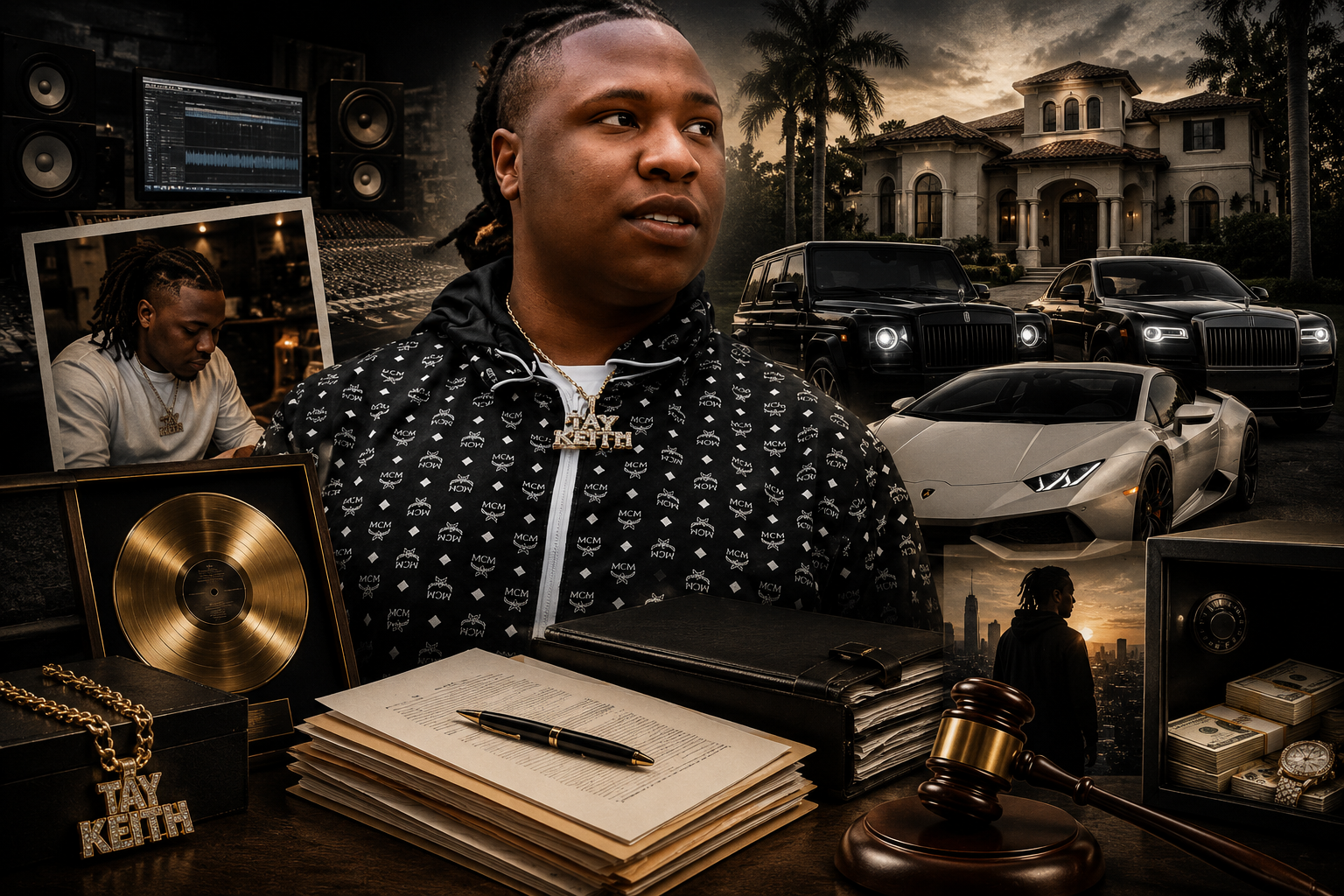
Court documents filed after his death, first reported by TMZ, now lay out the scope of what he left behind. The estate includes bank and money market accounts, a Mercedes-Maybach, a Lamborghini, a 50 percent ownership stake in a home in Memphis, an interest in Shadow Tequila, and a 50 percent interest in a recording and engineering studio. On top of that sits his music publishing interests, his trademark, his full catalog, and future royalty income from a decade of hit records. A family member has since been appointed administrator of the estate and has said she plans to work directly with his label and publishing partners to make sure future royalty payments are properly collected and routed to the estate going forward.
Here is where the story becomes bigger than one producer’s assets. Tay Keith was unmarried, had no children, and, according to the court paperwork, left no will. That single detail changes everything about how his estate gets handled. Without a will, an estate goes through intestate succession, meaning a court, not the person who built the wealth, decides how assets get distributed according to state law rather than personal wishes. For someone with a straightforward estate, that might not create much friction. For someone with a music catalog, publishing rights, trademarks, and business stakes in multiple companies, the absence of a will can turn something that should be simple into a years-long process involving lawyers, administrators, and family members who may not agree on next steps.
This is exactly why celebrity estate planning gets treated as urgent by anyone who understands the entertainment business. A catalog is not a static asset. It generates royalties every time a song streams, gets sampled, or lands in a film or commercial, and that income keeps flowing long after the artist is gone. Without clear legal instructions in place, decisions about licensing, sampling approvals, and where that royalty money goes can stall out or end up contested. Trademarks tied to a stage name, ownership stakes in studios or beverage brands, and real estate holdings only add more moving parts. Every one of those pieces needs someone with legal authority to manage it, and a will is what hands that authority to someone the artist actually chose.
The music industry has been here before, and not quietly. Prince died in 2016 without a will despite an estate eventually valued in the hundreds of millions, which triggered a lengthy court process to determine his heirs and led to years of legal battles before his estate was finally settled. Aretha Franklin died in 2018 with no formal will on file, only for handwritten documents to surface later in her home, sparking a public dispute among her sons over which version actually reflected her wishes. Both cases became cautionary tales precisely because so much of what these artists built, their catalogs, their royalties, their business interests, kept generating value long after they were gone, and no one had been formally designated to manage any of it.
Tay Keith’s estate is still early in this process, and the family member now serving as administrator appears focused on doing right by his catalog and his business interests. But the situation itself, a young artist with substantial assets and no will in place, is far more common than people assume. Estate planning tends to get treated as something for later in a career, or later in life altogether, when in reality any artist generating real income from music, endorsements, or business ventures is already sitting on an estate worth protecting. A will, a trust, or even a basic plan for who controls a catalog and publishing rights can be the difference between an artist’s legacy staying intact and that same legacy getting tied up in court for years.
What makes Tay Keith’s story resonate beyond the music industry is how relatable the gap actually is. He was 29, still building, still working, the kind of age where most people assume estate planning is decades away. His catalog, his studio stake, his tequila brand investment, and his real estate all point to someone who was actively building wealth in real time.
The court process now sorting through those assets is a direct result of one missing document, and it is a reminder that protecting a legacy takes more than talent and hustle. It takes paperwork, and it takes doing that paperwork before it becomes necessary rather than after.